Google creates empty security permission for AI agents on Android
Google has added a new system permission called EXECUTEAPPFUNCTIONS to Android, designed to let autonomous AI agents invoke specific app functions without manual tapping. The permission lives inside the AppFunctionsManager framework and is currently reserved for first‑party Google software such as the Gemini assistant. While the cage is fully built and locked down, no third‑party agents have…
Key points
- Google added a new Android permission (EXECUTEAPPFUNCTIONS) for AI agents to run app functions directly
- The permission is currently limited to internal Gemini testers and contains no third‑party agents yet
- Google’s early security cage aims to prevent unsafe, unrestricted AI actions on users’ phones
The approach aims to replace fragile screen‑tap automation with a hyperlink‑like shortcut that triggers a task directly, reducing breakage when apps change UI layouts. Google limits the permission to a small, in‑house tester group and has not announced a public rollout timeline. By establishing the security model early, Google hopes to avoid the risks of unrestricted agents that could read messages or move money without user awareness.
If developers eventually publish shortcuts and obtain the permission, Android could support more reliable, privacy‑preserving AI‑driven interactions across apps, extending the same capabilities already used by Gemini in Google’s own services.
Google built a security cage for AI agents on Android, but it's still empty
bing.com · 12 September 2026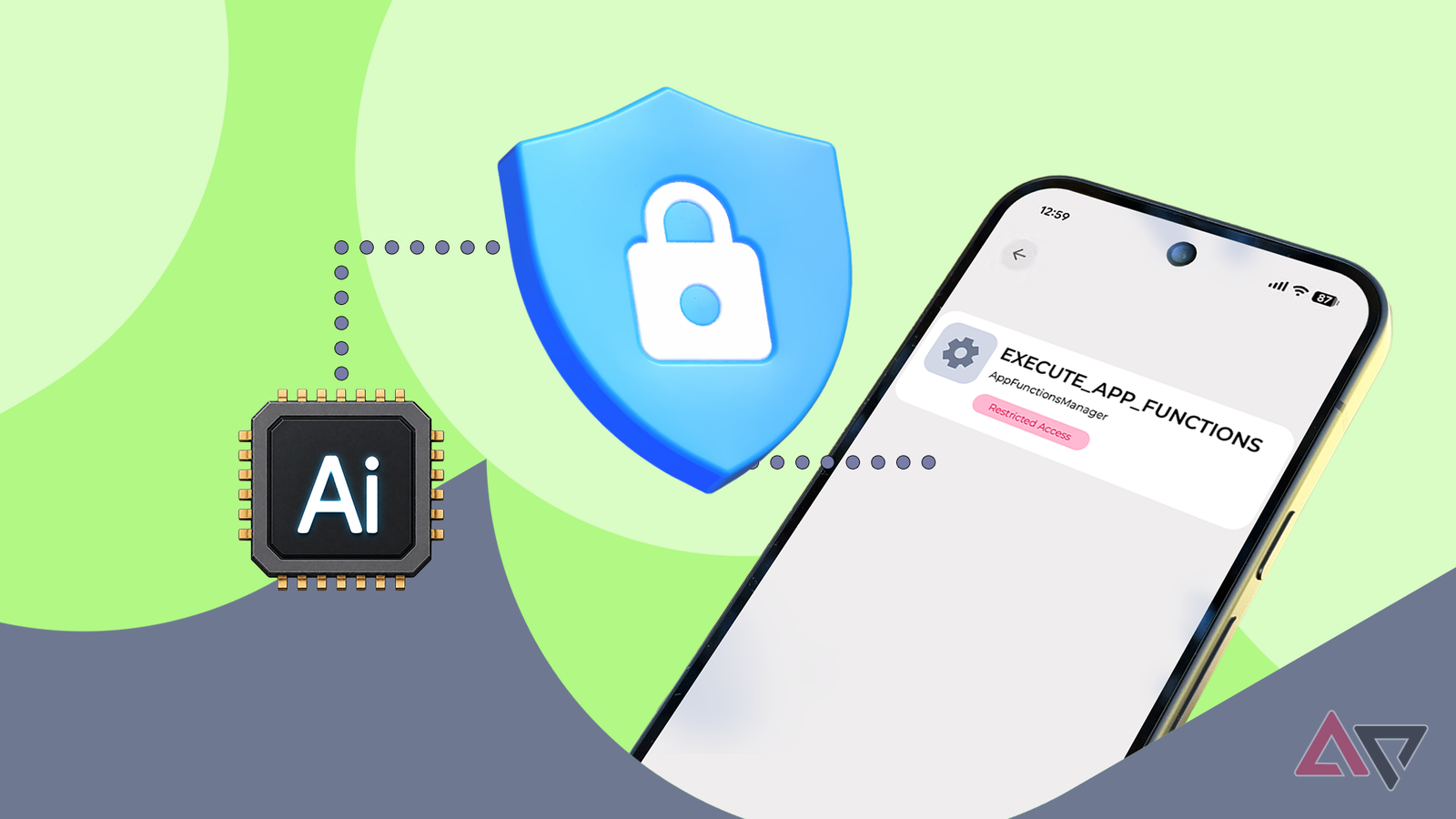
After I heard someone say that Google is bringing settings to control AI agents on Android, my inquisitive nature grabbed a magnifying glass and went looking.
I expected to find something in my phone's Settings app, a toggle of some sort, a permission list, or something I could actually tap. My phone didn't have anything like it, but I found something somewhere else.
What I found wasn't on my Google Pixel, but buried in developer documents, SDK release notes, and a permission registry that most Android users will never see.
Google built a real, functioning security cage for autonomous AI agents on Android. The twist is that there's nothing inside it.
The permission exists, and it's empty
EXECUTE_APP_FUNCTIONS is real, just not for you yet
Android houses a system permission called EXECUTE_APP_FUNCTIONS. It's only reserved for approved agents. Any app or assistant needs it before it can discover or run another app's functions.
That permission isn't sitting on a menu you'd stumble into while tinkering with your phone. It's not even in the Developer options. It lives in Android's "AppFunctionsManager" framework.
It's the part of the OS built to manage this handoff, and it's gated almost entirely to first-party Google software like Gemini.
AppFunctions is the motor behind all of it
Apps hand over a shortcut instead of getting tapped on
Here's how it works and what it's for. Instead of an AI agent faking a finger-tapping operation around your screen like you would, developers can build a shortcut to a specific action inside their app.
Google compares this to letting outside tools connect to a service instead of using it like a person.
When that shortcut exists, Android keeps track of it.
For instance, ask Gemini to book a ride, and instead of opening the app and hunting for buttons for you, it should trigger that action. It's like a hyperlink for a specific task.
This means no tapping, no risk of a missing button because the app moved something in an update. It means the agent will keep a record of shortcuts instead of the full operation.
It's a cleaner, more straightforward way to accomplish a task, and less likely to break. However, it will only work after a developer has built the shortcut, and right now, almost nobody has.
The reason that it's still a ghost town
Everything here is still labeled preview or alpha
Gemini's access to this system is limited to a small, in-house group of testers that Google handpicked. The program has no timeline for when it will see daylight.
That means the program could also change without any warning, so you'd better not get your hopes up just yet.
Getting real access now means applying to an early program and waiting to see if you're picked, with no guarantee of being selected. For most developers, that's not worth the effort, especially when the ground could shake out from under them at any point.
This isn't Google being slow. Gemini is already built into ten Google apps, but only three of them are actually useful.
The tools just keep showing up before the actual experience does, and to be fair, this is the right move.
Building the cage before the tenant arrives is the right call
Android usually does this the other way around
Android has a habit of shipping features first, and locking them down after something goes south.
Location, background data, and notifications all started wide open before eventually getting the strict permission prompts everyone dismisses today without realizing the consequences.
Doing the same with AI would be worse. An agent that can run free could read messages or move money before you notice anything is off. This isn't the same risk as an app that wants your location in the background.
Locking this down now, before developers have ample reasons to push back, means the rules exist before anyone's tempted to cut corners. This is crucial before real money or real users are involved.
There's clearly appetite for this. Third-party developers have built Android agents the old way, tapping through screens via ADB, which is the fragile approach AppFunctions tries to avoid.
Right now, it's a cage with nothing in it
But empty doesn't mean pointless
Android's AI agent permissions are carefully curated, detailed, and currently control almost nothing on a typical phone.
That doesn't mean Google dropped the ball on this one. It's closer to a security team finishing the blueprints before the building has a single tenant lined up.
That won't stay like this forever, though. Google's agent ambitions go beyond your phone, with a cloud agent that works around the clock on Gmail and Docs, and this permission is waiting for that same thing to happen on your phone.
For now, the cage is built, tested, and locked. Nobody's moved in yet.
This text was published by bing.com and written by Ali Salman Zia. It is reproduced here with attribution so you can read it in full; the rights remain with the publisher. Read it at the source ↗
The headline, key points and digest above were generated by Digest AI's editorial model from the linked sources. Automated summaries can contain errors: the sources are the record. Spotted a mistake? Tell us.
More in Agents & Tools
All →- Google launches AI Mode to show award flight prices alongside cash fares · 1 src
- Meta launches Muse, a personal AI agent for everyday tasks on iOS and Android · 24 src
- Autonomous fleet of tractors deployed across 255,000 acres of U.S. Sugarcane fields in Florida · 1 src
- GeoAI Agent for Arctic Navigation · 1 src
- CityPlanner: A New Sandbox Agent for Urban Planning · 1 src
Comments
via GitHub Discussions