AI cuts IT monitoring noise by 75% and boosts patch compliance to 95th percentile
IT operations teams are leveraging AI to manage scale without increasing headcount, achieving a 75% reduction in monitoring noise through anomaly detection and noise suppression. This shift allows engineers to focus on high-impact incidents rather than filtering duplicate or low-priority alerts. Additionally, AI-enabled Remote Monitoring and Management platforms have raised patch compliance from…
Key points
- AI-driven anomaly detection reduced monitoring noise by 75%, allowing engineers to focus on critical operational issues.
- Patch compliance improved from below 50% to the 95th percentile using AI-enabled Remote Monitoring and Management.
- Governance frameworks like NIST are essential to define human oversight and responsibility in automated IT environments.
Despite these gains, human expertise remains critical for complex issues involving multiple system dependencies. AI serves as a tool to surface information and automate routine tasks, but engineers must interpret results and make final decisions. The integration of AI requires robust governance, aligned with the NIST AI Risk Management Framework, to define clear escalation paths and responsibilities. As routine work is automated, the role of IT engineers is evolving toward higher-level analysis and strategic oversight, emphasizing the need for continuous training on AI capabilities and limitations.
Beyond Automation: What AI is Changing in IT Operations
Unite.AI · 14 September 2026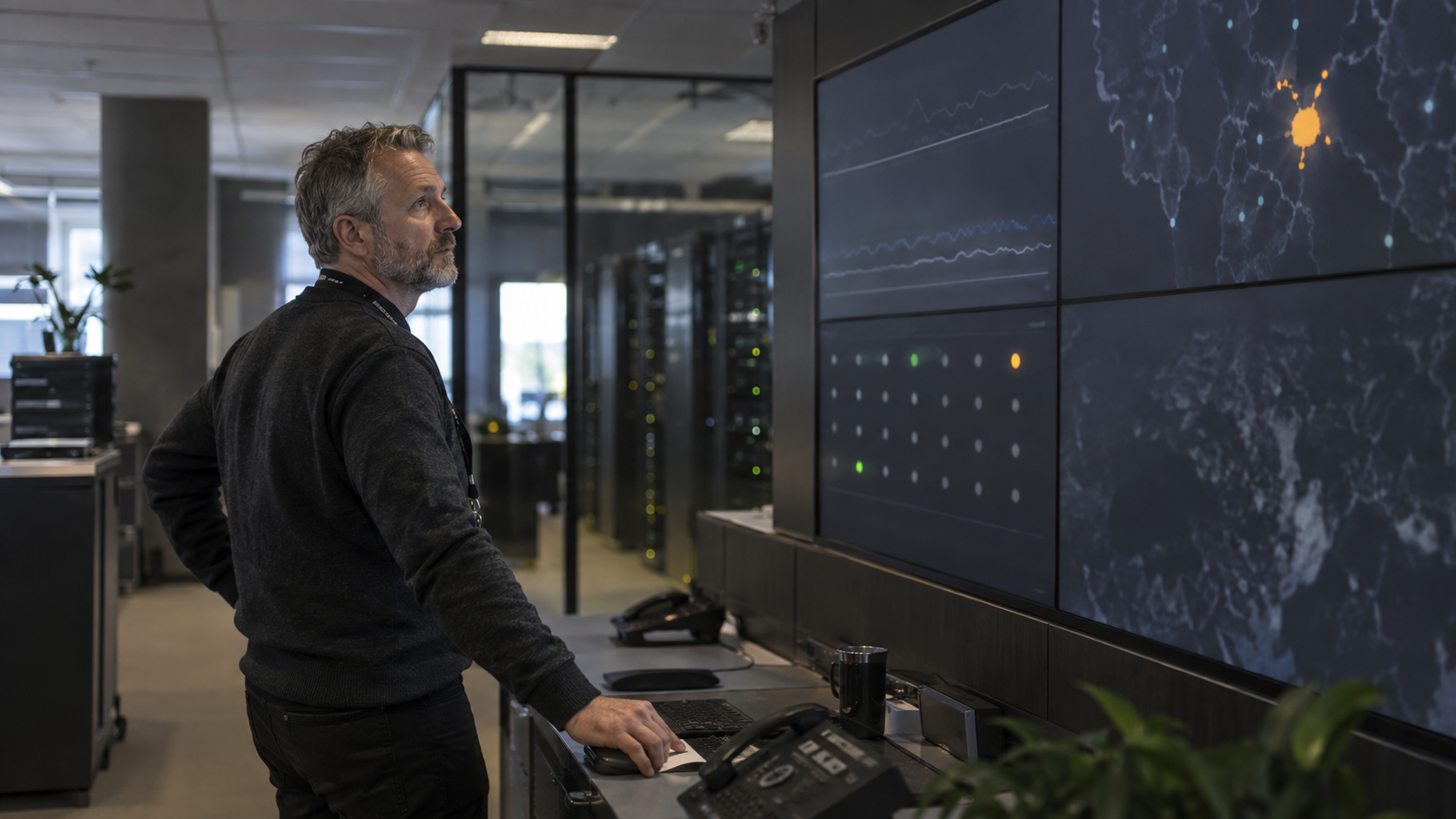
Reducing the Noise in Monitoring
One of the areas where we have seen a significant improvement is monitoring.
Large technology environments generate a considerable number of alerts, and not all of them require the same level of attention. Duplicate alerts, temporary anomalies and low-priority events can create unnecessary noise, making it harder for teams to identify issues that may have a genuine operational impact.
By incorporating AI-driven anomaly detection and noise suppression into our monitoring environment, we have achieved a 75% reduction in monitoring noise.
For the team, that means less time working through unnecessary alerts and more time investigating the issues that require attention. It also helps us identify unusual patterns earlier and gives engineers better information when they begin investigating an incident.
This is an area where AI is particularly useful because it can process large volumes of information quickly. But once something unusual has been identified. Understanding the cause and the potential impact still often requires someone who knows the environment.
Improving Routine IT Operations
We are also using automation to manage routine endpoint activities through an AI-enabled Remote Monitoring and Management platform.
This includes areas such as patch orchestration, health checks, scripted remediation, and remote troubleshooting.
Previously, patch compliance routinely fell below 50%, largely because of the manual workload involved and the scale of the environment. With the AI-supported RMM framework in place, compliance now reaches the 95th percentile.
That improvement has helped us strengthen endpoint stability and reduce exposure to known vulnerabilities, while also reducing the amount of repetitive work that engineers need to manage manually.
It is a good example of where automation makes sense. The process is predictable; it needs to happen consistently, and it must work across thousands of endpoints.
The technology can manage much of that activity in the background, while the team focuses on exceptions, escalation, and issues that need deeper investigation.
Where People Still Make the Difference
Not every IT issue follows a predictable pattern.
Our teams work across different infrastructure environments, networks, systems and client requirements. An issue that appears straightforward at first can sometimes involve several dependencies or require coordination between different teams.
AI can help identify anomalies, analyse information and surface possible causes, but the team still needs to understand what is happening in a wider environment.
That becomes particularly important when an issue affects multiple systems, or when the technically obvious solution may have consequences elsewhere.
This is where experience matters.
An engineer who understands the environment can look beyond an individual alert and consider what changed, what systems are connected, whether similar issues have happened before, and what impact a particular action could have on the wider operation.
For us, AI works best when it gives that engineer better information to work with rather than trying to remove them from the process altogether.
Supporting a High-Demand Environment
The scale of the environment means that we have to find ways of increasing capacity without simply increasing the amount of manual work.
Automation has helped with this.
Routine endpoint activities can happen consistently in the background. Monitoring tools can filter and consolidate signals before they reach engineers. Predictive capabilities can help identify potential problems earlier, while automated remediation can address known issues without waiting for someone to intervene manually.
This gives the team more capacity to focus on service continuity, escalations, and more complex technical issues.
It also changes the way we think about productivity in IT Operations. The benefit isn’t simply that a task is completed faster. It is that engineers have more time available for work where their experience can have a greater impact.
Governance Still Matters
As AI and automation become more capable, governance becomes increasingly important.
There needs to be clarity around which activities can be automated, when an engineer needs to intervene and who is responsible when an automated process does not behave as expected.
This is especially important in large technology environments. An automated action applied across thousands of endpoints can have a much wider impact than an action taken on an individual machine.
For that reason, we still need clear escalation paths, defined levels of access, and appropriate controls around automated activity.
This approach is consistent with the National Institute of Standards and Technology’s AI Risk Management Framework, which emphasizes ongoing monitoring of AI systems, clearly defined responsibilities and processes for human oversight and intervention.
For us, governance is not about slowing down the use of AI. It is about making sure we can use it confidently and responsibly within a live operational environment.
The Role of the IT Engineer Is Evolving
As more routine activities become automated, the role of the engineer is changing as well.
Technical knowledge remains essential, but there is increasing value in being able to interpret information, understand dependencies, and investigate issues that don’t have an obvious answer.
Engineers also need to understand the tools they are working with. If an AI-enabled system recommends an action, the person responsible needs enough knowledge of the environment to know whether that recommendation makes sense.
This makes training an important part of AI adoption.
Our teams need to understand what the technology can do, where its limitations are and when something needs to be escalated or investigated differently.
NIST similarly recommends clearly defining responsibilities for people operating and overseeing AI systems, alongside appropriate training and proficiency standards.
What We Have Learned So Far
Our experience so far has shown us that some of the most useful applications of AI in IT operations are relatively practical.
The 75% reduction in monitoring noise means engineers are spending less time working through unnecessary alerts. Moving patch compliance from below 50% to the 95th percentile has strengthened the consistency of endpoint management. Automation across more than 10,000 endpoints is helping us manage an environment that would otherwise require a significant amount of repetitive manual activity.
At the same time, the more complex parts of IT operations still rely heavily on people.
Technology can identify an unusual pattern or automate a known fix. An experienced engineer understands the wider environment, the dependencies involved, and the potential impact of the decision being made.
That balance is becoming increasingly important as AI becomes part of everyday IT operations.
For me, the value of AI is quite practical. It helps us manage scale, gives our teams better visibility and removes some of the repetitive work that can take time away from more important issues.
Technology is becoming more capable, but the experience of the people managing the environment remains just as important.
This text was published by Unite.AI and written by Marvin Ondong, Head of IT Operations, CCI Global, Kenya. It is reproduced here with attribution so you can read it in full; the rights remain with the publisher. Read it at the source ↗
The headline, key points and digest above were generated by Digest AI's editorial model from the linked sources. Automated summaries can contain errors: the sources are the record. Spotted a mistake? Tell us.
More in Enterprise & Industry
All →- Ninth Wave Enhances Open Finance Onboarding with AI and Amazon Bedrock · 1 src
- Google launches DevFest 2026 with focus on agentic AI development · 1 src
- Apple's AI Earnings Boost: What You Need to Know · 1 src
- AI Speeds Up Existing Cybersecurity Threats · 1 src
- AI Engineer Tops 2026 U.S. Job Market, Demand Surges 55% YoY · 1 src
Comments
via GitHub Discussions