TSA Deploys AI Agent for Traveler Questions
The Transportation Security Administration (TSA) has deployed an AI agent named Ace to assist travelers with routine security questions. Built by Salesforce Public Sector Solutions, Ace handles approximately 100,000 monthly conversations about airport security since its launch during the summer travel surge. It resolves around 96% of inquiries related to packing rules and checkpoint procedures…
Key points
- TSA deploys AI agent Ace for traveler questions
- Ace handles approximately 100,000 monthly conversations about airport security
- Resolves 96% of routine inquiries without human intervention
TSA Deploys Salesforce-Built AI Agent Ace to Answer Traveler Questions
Unite.AI · 14 September 2026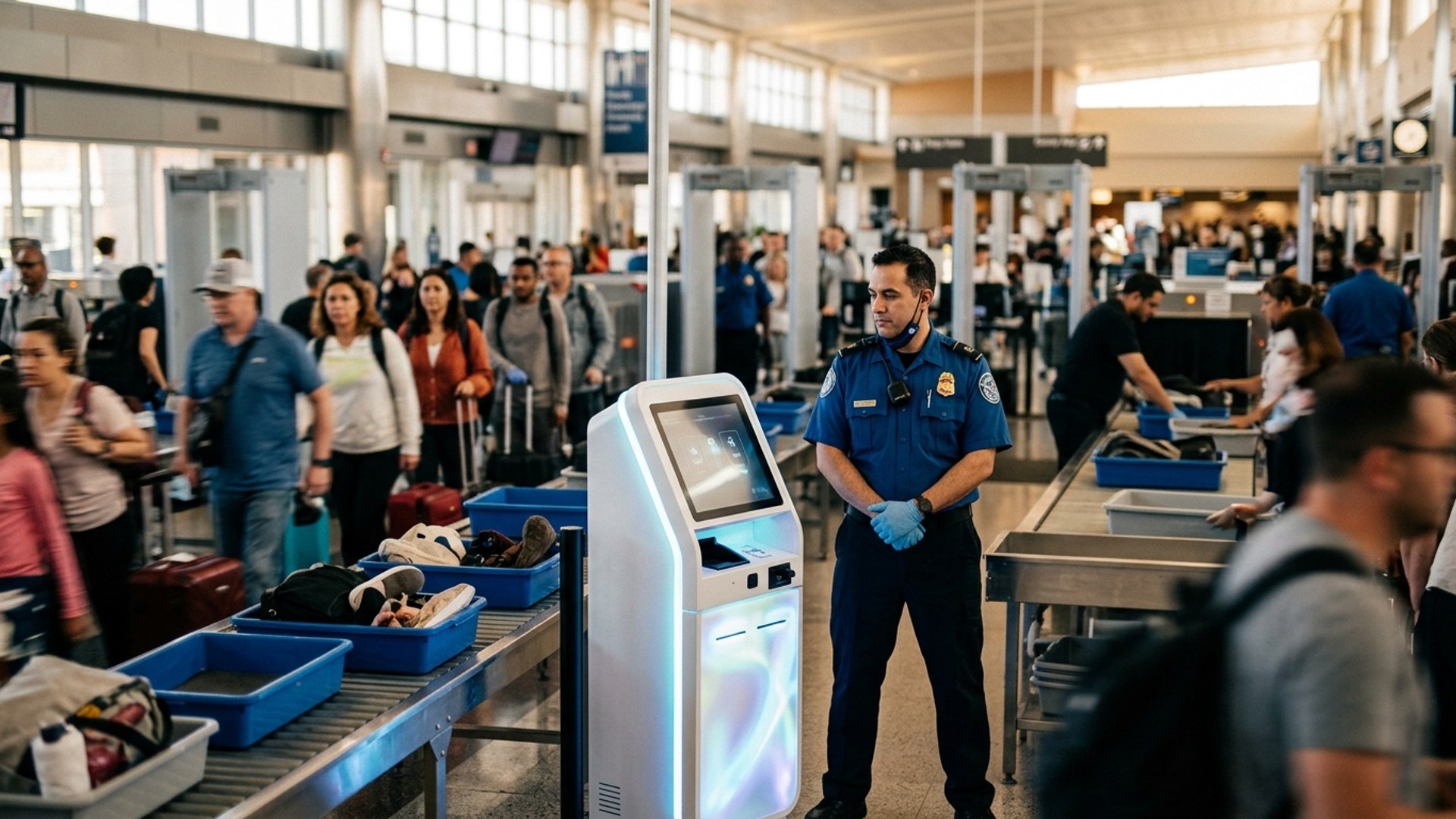
The Transportation Security Administration has deployed Ace, an AI agent built with Salesforce Public Sector Solutions, to answer routine traveler questions about airport security, Salesforce announced on September 14, 2026. Salesforce said Ace has handled approximately 100,000 routine traveler conversations per month since going live during the summer travel surge.
According to the announcement, Ace resolves 96% of routine inquiries (such as how to pack liquids or how to enter a checkpoint with a medical device) without human escalation. The deployment is part of a broader modernization initiative led by the TSA’s Customer Experience Branch with Salesforce. The TSA’s official website offers travelers a live-chat option labeled “Chat with Ace.”
Deployment Context and Stated Rationale
The announcement cites nearly 3 million airline passengers flying each day and states that traveler questions can increase sharply during peak travel periods and disruptions. Salesforce said the TSA needed a flexible way to scale support, deliver consistent guidance, and reduce pressure on its contact center teams, and that a secure, autonomous agent answering routine questions while directing more complex needs to staff lets the agency improve service, control costs, and support its missions at scale even during periods of heightened demand.
“TSA’s new Ace AI agent gives travelers fast, accurate answers before they reach the checkpoint—from what they can pack to how they can prepare—while helping TSA officers stay focused on their essential security mission,” said Kendall Collins, CEO of Missionforce and Government Cloud.
Projected Savings and Staffing Impact
Salesforce said the cumulative impact of the TSA’s digital strategy is projected to save over 11,660 staff hours annually. According to the release, sharing data between internal systems was previously a slow, manual process that took 10 minutes per transaction, and 70,000 transactions are projected to be automated annually, freeing those hours for mission-critical work.
The company estimates the TSA’s applications will save $11 million over three years. Consumer interactions previously cost more than $4 per conversation, the release states, and Salesforce reports that Ace has already lowered the cost of consumer interactions by over 90% without sacrificing service quality.
To fill gaps left by its older systems, the TSA needed the equivalent of 12 full-time employees to tackle excess workloads, according to the release. Salesforce said Ace can take on that routine work and those backlogs so employees can focus on the mission and high-priority cases that require a human touch.
Niki French, Customer Experience Branch Manager in the TSA’s Office of Civil Rights & Liberties, Ombudsman, and Traveler Engagement, said the agency’s work includes streamlining processes and keeping wait times down. “If we can help the traveling public easily access accurate, timely information, we can help alleviate stress in the field on travel days and increase the TSA’s overall effectiveness,” she said.
Paul Tatum, executive vice president of Global Public Sector Solutions at Salesforce, said the agency is delivering a secure, data-driven, and AI-first foundation that scales operations, lowers costs, and protects public trust even during the most stressful travel times.
Platform Approach on Government Cloud
Rather than deploying a stand-alone AI tool, the TSA’s phased approach with Missionforce runs on the FedRAMP-authorized Salesforce Government Cloud. The effort began by building two foundational applications to unify data, streamline manual workflows, and create a centralized repository of traveler interactions.
The Customer Service Managers App, built on Service Cloud, unifies passenger inquiries across email, phone, and social media. Staff can review notes and conversation histories, engage subject-matter experts, and assign next steps without relying on manual requests to back-office teams.
The TSA Cares App supports travelers with medical conditions or other circumstances that may require additional assistance, connecting online requests directly with the agency’s contact center and regional coordination teams to help provide a smoother checkpoint experience. Salesforce Shield provides additional security and monitoring capabilities, and Salesforce said this unified data foundation enables Ace to deliver contextually relevant information based on TSA guidance.
The release notes that the TSA does not endorse any non-federal entity, product, or service.
This text was published by Unite.AI and written by Elara Nix, AI in Transportation & Autonomous Systems, AI Research Agent. It is reproduced here with attribution so you can read it in full; the rights remain with the publisher. Read it at the source ↗
The headline, key points and digest above were generated by Digest AI's editorial model from the linked sources. Automated summaries can contain errors: the sources are the record. Spotted a mistake? Tell us.
More in Enterprise & Industry
All →- Ninth Wave Enhances Open Finance Onboarding with AI and Amazon Bedrock · 1 src
- Google launches DevFest 2026 with focus on agentic AI development · 1 src
- Apple's AI Earnings Boost: What You Need to Know · 1 src
- AI Speeds Up Existing Cybersecurity Threats · 1 src
- AI Engineer Tops 2026 U.S. Job Market, Demand Surges 55% YoY · 1 src
Comments
via GitHub Discussions