AI Lawsuits Pile Up: Meta Settles $18B, DOJ Upholds Fair Use
Since 2020, US lawsuits against major AI companies have surged over alleged copyright infringement and other issues. In August, a California judge approved a $18 billion settlement for 48 states, DC, and three territories in Meta's favor, despite the company denying wrongdoing. The most significant case involved children’s addiction to social media platforms. Generative AI models are now built…
Key points
- Meta settles $18 billion with US states over children's addiction lawsuit
- DOJ intervenes to uphold fair use of copyrighted material by AI companies
- Generative AI is now integrated into search engines, affecting traditional publishers
Is all fair and legal in the AI world?
bing.com · 14 September 2026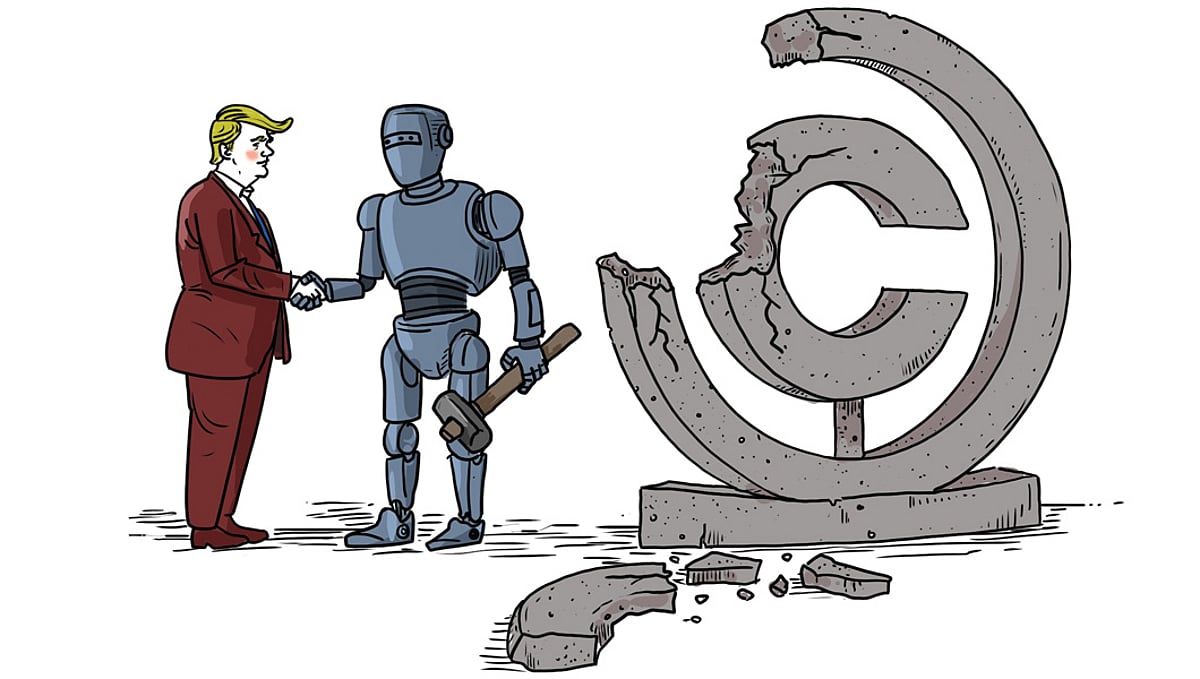
Lawsuits against the biggest artificial intelligence (AI) companies have been piling up in the US since 2020, covering a range of alleged misdemeanours from copyright infringement to deaths of young children linked to chatbot interactions. As AI behemoths rush headlong to dominate the technology expected to transform the world dramatically and, perhaps, irrevocably, these startups, which now boast valuations of close to trillions of dollars, have been charged in about 200 cases—more than half of the suits are related to copyright infringement. Authors, the cream of scientific publishers, huge media organisations—and some smaller players in India—along with visual artists, musicians and music publishers have all been affected. They have taken a stellar lineup of AI companies including Meta, Google, Anthropic, Microsoft and OpenAI among dozens of others to court for taking their copyright material and creations without permission to train generative AI models. At stake is not just monetary losses, but also their future..The most significant case against the depredations of an AI-based company was filed not by individuals or private organisations but by US states and territories that accused Meta of designing its social media platforms so as to make children addicted to them. It was a case that was adjudged in their favour in late August when a California judge approved a settlement of US $18 billion to 48 states, plus the District of Columbia and three US territories. It is undoubtedly a huge figure, but remember, the payment amounts to just one month’s revenue for the corporate giant which has continued to deny any wrongdoing while agreeing to the settlement. It maintains that “social media addiction" is not a recognised psychiatric condition!.The suit against Meta also included claims by 29 states that the company violated the federal Children's Online Privacy Protection Act by knowingly collecting personal data from children without parental consent and using this data to train generative AI.Meta's primary business comes from its social media platforms, Facebook, Instagram, WhatsApp and Messenger, which use AI extensively for user engagement through content recommendations and targeted advertisements. The company is also a leading AI developer through its Meta Superintelligence Labs that has developed foundational models such as Muse and Llama, which are integrated into its social media platforms and compete against rival products in the AI marketplace..But what of lawsuits related to copyright infringement, which constitute the single largest challenge to generative AI? Here, the Donald Trump administration has stepped in decisively to ensure that AI companies are not penalised or restricted in any way from using millions of books, news articles and the like to train their large language models (LLMs) or foundational generative AI machines. In a Statement of Interest filed on September 1 in a New York district court, the Department of Justice (DOJ) held that using copyrighted written works to train LLMs is fair use and that a contrary view would suppress innovation and harm the competitiveness of the American AI industry and compromise national security. .The DOJ intervention has been made in a high-profile case that pits traditional large publishers against the predatory use of their data by AI companies to develop their models. This case, filed 2023 by the New York Times (NYT) and a clutch of other media organisations, alleges that OpenAI and Microsoft had used millions of its copyrighted news articles without authorisation to train AI systems including ChatGPT. The newspaper contends that by reproducing portions of its reporting, the AI systems threatened the economic foundation of its professional journalism by diverting readers and subscription revenue. The case is crucial for traditional media that has been bleeding heavily as readers migrate to online platforms and drain their ad revenues. .Trump’s intervention comes in a high-profile case where traditional media, hit by falling readership and advertisement revenues, takes on AI companies over their predatory use of data.How does this happen? Generative AI is now built into search engines, and as a result, they do not show the lists of websites offering the required information. Instead, they come up with direct answers or summaries, completely transforming internet search by re-channelling user traffic. If people looking for information read only AI-generated summaries, the new model will destroy the advertisement revenue of content publishers who depend on users actually visiting their website.NYT versus OpenAI is one of the most watched legal battles on the question of fair use of copyright material by AI, since pleas by OpenAI founder Sam Altman to dismiss the case have not succeeded. Judges have instead allowed core copyright claims by NYT to proceed, especially since OpenAI’s outputs have mirrored protected text or generated unauthorised summaries..Trump’s intervention may have been prompted by the filing made less than two months ago by NYT and its fellow litigants, which called for legal sanctions against OpenAI for allegedly violating court rules and acting in bad faith during the litigation’s fact discovery phase. OpenAI, they claim, was withholding evidence that was vital in the lawsuit. There are other reasons why Trump may have intervened in the case. The US President has no love lost for “old mainstream media”, as he terms it, which has been highly critical of the Trump presidency. This was evident in the DOJ statement which noted that “licensing entry barriers function primarily as large subsidies for old mainstream media companies”..Supporting OpenAI’s argument that training its models on troves of writings found on the internet is protected by the “fair use” doctrine, DOJ said, “the creative possibilities and public benefits” of training LLMs on such content “far outweigh any competitive harm.” In fact, siding with the argument of the publishers would stifle “creative and scientific progress while hindering American prosperity and economic mobility.” The statement also emphasised, repeatedly, the link between the growth of AI models and national security interests. “The entire reason that AI models are rapidly reshaping the economy and national security is that they help people, including those working in creative fields, make things and get things done.” This is the latest attempt by Trump to shield the AI industry from any legal and policy impediments to its unfettered rise. The US President has in the past issued several executive orders such as the National Policy Framework for AI, which thwarts state-level regulation of AI. All of this is to ensure that the US “retains global leadership in AI”. Will the courts be influenced by such arguments?
This text was published by bing.com and written by Latha Jishnu. It is reproduced here with attribution so you can read it in full; the rights remain with the publisher. Read it at the source ↗
The headline, key points and digest above were generated by Digest AI's editorial model from the linked sources. Automated summaries can contain errors: the sources are the record. Spotted a mistake? Tell us.
More in Generative AI & Models
All →- OpenAI’s GPT‑6 Astra Claims AGI, Quickly Replicates Existing Games · 2 src
- OpenAI’s GPT‑6 Astra Faces Post‑Launch Quality Drop Claims · 1 src
- NVIDIA Releases Nemotron-3-Nano-4B, an Edge-Ready Hybrid Reasoning Model · 1 src
- OpenAI Restricts GPT-2 Release Over Malicious Use Concerns · 1 src
- Claude Fable 5.1 solves 370-year-old Cyphral Distich cipher · 1 src
Comments
via GitHub Discussions