Google AI highlights real-world applications in science, health, and disaster response
Google AI has released a new collection of six articles detailing how artificial intelligence is transitioning from theoretical research to measurable real-world impact. The initiative, launched in September 2026, focuses on leveraging advanced AI tools to address complex global challenges, including disease detection, natural disaster prediction, and educational expansion.
Key points
- Google AI released a six-article collection focusing on AI's measurable impact in science and society.
- Key application areas include disease treatment, natural disaster prediction, and expanding educational access.
- The initiative highlights partnerships with local communities and researchers to deploy AI for global challenges.
The content emphasizes partnerships between Google and local communities and researchers who are actively deploying these technologies. By showcasing specific case studies, the collection aims to demonstrate how AI can make diseases more treatable and preventable while simultaneously unlocking new economic opportunities for diverse populations.
This release underscores a strategic shift toward applied AI, moving beyond model benchmarks to highlight tangible societal benefits. The focus on local leadership and community integration suggests a broader effort to ensure that the advantages of AI development are widely shared rather than concentrated in specific sectors or regions.
AI for Societal Impact
Google AI Blog · 15 September 2026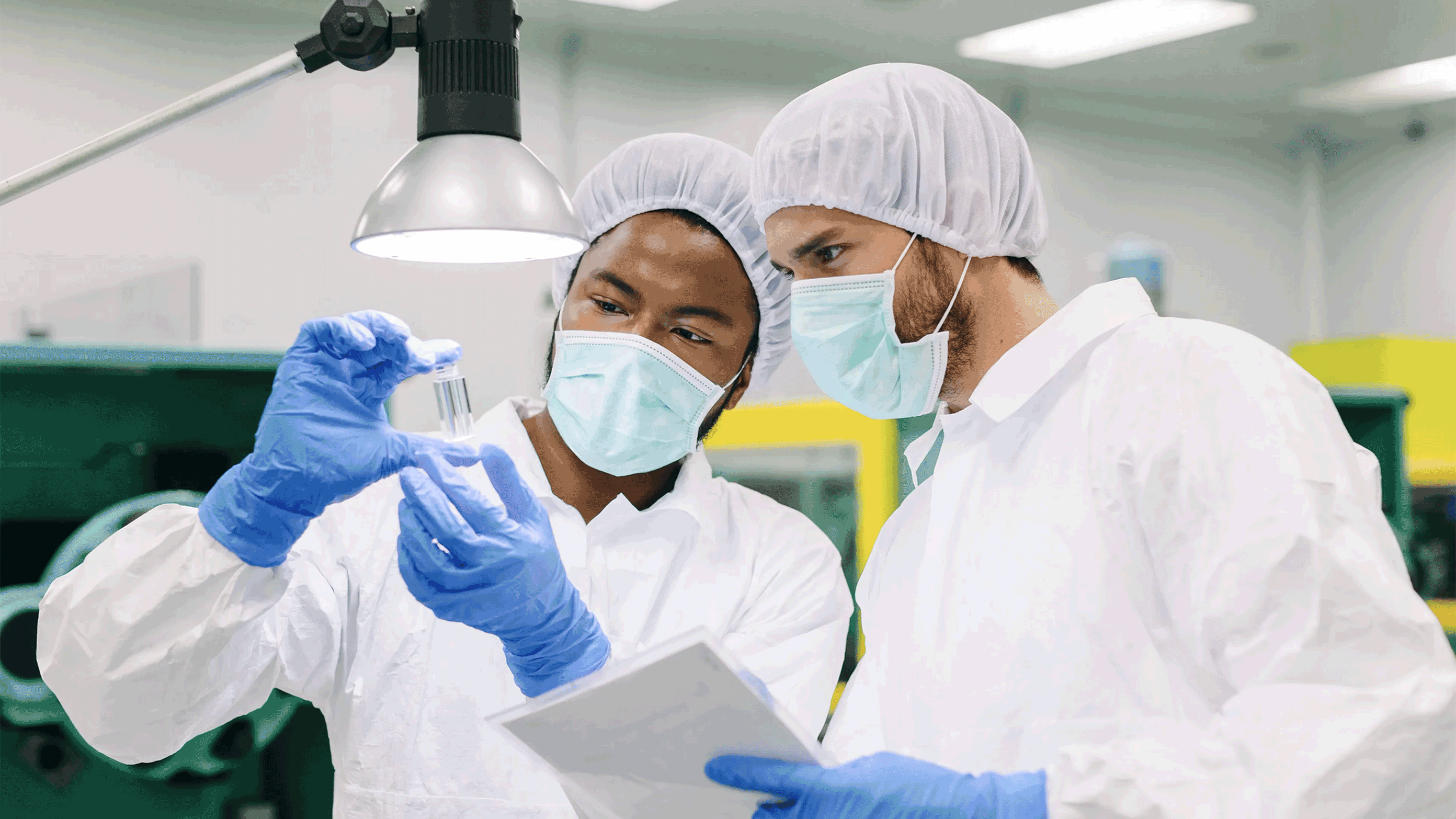
Building AI to accelerate science and improve lives
We're focused on key areas where advanced technology can help make extraordinary progress for humanity possible.
Sep 15, 2026 · 6 articles 15 Sep, 2026
articles 6
Sep 15, 2026 6 articles
15 Sep, 2026 articles 6
For over a decade, we’ve seen artificial intelligence steadily advance scientific discovery, shifting from theoretical research to real-world impact. Today, the potential of these tools is no longer hypothetical — it is measurable and fundamentally reshaping how we solve humanity's most complex challenges.
Across the globe, we’re partnering with communities and researchers who are putting AI to work in key areas that matter most: making disease detectable, treatable, and preventable, predicting natural disasters, expanding learning, and unlocking economic opportunities for more people.
Explore this collection to see how experts and local leaders are using AI breakthroughs to ensure everyone can share the opportunity of AI.
This text was published by Google AI Blog . It is reproduced here with attribution so you can read it in full; the rights remain with the publisher. Read it at the source ↗
The headline, key points and digest above were generated by Digest AI's editorial model from the linked sources. Automated summaries can contain errors: the sources are the record. Spotted a mistake? Tell us.
More in Society & Work
All →- OpenAI uses hundreds of contractors to review ChatGPT chats · 3 src
- Study Finds Majority of Recent F‑Droid Updates Show AI‑Generated Code · 1 src
- Meta fixes AI bug that surfaced private data on children after viral complaint · 5 src
- CrowdStrike CEO: AI security risks persist regardless of model development pace · 1 src
- Astronaut Christina Koch Talks Space, AI, and Discovery with Google’s James Manyika · 1 src
Comments
via GitHub Discussions