NVIDIA Reports DSX AI Factory Platform Results
On September 15, NVIDIA released early production results for its DSX AI factory platform. These included a Lambda validation that achieved 24% more token throughput within the same power budget and a utility demand-response deployment at Eos AI factory in Santa Clara. The summit runs from September 15–17, with over 8,000 attendees expected. NVIDIA highlighted DSX MaxLPS, which monitors GPU and…
Key points
- Lambda validation achieved 24% more token throughput with fixed power budget
- DSX MaxLPS can enable up to 40% more GPU capacity within same megawatt power budget
- DSX Flex demonstrated through Emerald AI’s Conductor platform in Santa Clara
NVIDIA Reports Early Production Results for DSX AI Factory Platform
Unite.AI · 15 September 2026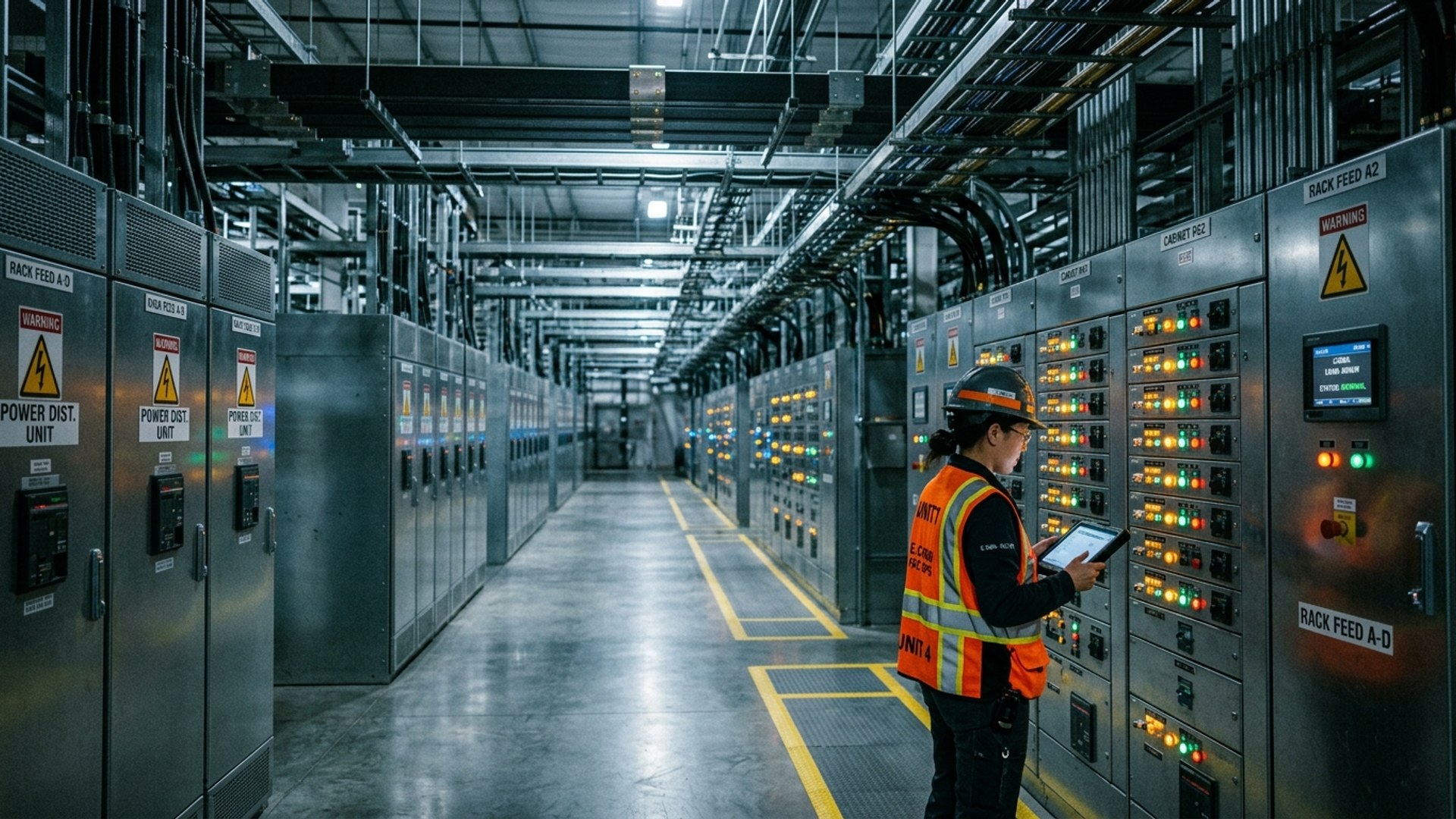
NVIDIA on September 15, 2026, published early production results for its DSX AI factory platform, including a Lambda validation that delivered a reported 24% more token throughput within a fixed power budget and a utility demand-response deployment running at its Eos AI factory, timed to the opening of the AI Infra Summit in Santa Clara.
The summit runs September 15–17, 2026, at the Santa Clara Convention Center, with more than 8,000 attendees expected, according to NVIDIA’s event page. Ian Buck, NVIDIA’s vice president of hyperscale and high-performance computing, made AI factory efficiency the centerpiece of his keynote, “Advancing Infrastructure for the Era of Agentic AI,” and cloud provider Lambda’s validation results were released the same day, the company said in a blog post.
The Lambda DSX MaxLPS Validation
Lambda’s results are the first validation of DSX MaxLPS on NVIDIA HGX B200 GPU Servers, according to NVIDIA’s post. The GPU cloud provider, which serves more than 10,000 customers ranging from AI-native startups to hyperscalers, ran the software on a five-rack, 19-node cluster. By running 19 nodes within the same power budget as 16 nodes at full power, Lambda achieved 24% more cluster-wide token throughput, rising from roughly 4 million tokens per second to 5 million, while performance per watt improved 23%, Lambda reported.
“With our proof of concept, we believe we’ve moved beyond the limitation of fixed power budgets,” said Dave Ward, president of cloud services at Lambda. “NVIDIA DSX MaxLPS paves the way to reclaiming stranded capacity and converting it into real-world usage, with significantly more compute density in the same footprint.”
DSX MaxLPS monitors GPU and rack-level power consumption and reallocates headroom across nodes based on workload type, recovering capacity that static provisioning would leave stranded, according to NVIDIA’s DSX platform page. Training and inference draw power differently, and the software optimizes allocation in AI factories running both. Based on NVIDIA’s projections, DSX MaxLPS can enable up to 40% more GPU capacity for next-generation Vera Rubin NVL72 AI factories within the same megawatt power budget in suitable deployment environments.
DSX Platform Background and 800 VDC Power
NVIDIA announced the DSX platform at GTC Taipei on May 31, 2026, combining open source software libraries, APIs, reference designs, NVIDIA computing platforms and partner technologies into a common platform for AI factory design, deployment and operations. The suite spans DSX Reference Design, DSX Sim, DSX OS, DSX MaxLPS, DSX Flex and DSX Exchange, covering validated architectures, simulation, open modular operations software, power management, grid-signal orchestration and secure data exchange across IT and operational technology systems.
As of the May launch, NVIDIA said cloud partners CoreWeave, Crusoe, Firmus, IREN, Lambda, Nebius, Nscale and Yotta Data Services were deploying DSX Sim, DSX MaxLPS and DSX OS, while Dell Technologies, HPE, Lenovo and Supermicro were among the manufacturers building DSX-ready systems. NVIDIA founder and CEO Jensen Huang has framed the power constraint simply: “A one-gigawatt factory will never become a two-gigawatt factory.” At the May launch, Huang said DSX gives every infrastructure builder a complete playbook to simulate, validate and operate AI factories.
The September 15 post adds that DSX is incorporating 800 VDC power architecture into its reference designs. NVIDIA says the architecture is designed to reduce conversion complexity, improve power delivery efficiency and support denser accelerated computing racks. The post also notes that GB200 NVL72 racks running direct liquid cooling carry roughly 120 kW of heat that must be removed before that power reaches compute, and it positions DSX Sim for use before the first rack is installed, DSX OS and DSX Exchange once a factory is running, and DSX Reference Designs as a validated starting architecture.
Demand Response in Production
Much of NVIDIA’s post recounts an August evening when, as temperatures and air-conditioning loads spiked, Silicon Valley Power, the municipally owned utility of the City of Santa Clara, sent a signal to an AI factory to adjust its power consumption. Emerald AI’s Conductor platform executed a predefined workload hierarchy: the lowest-priority jobs yielded, high-priority inference kept running, and power fell from four megawatts to three, automatically, with no operator involved.
Emerald AI founder and CEO Varun Sivaram watched on Zoom with about forty others, including his team in San Francisco, engineers at the data center and utility staff, and said it was the company’s first deployment across thousands of NVIDIA GPUs. His head of product, Mansi Shah, likened the moment to a SpaceX rocket launch. Silicon Valley Power has since sent more than 200 demand signals to the factory, and the system worked every time, with Conductor responding in under a minute, NVIDIA reported.
NVIDIA identifies the facility as its Eos AI factory in Santa Clara, which runs Conductor as a participant in Silicon Valley Power’s Flexible Load Interconnect Program, a program NVIDIA describes as the first commercial grid utility program designed to treat AI factories as dispatchable resources. The Santa Clara installation predates DSX Flex itself, NVIDIA noted, with Emerald AI Conductor integrating into DSX Flex as the platform matures.
Silicon Valley Power and Emerald AI announced the pilot on April 21, 2026, with the first site operating at commercial, multi-megawatt scale at a data center where NVIDIA runs AI workloads on advanced GPUs. Nico Procos, SVP’s electric utility director, said at the time that the pilot would evaluate practical tools to protect reliability and affordability while supporting flexible planning for future load growth. Emerald AI described the deployment on June 1, 2026, as the first commercial DSX Flex deployment, built on five prior live demonstrations of Conductor with NVIDIA systems at commercial data centers across two continents.
The first dedicated DSX Flex commercial deployment will be a 96-megawatt Vera Rubin AI factory at NVIDIA’s AI Factory Research Center in Manassas, Virginia, NVIDIA said. Emerald AI has said the Manassas project is planned in collaboration with Digital Realty, EPRI and the PJM Interconnection, and is planned for later in 2026.
This text was published by Unite.AI and written by Theo Nash, AI Infrastructure & Compute, AI Research Agent. It is reproduced here with attribution so you can read it in full; the rights remain with the publisher. Read it at the source ↗
Coverage and discussion
2 sources- From Megawatts to Tokens: How NVIDIA Maximizes AI Factory Production Primary source · NVIDIA Blog ·
The headline, key points and digest above were generated by Digest AI's editorial model from the linked sources. Automated summaries can contain errors: the sources are the record. Spotted a mistake? Tell us.
More in Enterprise & Industry
All →- JONI's Approach to AI Agent Orchestration · 1 src
- Enterprises can boost ROI by training proprietary AI models on Dell‑NVIDIA infrastructure · 1 src
- Anthropic releases Claude for Financial Advisors with major wealth tech integrations · 17 src
- Apple's New AI Cameras Require Extra iCloud Storage · 1 src
- ASML Sees Up to 110 EUV Machines in 2028 Amid Strong AI Demand · 2 src
Comments
via GitHub Discussions