Samsung and CXMT Supply High-End LPDDR5X Memory for New Chinese AI Smartphone
Chinese memory manufacturer ChangXin Memory Technologies (CXMT) has successfully entered the flagship smartphone supply chain, providing LPDDR5X mobile DRAM alongside Samsung Electronics for the new Nubia NaviX Ultra. The AI-focused device is being jointly developed by Chinese telecom giant ZTE and ByteDance. This partnership marks a significant transition, as high-end Chinese smartphones have…
Key points
- CXMT and Samsung are co-supplying LPDDR5X DRAM for the ZTE and ByteDance-developed Nubia NaviX Ultra.
- CXMT has closed the speed gap with Korean rivals, achieving LPDDR5X data transfer speeds of 10.667Gbps.
- CXMT also commenced mass production of LPDDR6, commercially debuting the memory in Xiaomi's flagship foldable phone.
CXMT has rapidly closed the performance gap with its Korean rivals. While its LPDDR5X speeds lagged last year, the company has boosted data transfer rates to 10.667Gbps, matching top-tier industry standards. Additionally, CXMT recently announced the mass production of its next-generation LPDDR6 memory, which is already being deployed in Xiaomi's flagship foldable devices, signaling a broader shift toward domestic hardware sourcing in China's tech ecosystem.
[News] Samsung, CXMT Reportedly Supply LPDDR5X for Chinese AI Phone as Domestic Memory Enters Flagship Supply Chain
bing.com · 10 September 2026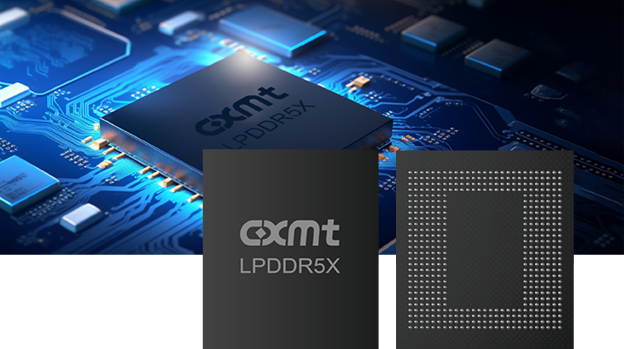
[News] Samsung, CXMT Reportedly Supply LPDDR5X for Chinese AI Phone as Domestic Memory Enters Flagship Supply Chain
China’s CXMT is making further inroads into the high-end mobile memory market. According to Business Korea, Samsung Electronics is supplying LPDDR5X mobile DRAM and flash memory for the Nubia NaviX Ultra, jointly developed by Chinese telecommunications equipment maker ZTE and IT company ByteDance. Notably, ChangXin Memory Technologies (CXMT) is also supplying LPDDR5X for the model, establishing a multi-vendor memory supply system.
The development marks a notable shift in China’s flagship smartphone supply chain. As the report highlights, high-end Chinese smartphones have historically relied heavily on Korean memory, but CXMT has rapidly improved its technology and is now pushing into the top-tier product supply chain.
CXMT LPDDR5X Closes Speed Gap With Korean Rivals
As the report notes, CXMT began mass production of LPDDR5X in May last year, when its maximum data transfer speeds stood at around 8.533Gbps and 9.6Gbps, still behind products from Samsung Electronics and SK hynix. In just over a year, however, CXMT has raised the maximum speed to 10.667Gbps. Based on data transfer speed alone, its LPDDR5X has essentially reached the same level as the top-tier 10.7Gbps-class products from Samsung and SK hynix.
Still, the report cautions that mobile DRAM competitiveness depends on more than data transfer speed, with power efficiency, heat generation, and yield also playing important roles. These gaps have previously led Chinese smartphone makers to use CXMT memory mainly in low- to mid-range models while relying on Korean memory for their top-tier flagships.
That divide, however, is beginning to narrow as CXMT increasingly moves into flagship devices. CXMT announced on September 7 that its LPDDR6 has entered mass production and is being used in Xiaomi’s 18 Fold flagship foldable smartphone, marking what the company says is the world’s first commercial deployment of LPDDR6 in a flagship phone. The 16GB chip supports data rates of up to 12.8Gbps, or 10.667Gbps when operating with the SoC, while delivering 60% higher bandwidth and 20% lower power consumption than its LPDDR5X predecessor, according to CXMT.
This text was published by bing.com and written by TrendForce. It is reproduced here with attribution so you can read it in full; the rights remain with the publisher. Read it at the source ↗
The headline, key points and digest above were generated by Digest AI's editorial model from the linked sources. Automated summaries can contain errors: the sources are the record. Spotted a mistake? Tell us.
More in Hardware & Compute
All →- Google signs record 396 MW geothermal deal with Fervo Energy · 1 src
- Nex-N2.5-mini-MLX-4bit achieves 133.6 tok/s on Apple M5 Max · 1 src
- Scavenger Finds 12 RTX 3070 GPUs from Crypto Mining Era · 1 src
- ggml-cuda adds missing AMD GCN MMQ config for RDNA2 GPU support · 2 src
- Marvell positions itself as backbone of next‑gen AI data‑center infrastructure · 1 src
Comments
via GitHub Discussions