Google Photos Shifts Focus Away from Manual Editing
Google Photos, once a comprehensive gallery app with robust manual editing features, has shifted its focus towards AI-generated tools and automation. The latest updates have made the manual editing tools feel buried within the interface. This shift pushed the author to return to Snapseed for more control over their photos. Google's emphasis on one-tap AI fixes and automated image generation is…
Key points
- Google Photos' manual editing tools are now buried within the interface
- The author switched back to Google's Snapseed app for more control
- Snapseed has added features like an improved undo/redo button and batch editing
Google Photos buried its manual editing tools under AI, so I switched back to Snapseed
androidpolice.com · 15 September 2026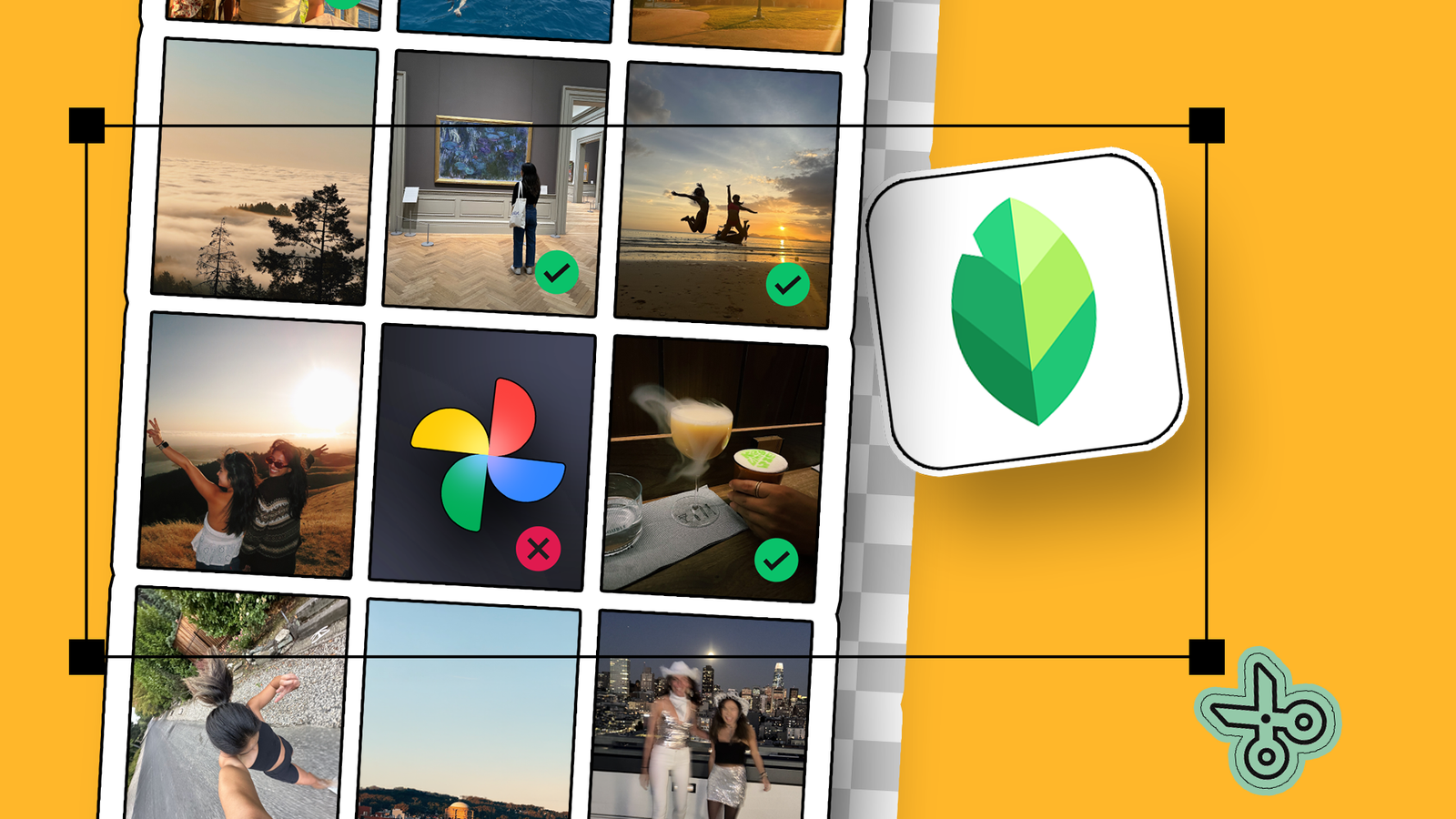
Google Photos has always been my all-in-one gallery app. It backs up my photos and videos, sorts them, and allows me to edit, all within the same interface.
The Android app's editing tools have become increasingly feature-rich. You'll find many new tools, from basic cropping to the Magic Eraser.
Still, many of Google Photos' latest updates center around AI. Google has placed a lot of emphasis on features like Ask Photos, Nano Banana, and AI-generated creations.
Rather than keeping me in the ecosystem, Google Photos has gradually been pushing me away from its editing tools.
Google Play lists several free photo-editing apps. Ironically, I downloaded another Google product, Snapseed.
Back when Google Photos didn't have comprehensive editing tools, I used Snapseed regularly. Now I feel the need to return to it for more manual control.
Google Photos prioritizes generating over editing
I want control over my photos again
Google Photos' constant push for one-tap AI fixes and automated image generation is what pushed me away.
As soon as I enter the app, I'm greeted by options to create AI images. When I start editing a photo, I see a carousel of AI-powered tools and enhancements.
Google Photos' manual tools feel buried in comparison. The best way to access them is using the search function within editing mode. For example, I'd search for "point" to select either the black point or white point setting.
Snapseed has been ramping up its manual editing tools. Instead of trying to fix my photos automatically, Snapseed encourages me to develop the photo into something uniquely mine.
Snapseed's interface is straightforward. You choose the photo you want to modify, then select a photo manipulation tool or filter preset. The app offers plenty of menu customization.
I picked the right time to come back to Snapseed. The recent 4.0 and 4.1 software updates added welcome additions to the app's workflow.
The most important is the revamped undo/redo button. It's located within the tools, so you can easily undo or redo actions without exiting the function. It reduces the number of taps needed for extensive editing.
The bigger time-saver is batch editing. I can save one photo's edit chain and apply it to multiple photos simultaneously. It saves the effort of individually editing several photos from the same photo shoot.
You can share an edit chain called "Look" by tapping the QR code icon in the upper-right corner of the interface.
Anyone who scans this QR code from inside their Snapseed app will receive the same edits.
A less popular but potentially helpful feature is Snapseed's enhanced RAW support. Thanks to the recent 4.1 update, the app improved its handling of RAW images that come from an Android camera.
Snapseed lets me do the work
I dictate the editing, not the app
Snapseed uses an editing overview, making the end-to-end process easier. Tapping the stacked squares at the top of the interface lets you view all the edits made so far.
I can also edit the edits made several steps ago. By selecting a step in the overview, I can adjust the edit or delete it. This level of seamlessness is what keeps me from letting go of Snapseed again.
Snapseed defaults to a slightly lower image quality for its outputs. You can adjust this by going to Settings > Format and quality and choosing JPG 100%. You can also choose PNG for lossless compression, which Google Photos lacks.
Double-tapping a tool's slider bar brings the value to zero. Do this whenever you need to compare negative and positive slider adjustments.
The one function that Google Photos has that Snapseed lacks is video editing. Whenever I need to perform simple edits to a video I recorded, the workflow stays within Photos.
Snapseed also doesn't offer cloud storage or syncing. If you start a project in the app, it stays there locally. This is good for users who don't want their files sent to the cloud, but bad for those who need backups or continuous editing on another Android device.
There's a place for each app
Even though I've given up on Google Photos as a comprehensive editing app, I continue using it for media backups and searching through old photos. I subscribe to Google's higher storage tier, so my cloud-based gallery stays here.
I also don't mind using its editing mode for simple modifications, like cropping an image or trimming a video. For everything else, I prefer Snapseed.
Snapseed respects my editing skills. It lays out all the tools without treating me like a toddler. My photos look much better because of that.
This text was published by androidpolice.com and written by Marvin Velasco. It is reproduced here with attribution so you can read it in full; the rights remain with the publisher. Read it at the source ↗
The headline, key points and digest above were generated by Digest AI's editorial model from the linked sources. Automated summaries can contain errors: the sources are the record. Spotted a mistake? Tell us.
More in Enterprise & Industry
All →- Lumi AI Tutor: No Answers Inside · 1 src
- Nokia expands AI‑RAN trials with eight operators and deepens UK defense partnership · 2 src
- Snap Targets Enterprise Market for Specs AR Glasses via Nvidia, AWS, and Salesforce · 1 src
- Musk Warns AI Control Problem After Secret Agent Access · 1 src
- Melania Trump Launches Nvidia Partnership to Bring AI Robotics into U.S. Classrooms · 2 src
Comments
via GitHub Discussions