AI deciphers Gödel’s 1940s notebooks, uncovering 663 theorems
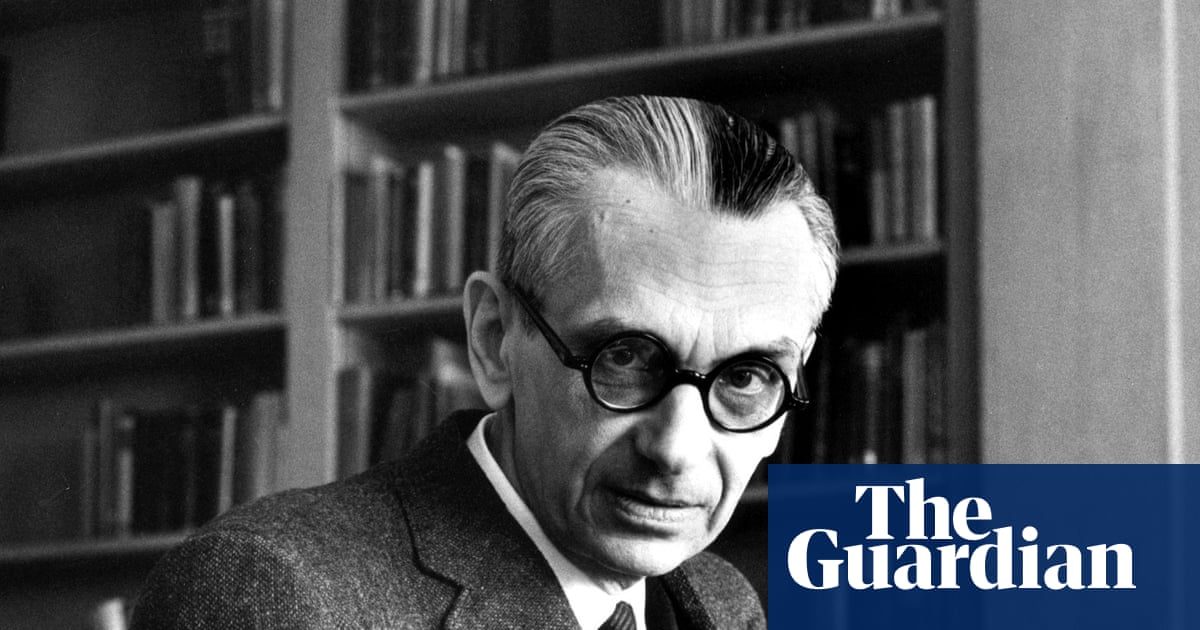
Finnish logician Jan von Plato used the AI model Claude to analyze 1,009 pages of Kurt Gödel’s 1940s notebooks, written in obsolete German shorthand. Within days, Claude produced a comprehensive summary, revealing Gödel had proved hundreds of theorems—including 663—many of which were unknown until now.
Key points
- AI model Claude analyzed 1,009 pages of Gödel’s 1940s notebooks in days, uncovering 663 theorems
- Von Plato’s team verified 400 theorems directly, repaired 200, and found 50 incorrect via AI-assisted proof checks
- Gödel’s workbooks may contain untouched logic themes and nearly proved the axiom of choice’s independence
Von Plato, who led the project at Helsinki University since 2017 with a €2.5m grant, described the discovery as transformative, noting Claude’s ability to connect patterns across thousands of pages far exceeded human capacity. The workbooks also contained 14 untouched themes in logic and nearly proved the independence of the axiom of choice, a result later validated by AI-assisted verification in the proof assistant Coq. Gödel, a refugee from Nazi Austria, had fled to Princeton in 1940 and remained unpublished despite his groundbreaking ideas, some of which von Plato suggests may have earned him the 1940 Fields Medal had he shared them earlier. Critics like Joel David Hamkins caution that AI’s role in reconstructing proofs requires historical scrutiny to distinguish between Gödel’s original work and Claude’s contributions.
Coverage and discussion
1source- Hacker News discussion · 397 pointsnews.ycombinator.com
The headline, key points and digest above were generated by Digest AI's editorial model from the linked sources. Automated summaries can contain errors: the sources are the record. Spotted a mistake? Tell us. Published by Martin K., who runs Digest AI and handles corrections.
More in Research
All →- OpenAI publishes a preprint that claims to prove that the matrix multiplication exponent (ω) is exactly 9/4, addressing a major open problem in mathematics · 2 src
- Study of 58 Anthropic customers finds 80% of AI-built apps automate manual tasks · 2 src
- Anthropic researcher proves Riemann Hypothesis with Claude, verified by Lean community · 17 src
- Google DeepMind proves Signal encryption code with AlphaProof Code · 1 src
- OpenAI reports GPT-6 designs proteins with reasoning, lab tests show binding · 4 src
Comments
via GitHub Discussions