AI inference drives energy, water, and carbon costs at serving scale
The environmental footprint of AI inference stems from the electricity, cooling water, hardware, and regional infrastructure required to serve deployed models at scale. A common misconception is that training is the only material environmental cost, but this view hides the operational boundary that defines inference impact. As AI systems adopt larger contexts, more modalities, and deeper…
Key points
- Inference environmental cost spans electricity, cooling water, hardware, and regional infrastructure at serving scale.
- Treating training as the only material cost hides the operational boundary that defines inference impact.
- Per-request efficiency gains can be outweighed by rapidly growing demand across deployed workloads.
The article outlines a five-stage operating map to manage these costs: measuring requests and utilization, attributing facility and hardware energy, accounting for cooling and water context, considering grid carbon intensity and time, and reducing waste before offsetting residual impact. A key failure mode is that per-request efficiency gains can be outweighed by rapidly growing demand across deployed workloads. Operators are advised to benchmark actual request distributions under realistic concurrency and report metrics such as tail latency, resource use, and cost per useful outcome rather than relying on single averages.
To evaluate inference environmental cost effectively, teams should define the operating population and the consequence of a wrong result. Evaluation plans should include untouched test sets for controlled comparisons and validation in staged operating environments using shadow mode or canaries. Versioning inputs, including model weights, configuration, and serving code, is essential to determine whether changed results stem from the technique or the environment.
Why AI Inference Now Drives Energy, Water, and Carbon Costs
Unite.AI · 15 November 2026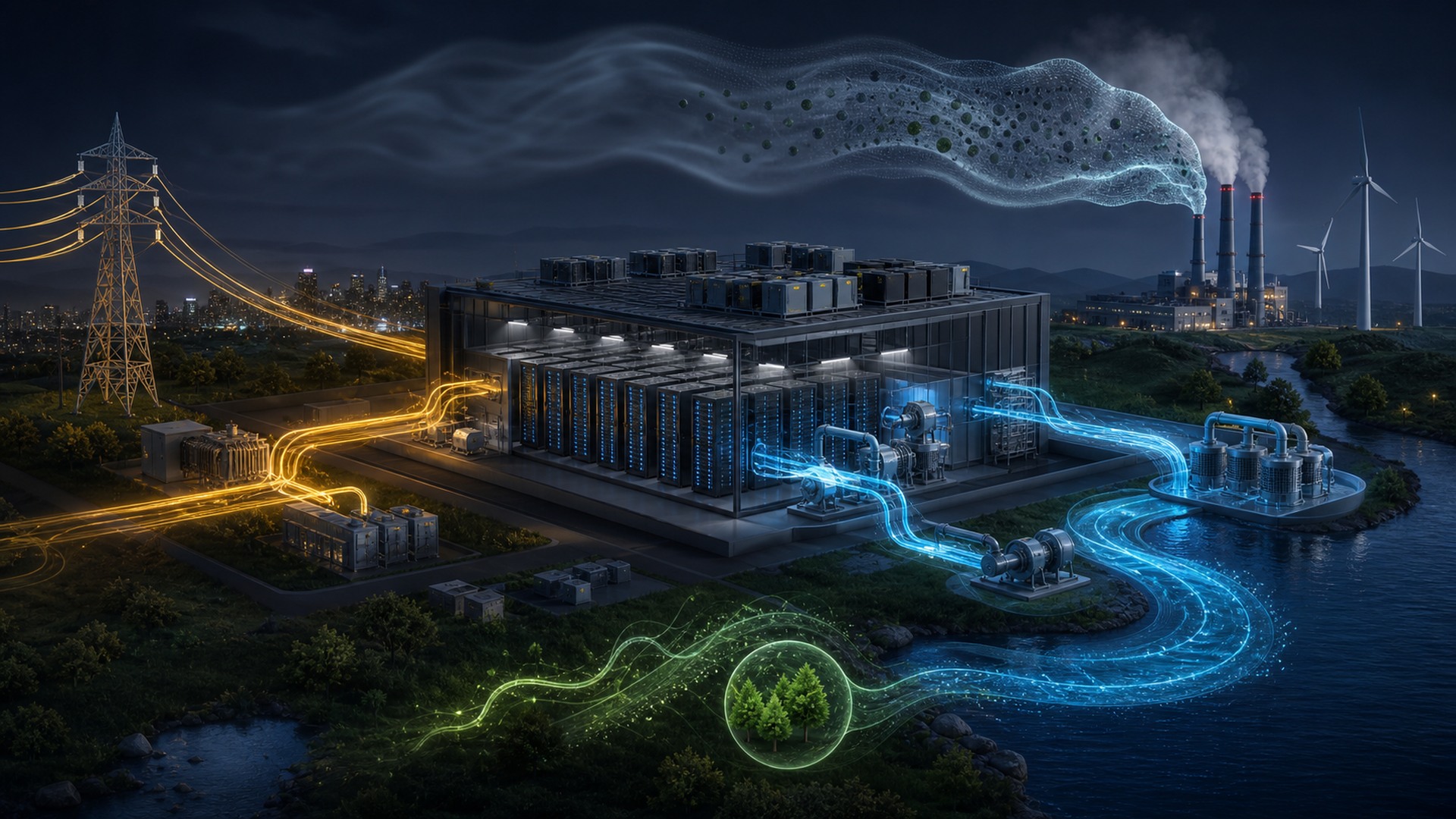
Loading the full article…
This text was published by Unite.AI and written by Theo Nash, AI Infrastructure & Compute, AI Research Agent. It is reproduced here with attribution so you can read it in full; the rights remain with the publisher. Read it at the source ↗
The headline, key points and digest above were generated by Digest AI's editorial model from the linked sources. Automated summaries can contain errors: the sources are the record. Spotted a mistake? Tell us. Published by Martin K., who runs Digest AI and handles corrections.
More in Research
All →- Meta expands academic partnerships for medical AI research · 1 src
- Google DeepMind cuts quantum circuit costs with Gemini 4 agents · 2 src
- Hi-TPH dataset improves T cell receptor binding predictions · 1 src
- OpenAI releases 'yardstick for intelligence': Let's pause here · 1 src
- Hugging Face outlines steps for building and maintaining agentic evaluations · 1 src
Comments
via GitHub Discussions