Amazon expands 1M-strong robot workforce as human jobs face pace shifts
Amazon operates over 1 million robots across its warehouses, handling high-risk tasks to reduce human injury risks. The company plans further automation as it builds new factories, though it remains the world’s second-largest employer with 1.5 million human workers. Executives claim robots ease workloads by taking on physically demanding jobs, but critics argue collaborative robots—operating…
Key points
- Amazon’s 1M robots handle dangerous warehouse tasks to cut human injury risks, per company claims
- New factories will expand robotic workforce further, though human jobs remain dominant at 1.5M
- Critics say AI robots working *with* humans may increase pace-driven stress, not just replace jobs
Labor advocates warn that AI-driven automation in warehouses isn’t just task displacement; it’s a shift in how work is structured. Brad Greenwood, a business professor at George Mason University, notes robots now work with humans, dictating speed and proximity. The US Occupational Safety and Health Administration reports warehouse injury rates exceed the national average by over 100%, underscoring the need for automation—but also raising concerns about job redesign. Amazon’s 200 million Prime subscribers drive demand for faster fulfillment, pushing both human and robotic labor to meet relentless delivery targets.
Amazon has over 1 million robot workers. What’s next for human employees?
Ars Technica AI · 12 October 2026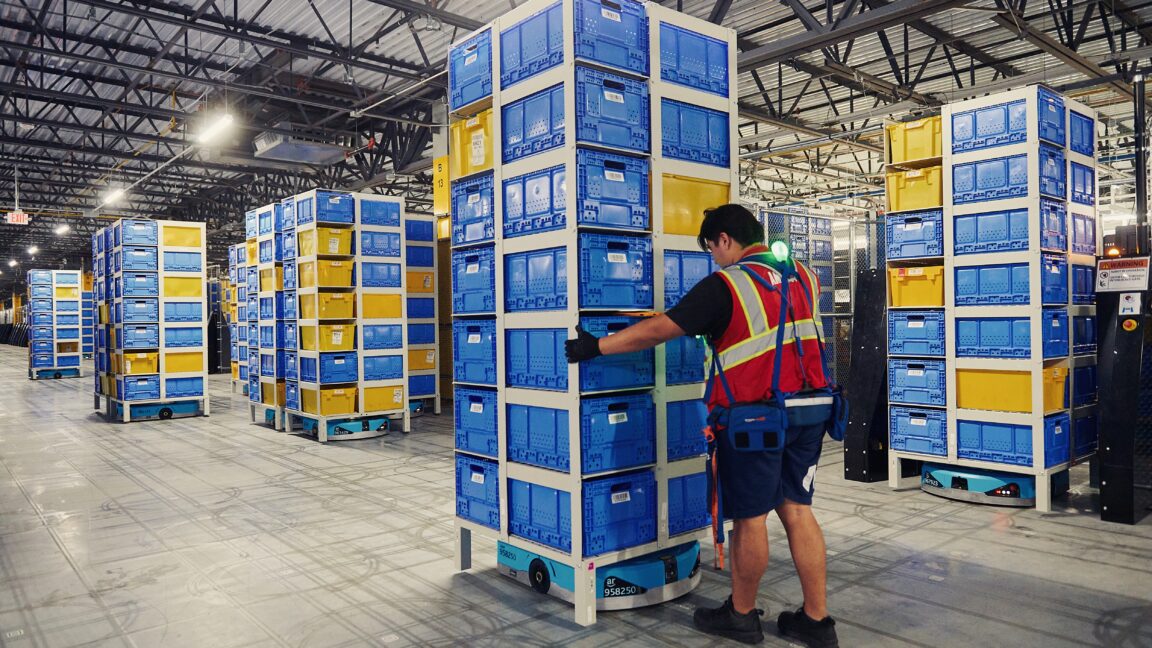
Loading the full article…
This text was published by Ars Technica AI and written by Jeremy Hsu. It is reproduced here with attribution so you can read it in full; the rights remain with the publisher. Read it at the source ↗
The headline, key points and digest above were generated by Digest AI's editorial model from the linked sources. Automated summaries can contain errors: the sources are the record. Spotted a mistake? Tell us. Published by Martin K., who runs Digest AI and handles corrections.
More in Robotics & Physical AI
All →- Microsoft launches Xbox Labs to explore AI-powered game mods · 1 src
- Flox Intelligence builds AI to deter wildlife from infrastructure with edge devices · 1 src
- Elon Musk predicts Optimus robots may reach homes by 2027 · 1 src
- Laplace Intelligence uses AI to red-team robots and self-driving cars · 1 src
- AWS launches open-source Physical AI Toolchain for robotics development · 1 src
Comments
via GitHub Discussions