Anthropic study finds robots cover 34% of US work hours but face cost barriers
A new study from Anthropic estimates robots can perform about 34% of all working hours in the US, covering roughly three-quarters of physical job tasks. However, the report highlights significant barriers to widespread adoption, including the need for highly structured environments and cost competitiveness for only 0.3% of work. Even with historical price declines of 3% annually since the 1990s,…
Key points
- Cost competitiveness remains at **0.3%** of work; historical price drops of **3% annually** since 1990s
The findings contrast with recent industry hype. Nvidia CEO Jensen Huang predicted a ‘ChatGPT moment’ for robotics at CES 2026, while Morgan Stanley forecasted a $5 trillion humanoid robot market by 2050. Anthropic’s research also distinguishes between physical and white-collar labor: while half of all work tasks are exposed to LLMs like Claude, the study warns that software-based disruption could outpace hardware-driven automation due to lower barriers to entry. Personal care and service jobs remain resilient, with 40% of tasks exposed but requiring interpersonal interaction or delicate manipulation—areas where robots and LLMs currently struggle.
Anthropic study suggests blue-collar workers have decades before robots take their jobs
aol.com · 1 October 2026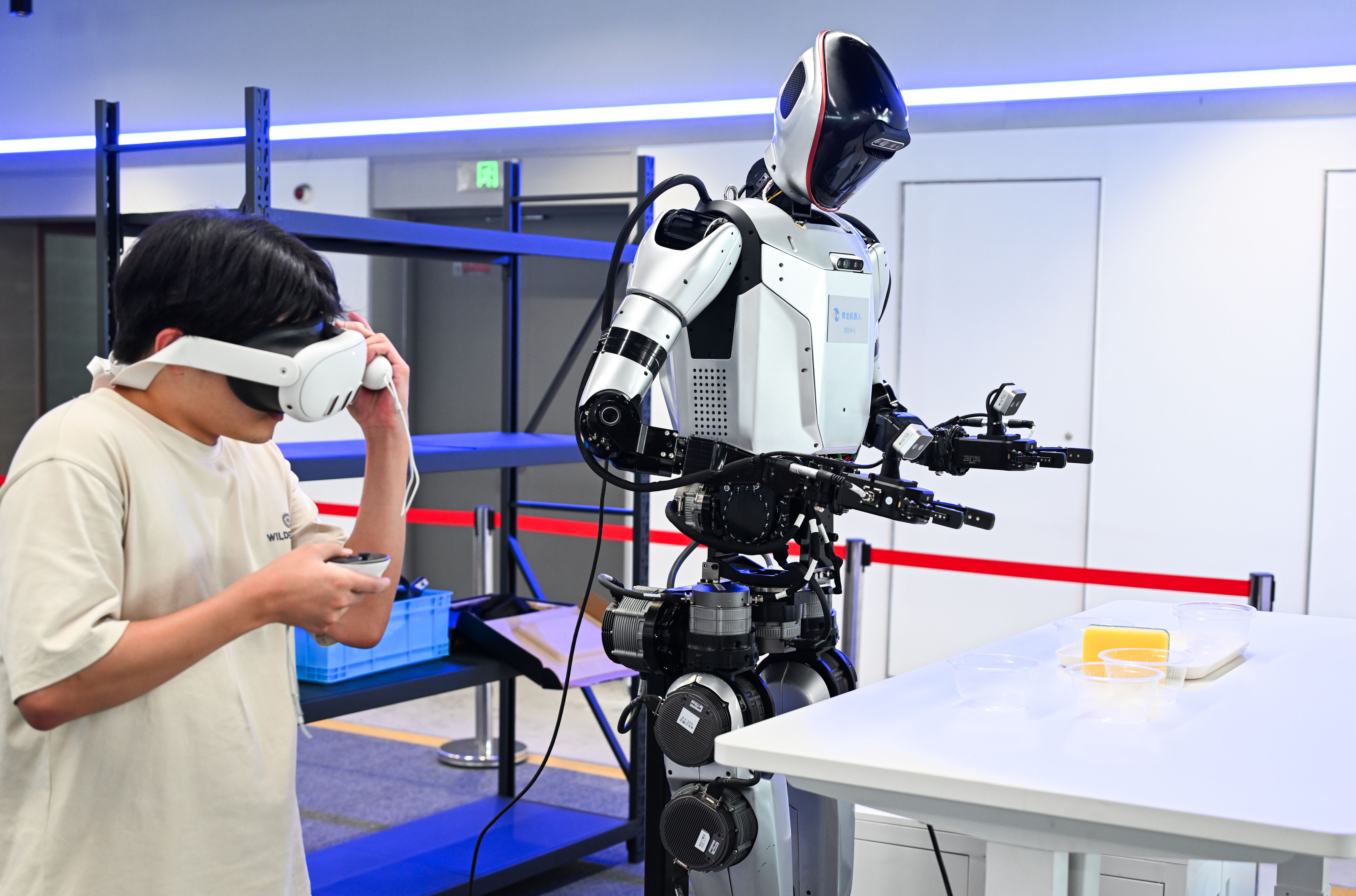
Loading the full article…
This text was published by aol.com and written by AOL. It is reproduced here with attribution so you can read it in full; the rights remain with the publisher. Read it at the source ↗
The headline, key points and digest above were generated by Digest AI's editorial model from the linked sources. Automated summaries can contain errors: the sources are the record. Spotted a mistake? Tell us. Published by Martin K., who runs Digest AI and handles corrections.
More in Robotics & Physical AI
All →- Boston Dynamics unveils Atlas hand with 13 degrees of freedom for mass production · 2 src
- XPeng launches G9L SUV globally at Paris Motor Show · 1 src
- Agility and FORT partner to expand Digit 5’s off-robot safety system · 1 src
- VicOne LAB R7 finds manipulated inputs can bypass robot safety systems · 1 src
- Maven Robotics automates industrial tasks with mobile manipulators, targeting 24/7 fleets by year-end · 1 src
Comments
via GitHub Discussions