FCC robot restrictions could accelerate shift to local AI
The FCC added foreign-made advanced robots to its list of restricted technologies in July, blocking imports and sales in the US. The move follows concerns over national security risks, including potential surveillance or remote interference by foreign actors. The restrictions target mobile robots—such as humanoids and quadrupeds—that collect detailed environmental data, forcing companies to…
Key points
- FCC bans foreign-made advanced robots, citing national security risks like surveillance or remote interference
- Companies may move AI processing on-premises to avoid cloud data exposure and improve control
- Small language models (SLMs) could replace cloud-dependent LLMs for industrial robotics tasks
Industry experts say the ruling will accelerate the shift toward on-premises AI architectures. Cloud-dependent AI introduces network vulnerabilities and data exposure, while local processing improves latency, reliability, and control. For high-stakes environments like factories, companies must now weigh which AI tasks stay on-device versus in the cloud. Smaller, specialized models—like small language models (SLMs)—are gaining traction for industrial use, offering flexibility and lower compute demands than large language models. However, integrating these systems requires rigorous testing, sourcing transparency, and ongoing maintenance, raising the bar for robotics suppliers and buyers alike.
FCC robot restrictions could accelerate shift to local AI
The Robot Report · 5 October 2026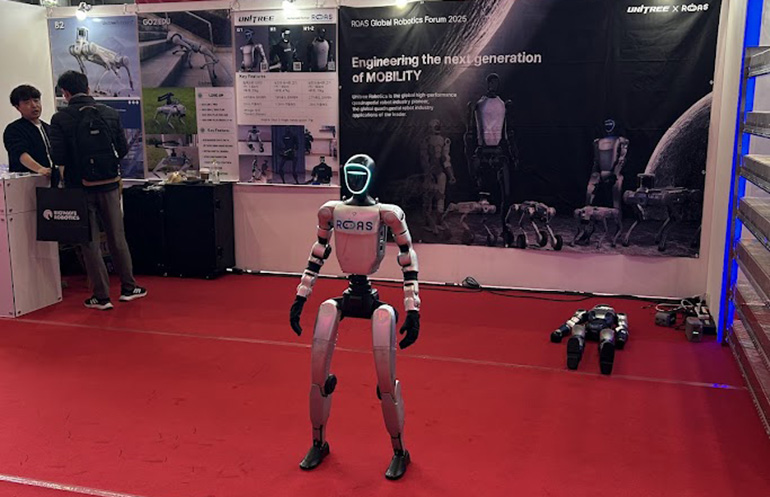
Loading the full article…
This text was published by The Robot Report and written by Jenny Shern. It is reproduced here with attribution so you can read it in full; the rights remain with the publisher. Read it at the source ↗
The headline, key points and digest above were generated by Digest AI's editorial model from the linked sources. Automated summaries can contain errors: the sources are the record. Spotted a mistake? Tell us. Published by Martin K., who runs Digest AI and handles corrections.
Comments
via GitHub Discussions