GlobalFoundries to test Boston Dynamics Atlas humanoid in semiconductor fabs
GlobalFoundries will become the first customer outside the automotive sector to trial Boston Dynamics’ Atlas humanoid, with testing slated for early 2027. The partnership builds on an existing Spot deployment at GlobalFoundries, where two Spot robots in Singapore have logged nearly 900 km, completed over 90,000 sub‑fab inspections and achieved a 99% mission success rate, according to the…
Key points
- GlobalFoundries will test Atlas humanoid in early 2027, the first non‑automotive customer
- Spot robots at GlobalFoundries Singapore have traveled nearly 900 km, done 90,000+ inspections with 99% success
- Boston Dynamics unveiled a new Atlas hand with four fingers and 13 DoF and a wheeled experimental version
Boston Dynamics aims to identify semiconductor‑manufacturing use cases, assess integration needs and train Atlas for specific tasks, though it did not disclose how many Atlas units will be used or which fabs will host them. The move follows Boston Dynamics’ recent announcements of an electric Atlas version at CES 2026, a redesigned four‑finger hand with 13 DoF, and an experimental wheeled version to test whole‑body control via reinforcement learning. The company also noted that Hyundai plans to deploy 25,000 Atlas robots across its factories and produce 30,000 units annually.
The announcement arrives a month after Boston Dynamics appointed former Amazon executive Rohit Prasad as CEO, signaling a push to embed more AI capabilities—such as Google DeepMind’s Gemini Robotics models—into its humanoid platform.
The story so far
2 episodes →- GlobalFoundries to test Boston Dynamics Atlas humanoid in semiconductor fabsthis story
Boston Dynamics’ Atlas humanoid lands first non-automotive trial
The Robot Report · 17 November 2026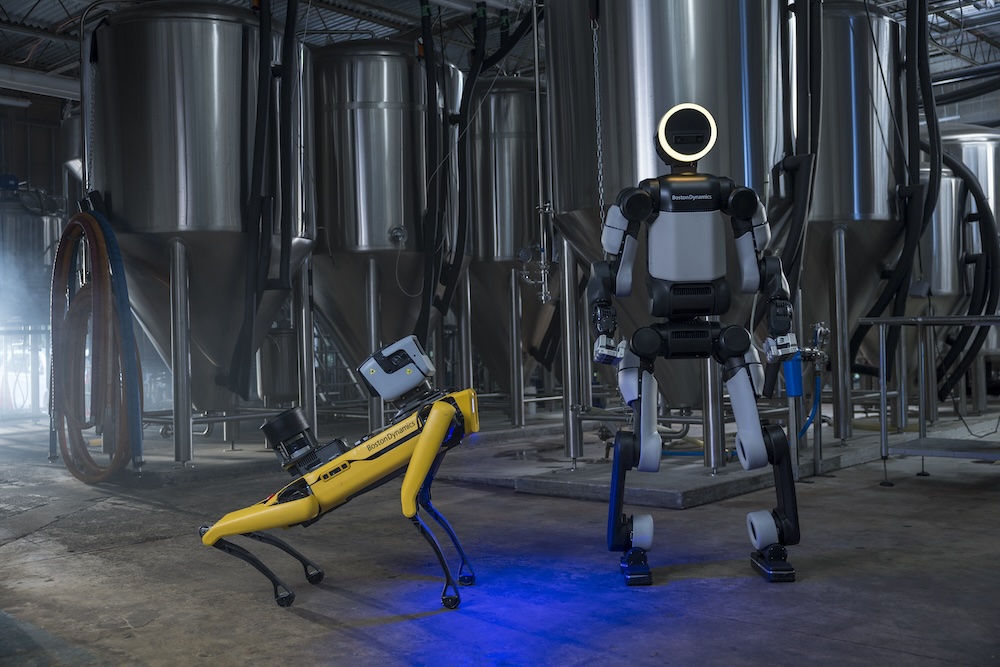
Loading the full article…
This text was published by The Robot Report and written by Steve Crowe. It is reproduced here with attribution so you can read it in full; the rights remain with the publisher. Read it at the source ↗
The headline, key points and digest above were generated by Digest AI's editorial model from the linked sources. Automated summaries can contain errors: the sources are the record. Spotted a mistake? Tell us. Published by Martin K., who runs Digest AI and handles corrections.
Comments
via GitHub Discussions