Google launches first Suncatcher satellite to test AI chips in orbit
Google’s Project Suncatcher, a research initiative exploring space-based AI infrastructure, sent its first prototype satellite into low Earth orbit aboard SpaceX’s Transporter-18 mission on September 24, 2026. Developed with Planet, the satellite carries Tensor Processing Units (TPUs) to assess how they endure space’s physical stress—vibrations up to 10x Earth’s gravity, radiation, and extreme…
Key points
- Google’s first Suncatcher satellite launched on SpaceX’s Transporter-18, carrying TPUs for space stress tests
- Trillium TPUs survived radiation doses **15 krad(Si)**, far exceeding the **750 rad(Si)** five-year mission threshold
- Project aims for **81-satellite constellation by 2027**, with **1.6 Tbps** laser links and solar-powered efficiency
Announced in November 2025, Project Suncatcher targets a dawn–dusk sun-synchronous orbit to maximize solar energy (up to 8x Earth’s productivity). Google estimates launch costs could drop below $200/kg by the mid-2030s, potentially making space-based data centers cost-competitive with terrestrial ones. The 2027 milestone will test two satellites flying in tandem, with Planet handling construction and deployment. The initiative builds on earlier benchmarks, including 800 Gbps two-way transmission in lab tests.
Google’s Project Suncatcher Prototype Heads to Orbit for AI Chip Tests
unite.ai · 24 September 2026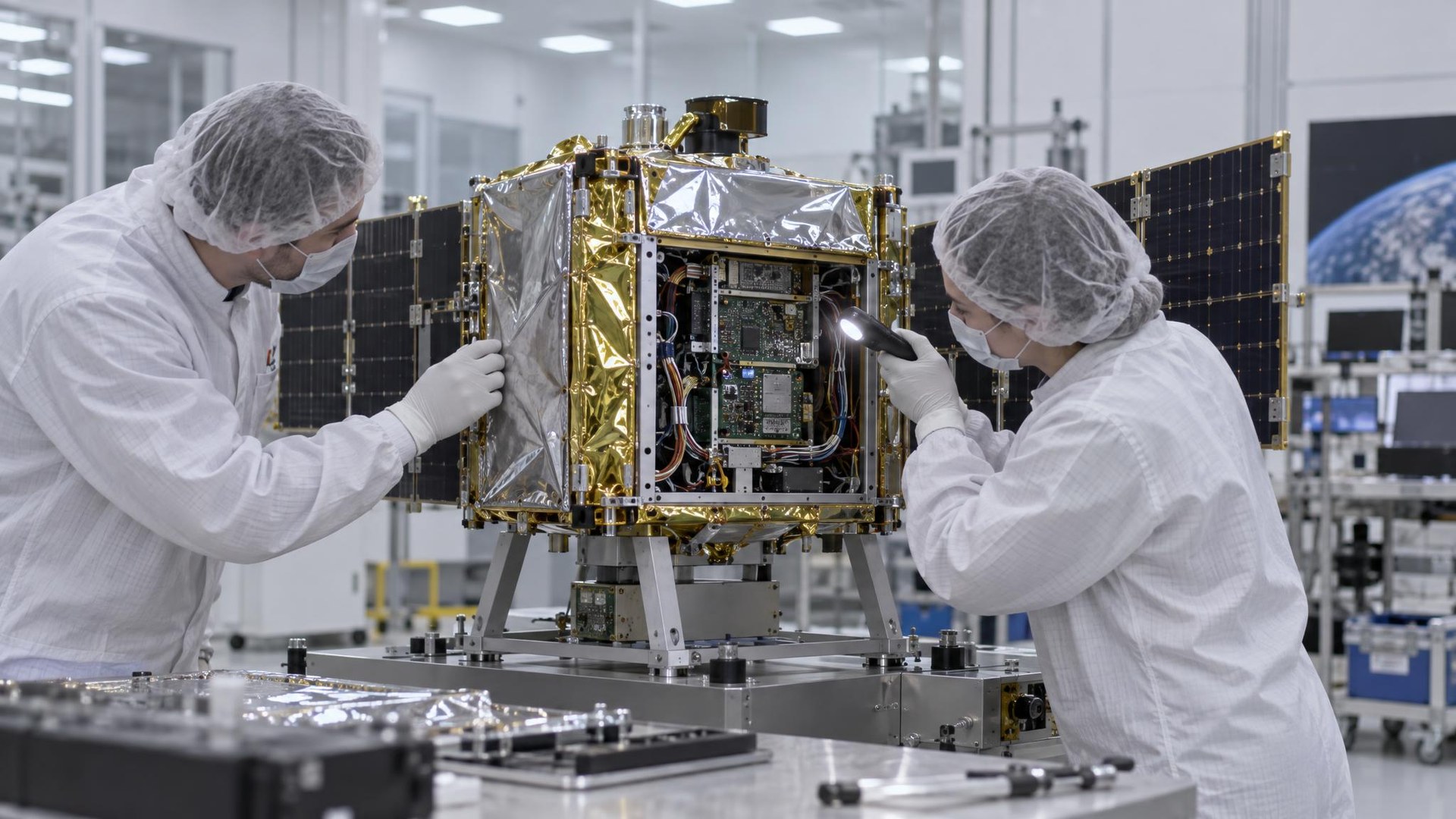
Loading the full article…
This text was published by unite.ai. It is reproduced here with attribution so you can read it in full; the rights remain with the publisher. Read it at the source ↗
Coverage and discussion
5sources- Hacker News discussion · 44 pointsnews.ycombinator.com
- Google's Suncatcher project aims to put AI data centers in orbit powered by solar energyPress · The Decoder ·
- Google's first Suncatcher orbital data center test launches October 1Press · Ars Technica AI ·
- Google is sending an AI satellite into space next weekPress · The Verge AI ·
- Google’s Project Suncatcher to put ML infrastructure in spacePrimary source · blog.google ·
The headline, key points and digest above were generated by Digest AI's editorial model from the linked sources. Automated summaries can contain errors: the sources are the record. Spotted a mistake? Tell us. Published by Martin K., who runs Digest AI and handles corrections.
More in Hardware & Compute
All →- Meta launches Ray‑Ban Meta Audio glasses and expands AI glasses lineup · 23 src
- PicoJool raises $27.5M Series A to scale optical VCSEL links for AI data centers · 2 src
- Meta CEO Mark Zuckerberg unveils Muse Charm wearable for Muse AI agent at Connect event · 17 src
- Microsoft removes Copilot+ PC label from new Surface devices · 2 src
- UK’s £26bn AI supercomputer faces mid-2030s launch delay over power grid limits · 1 src
Comments
via GitHub Discussions