Google launches 'Polar Peaks' AI quest to teach brain mapping
Google Research and the Stanford Accelerator for Learning have released "Polar Peaks," the third installment in their AI Quests educational series. Designed for students aged 11 to 14, the new module immerses learners in neuroscience by having them map neural networks to understand memory loss. This follows previous quests focused on flood forecasting and eye disease detection, which were…
Key points
- Google launched 'Polar Peaks,' the third AI Quest for students aged 11 to 14.
- The quest teaches brain mapping concepts inspired by connectomics research.
- Teacher training modules for the new quest will launch next month.
The quest is grounded in over a decade of connectomics research, including the recent mapping of the complete fruit fly brain, described as the largest brain map by neuron count to date. Students perform tasks such as data cleaning and model testing to learn that AI requires human oversight. Upon completion, they hear from the researchers behind these real-world breakthroughs.
To support classroom integration, Google is also releasing training modules for teachers within the Google AI Educator Series. Modules for the first two quests are available now, while the module for "Polar Peaks" will launch next month. The AI Quests program has already been recognized with a 2026 Webby Award for AI Education and a Best Global K–12 Learning Solution award at the ETIH Innovation Awards. More than 400,000 quests have been completed to date, with content localized into 10 languages.
Our newest AI Quest: Mapping the human brain
Google AI Blog · 26 October 2026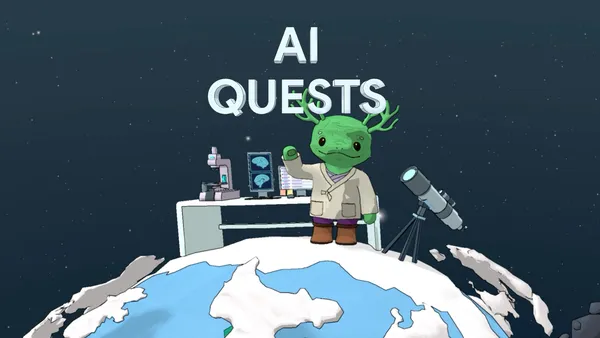
Loading the full article…
This text was published by Google AI Blog and written by Ronit Levavi Morad. It is reproduced here with attribution so you can read it in full; the rights remain with the publisher. Read it at the source ↗
The headline, key points and digest above were generated by Digest AI's editorial model from the linked sources. Automated summaries can contain errors: the sources are the record. Spotted a mistake? Tell us. Published by Martin K., who runs Digest AI and handles corrections.
More in Society & Work
All →- Kevin Roose’s book details AI labs’ shift toward AGI · 1 src
- Anthropic co-founders say AI is one of the most consequential technologies in human history · 1 src
- Opinion: AI safety focus ignores everyday harms like teen dependence and cognitive decline · 1 src
- Ben Thompson argues public internet is dead, AI security risks rising · 1 src
- R/opensource bans AI projects and non-English speakers · 2 src
Comments
via GitHub Discussions