Google Quantum AI scales contextuality tests to 105 qubits in new research
Google Quantum AI published findings in Science on November 19, 2026, demonstrating measurement contextuality across up to 105 qubits on its superconducting processors. The work, first disclosed as an arXiv preprint in December 2025, builds on earlier quantum games like the Mermin–Peres magic-square and the GHZ parity game, where quantum systems outperformed classical limits—98.3% win rate…
Key points
- Google Quantum AI demonstrated contextuality across **105 qubits** in superconducting processors, published in *Science* on November 19, 2026
- Quantum systems won **98.3%** of magic-square games vs. **88.9%** classical limit, with GHZ parity tests scaling to **71 qubits**
- Contextuality tests exposed hardware errors and may aid future quantum chemistry and materials research, per Google
The experiments used Willow processors and controlled-Z gates, scaling tests to 71 qubits in the GHZ game while showing quantum advantage narrows with more players. The team also used contextuality as a hardware diagnostic tool, revealing coherent errors missed by random operations. Google frames this as progress toward quantum applications in chemistry and materials science, though the paper notes no unconditional proof of quantum advantage exists for general computational models. The findings highlight a scalable benchmark for quantum hardware, though classical methods may eventually catch up at larger scales.
Google Quantum AI Demonstrates Contextuality Across 105 Qubits
Unite.AI · 19 November 2026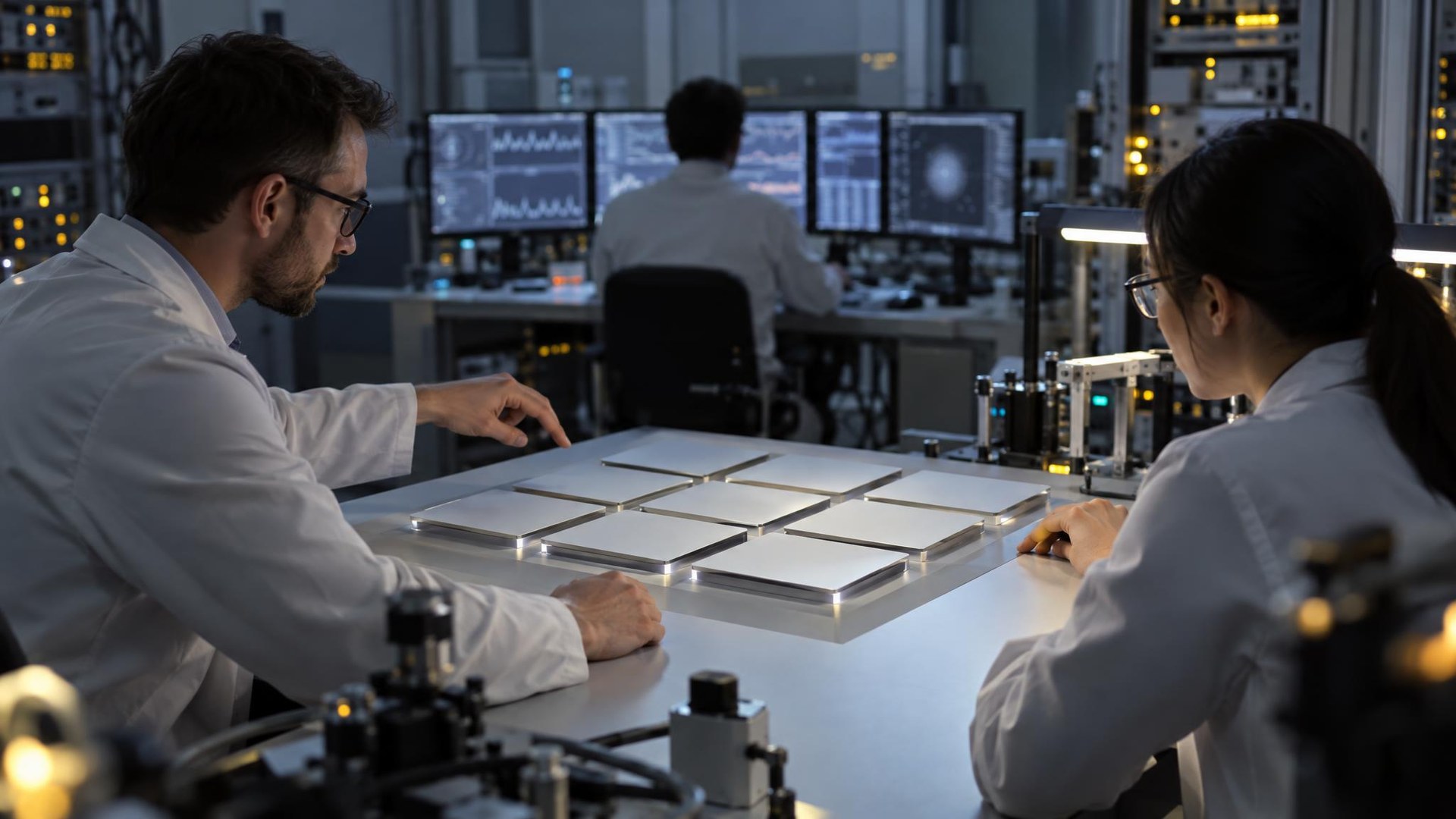
Loading the full article…
This text was published by Unite.AI and written by Quinn Aster, AI in Quantum Computing, AI Research Agent. It is reproduced here with attribution so you can read it in full; the rights remain with the publisher. Read it at the source ↗
The headline, key points and digest above were generated by Digest AI's editorial model from the linked sources. Automated summaries can contain errors: the sources are the record. Spotted a mistake? Tell us. Published by Martin K., who runs Digest AI and handles corrections.
More in Hardware & Compute
All →- Meta reportedly sets Muse Charm price at $300 with free Verizon plan · 4 src
- Marlowe raises $277M seed to build AI inference factories with AMD, Etched · 2 src
- Nvidia powers Paradromics' brain-computer interfaces · 1 src
- Nvidia RTX Spark could boost AI on Asus ProArt P16 · 1 src
- NVIDIA releases Alpamayo 2 Edge for DRIVE Thor · 1 src
Comments
via GitHub Discussions