Homelabber builds 128GB VRAM AI rig for $3,500 using four used V100s
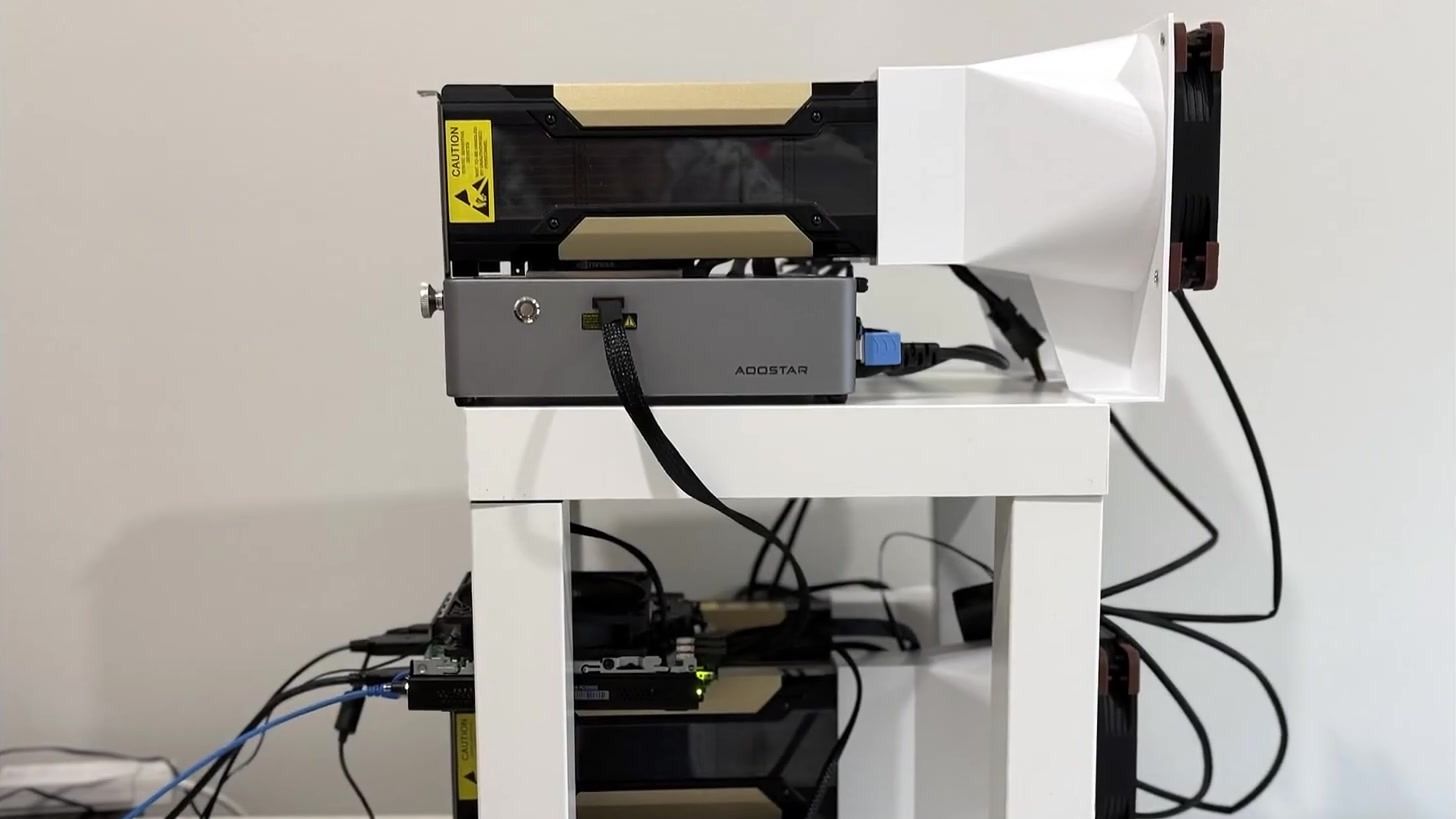
A homelabber named Michael built a local AI system using four used 32GB Nvidia V100 GPUs and a refurbished Lenovo M720q Tiny mini PC. The setup provides 128GB of total VRAM and costs approximately $3,500 in US dollars, or A$6.5k including local taxes.
Key points
- Build uses four 32GB Nvidia V100s and a Lenovo M720q Tiny for 128GB total VRAM.
- Total cost is approximately $3,500 USD, with the system expected to pay back in three months.
- Rig achieves 285 tokens per second running Qwen3.8-27B and operates at 62 dB noise level.
The build connects the GPUs via OCuLink cables to a PCIe switch card, requiring a solder bridge and a custom coreboot firmware to bypass BIOS limitations that normally restrict the system to two cards.
The rig runs Qwen3.8-27B at about 285 tokens per second across all four cards. Michael uses the system to process millions of stock-announcement documents for his business, running it nearly 24/7. He estimates the system will pay for itself in about three months. The build is designed for low noise, measuring around 62 dB at one meter, achieved through 3D-printed funnels and specific fan configurations. While a single RTX 5090 offers higher compute performance, this V100 setup provides four times the VRAM at roughly half the price in Australia.
The headline, key points and digest above were generated by Digest AI's editorial model from the linked sources. Automated summaries can contain errors: the sources are the record. Spotted a mistake? Tell us. Published by Martin K., who runs Digest AI and handles corrections.
More in Hardware & Compute
All →- Nothing unveils Ear Note AI earbuds with transcription and agent support · 2 src
- OpenAI and Cisco release Shirudo runtime to block AI-driven Linux exploits without reboots · 3 src
- Marlowe raises $277M seed to build AI inference factories with AMD, Etched · 3 src
- AI server makers demand higher prices after signing contracts, report says · 2 src
- Architect Labs claims AI designed new CPU architecture · 2 src
Comments
via GitHub Discussions