Humanoid robots: Who's responsible when they fail?
Humanoid Robots Are Coming to Factories. Who Is Responsible When They Fail?
Key points
- Humanoid robots pose new safety risks due to adaptability and mobility in human environments.
- Current industrial robotics standards do not fully cover mobile humanoid robots working alongside people.
- Accountability should be shared among manufacturers, developers, integrators, and employers based on control over the system.
Key Points: Humanoid robots pose new safety risks due to their adaptability and mobility in human environments. Current industrial robotics standards do not fully cover mobile humanoid robots working alongside people. Accountability should be shared among manufacturers, developers, integrators, and employers based on control over the system.
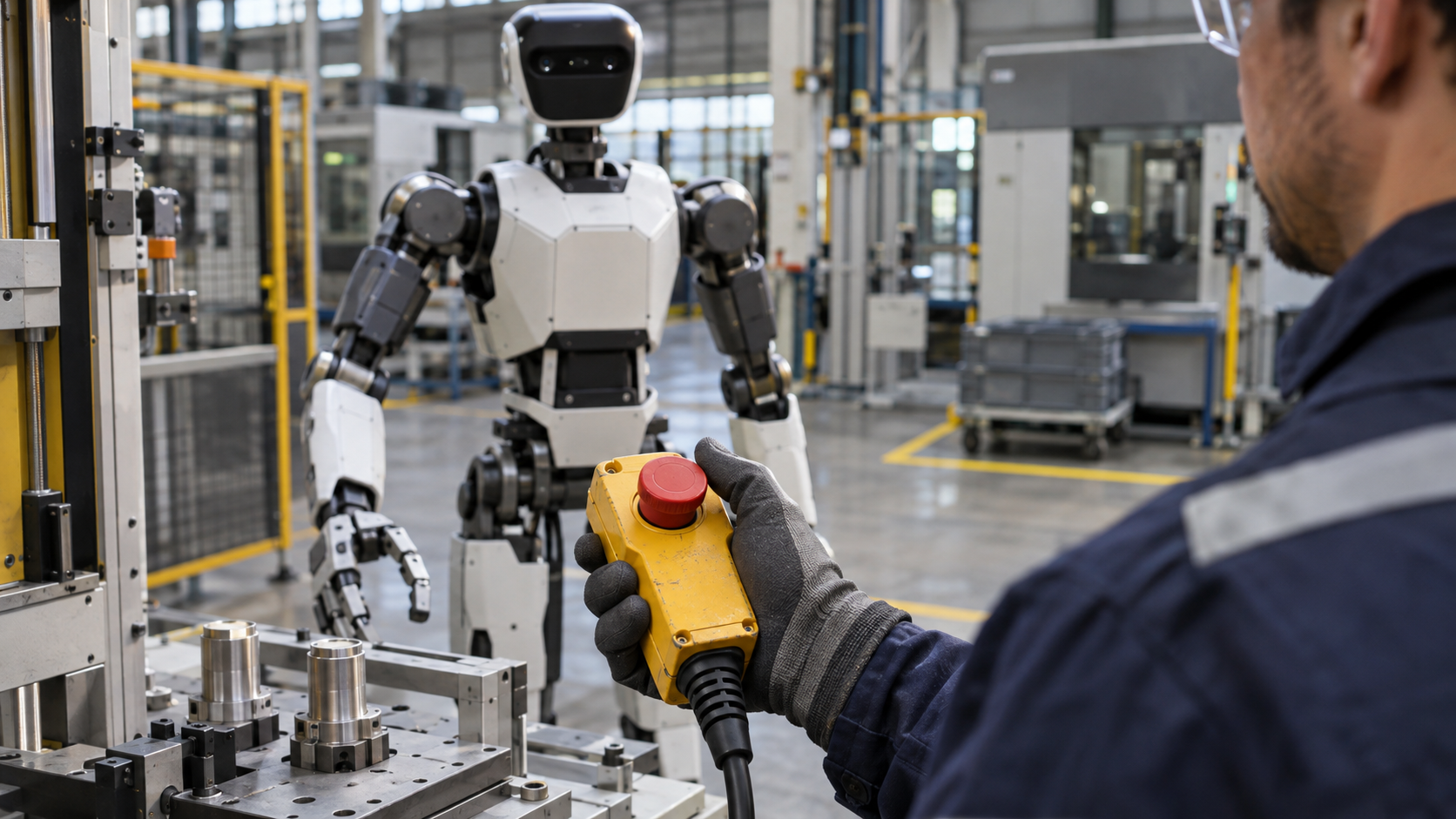
Agility Robotics and FORT Robotics have announced a partnership to enhance safety architecture for their Digit 5 humanoid robot. They plan to incorporate onboard safety systems and external interfaces, communications, and manual override mechanisms.
Safety standards are evolving to address these new challenges, but technology alone is not enough. Manufacturers need to ensure that mistakes do not translate into unsafe physical movements. Confidence thresholds and human authority should be part of the system's safety architecture, along with hardware interlocks.
While current industrial robotics standards offer a foundation, they may not cover all applications or hazards presented by mobile humanoid robots working in human environments. Independent testing, scenario-based validation, and phased workplace pilots are crucial as industry practices evolve.
Human oversight is essential but cannot be solely focused on approving decisions. It should include named individuals with the power to override systems and ensure that decisions are documented and checked. Accountability should be shared based on control over each party in the system.
As humanoid robots become more flexible and productive, clear responsibility frameworks will be crucial for their adoption in factories. This includes ensuring safeguards are in place and procedures are established for stopping unsafe operations.
The headline, key points and digest above were generated by Digest AI's editorial model from the linked sources. Automated summaries can contain errors: the sources are the record. Spotted a mistake? Tell us. Published by Martin K., who runs Digest AI and handles corrections.
More in Enterprise & Industry
All →- Anthropic migrates Messages API to Rust, cutting CPU use by 70% · 2 src
- Opinion: AI agent deployments fail without deep business process context · 2 src
- AWS launches Bedrock API for Anthropic's Enterprise Frontier Safeguards · 5 src
- Chariot Launches Sovereign Foundation Models · 1 src
- Nexent Capital launches fund for quantum-ready AI and energy assets · 1 src
Comments
via GitHub Discussions