Indy Autonomous Challenge features first road-course overtakes, Unimore wins
The Indy Autonomous Challenge held on Sept. 3 at Laguna Seca marked the first time autonomous racecars passed each other on a road course. Nine university teams from North America, Europe and Asia competed with identical AV‑24s, and Unimore Racing from the University of Modena and Reggio Emilia defeated Purdue AI Racing in the final heat.
Key points
- The Sept. 3 Indy Autonomous Challenge at Laguna Seca featured the first road‑course overtakes in IAC history.
- Unimore Racing from the University of Modena and Reggio Emilia beat Purdue AI Racing in the final heat.
- Nine university teams piloted identical AV‑24s with Dallara chassis, Honda engines, Luminar sensors and NVIDIA GPUs.
The competition used one‑on‑one heats where the overtaking car had two laps to pass the leader before swapping positions and increasing engine power limits. Teams qualified months earlier in a D‑Space‑hosted simulation race, the first virtual qualification required for a physical event. All vehicles shared a Dallara base design, Honda engine, Luminar sensors and NVIDIA GPU, with AI drivers making all passing decisions while human crews monitored data and held the e‑stop. The IAC, started in 2021, continues to influence autonomous‑driving research and has spawned startups such as Aidoptation, driveblocks and Autonoma AI.
IAC completes autonomous racing event at Laguna Seca
The Robot Report · 21 September 2026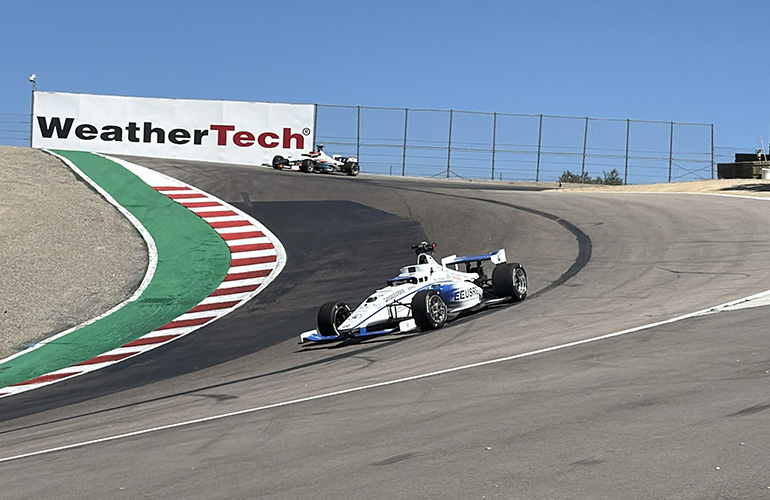
Loading the full article…
This text was published by The Robot Report and written by Mike Oitzman. It is reproduced here with attribution so you can read it in full; the rights remain with the publisher. Read it at the source ↗
The headline, key points and digest above were generated by Digest AI's editorial model from the linked sources. Automated summaries can contain errors: the sources are the record. Spotted a mistake? Tell us.
More in Research
All →- Researchers unveil TangleDiff to design entangled protein hydrogels · 1 src
- Anthropic reports Claude leads 26% of its AI research and development tasks · 3 src
- University of Bristol proposes learning ensemble framework to test medical AI reliability · 1 src
- Anthropic Claude AI predicts chainlink to rise about 300% by 2027 · 2 src
- Understanding loss functions and their five-stage operating map · 1 src
Comments
via GitHub Discussions