Locating the source of a mysterious beep with Claude
The system uses a Python web server and devices like iPads, a phone, a MacBook Pro, and a Surface Ultra as listeners. After testing with claps and beeps, it located the beep within about 40cm, leading to the discovery of an old carbon monoxide detector needing new batteries. The project was inspired by the 2007 BeepBeep paper on acoustic-based localization using commodity devices.
Key points
- Beep Locator uses multiple devices to triangulate a beep via sound and WebSockets
- The system located the beep within about 40cm of its actual source
- The beep came from an old carbon monoxide detector with dead batteries
Model pages: Opus 5.5 → · Fable 5.2 →
Locating the source of a mysterious beep with Claude
Simon Willison · 9 November 2026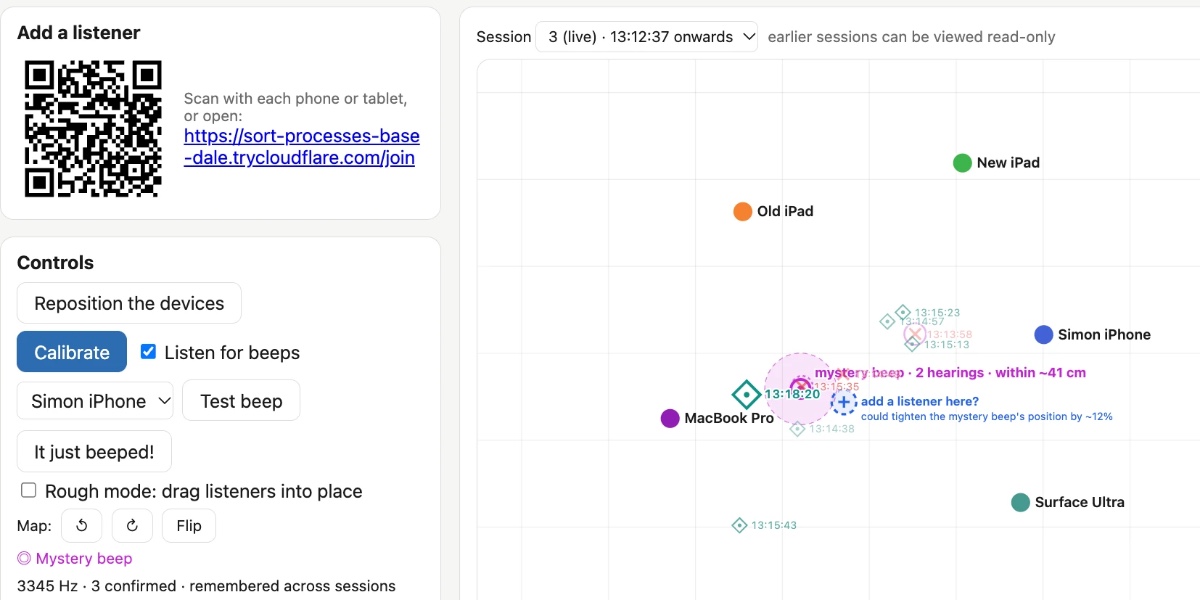
Loading the full article…
This text was published by Simon Willison and written by Simon Willison. It is reproduced here with attribution so you can read it in full; the rights remain with the publisher. Read it at the source ↗
Coverage and discussion
1source- Hacker News discussion · 309 pointsnews.ycombinator.com
The headline, key points and digest above were generated by Digest AI's editorial model from the linked sources. Automated summaries can contain errors: the sources are the record. Spotted a mistake? Tell us. Published by Martin K., who runs Digest AI and handles corrections.
More in Society & Work
All →- Chess world championship offers lessons on human vs AI limits · 1 src
- Dario Amodei reportedly suggested games could pacify masses after AI job loss · 3 src
- Microsoft AI CEO says parents may rethink college savings, 15% already cut · 1 src
- Guardian writer tests AI text replies with husband · 1 src
- Former members accuse AI-focused Vermont group Maple of cult-like practices · 1 src
Comments
via GitHub Discussions