Nvidia and University of Washington unveil open-source protein design model RFD4-Proteina
Nvidia and the University of Washington School of Medicine Institute for Protein Design have released RFD4-Proteina, an open‑source generative model built on Nvidia’s BioNeMo platform. The developers say the model improves design success rates by five‑ to ten‑fold and generates candidates five‑ to ten‑times faster than earlier tools. Benchmarks across protein binding, small‑molecule binding,…
Key points
- RFD4-Proteina achieves 5‑10× higher design success rates than prior models, developers say.
- Generation speed is 5‑10 times faster, cutting design time from months to days.
- The model is open‑source under a BSD‑3 license and available via multiple cloud partners.
RFD4-Proteina is distributed under a BSD‑3 license and hosted on a BSD‑3 repository. It can be accessed through partners such as Amazon Bio Discovery, Anthropic’s Claude Science, Benchling, Databricks, Google Cloud, Hugging Face, Nebius, OpenAI and Tamarind Bio, enabling integration into cloud and scientific workflows. Funding for the project came from the Howard Hughes Medical Institute, the Gates Foundation (grant of $25,748,619 dated November 2025), Grantham Foundation, Fund for Science and Technology, Schmidt Sciences, the OpenFold consortium and Rosetta Commons. Nobel laureate David Baker highlighted the model’s potential to accelerate drug discovery, enzyme engineering and broader biotechnology applications.
Nvidia, UW Institute for Protein Design Unveil Open-Source Protein Design AI Model
genengnews.com · 22 October 2026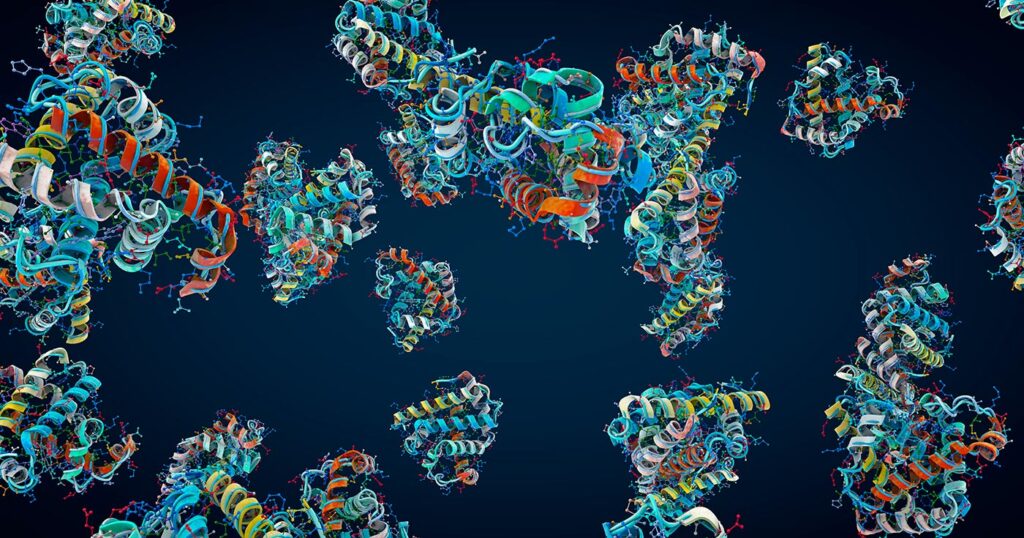
Loading the full article…
This text was published by genengnews.com and written by Alex Philippidis. It is reproduced here with attribution so you can read it in full; the rights remain with the publisher. Read it at the source ↗
The headline, key points and digest above were generated by Digest AI's editorial model from the linked sources. Automated summaries can contain errors: the sources are the record. Spotted a mistake? Tell us. Published by Martin K., who runs Digest AI and handles corrections.
More in Generative AI & Models
All →- OpenAI makes its Decisions API widely available using GPT-6 Luna · 3 src
- Anthropic's Claude Opus 5.5 tops Coding Agent Index with 61.7 score · 1 src
- Hugging Face releases Carbon-X, a 14B parameter DNA language model · 6 src
- Gradium open-sources Phonon 31M on-device TTS model under Apache 2.0 · 1 src
- Cohere releases Rerank 5 with passage-level context focus and calibrated scores · 1 src
Comments
via GitHub Discussions