NVIDIA reportedly exploring PTFE for next-gen AI server boards to cut signal loss
NVIDIA is evaluating polytetrafluoroethylene (PTFE), the material behind Teflon, for use in future Rubin Ultra NVLink switch boards or next-generation orthogonal mid-plane boards, according to industry sources cited by WCCFTech. The move targets signal loss in high-speed AI server circuits, where energy dissipation through PCB materials becomes a bottleneck as demand for faster data transfer…
Key points
- NVIDIA reportedly testing PTFE for next-gen AI server boards to reduce signal loss in high-speed circuits
- Industry sources cite PTFE’s low dielectric loss as a solution for boards exceeding 70 layers, but manufacturing yields remain below 5%
- Hybrid designs (PTFE in high-speed layers, other materials elsewhere) may resolve bonding and processing challenges, with potential deployment by **2028–2030**
NVIDIA Is Reportedly Eyeing Teflon to Solve an AI Server Signal Problem
gadgetreview.com · 29 October 2026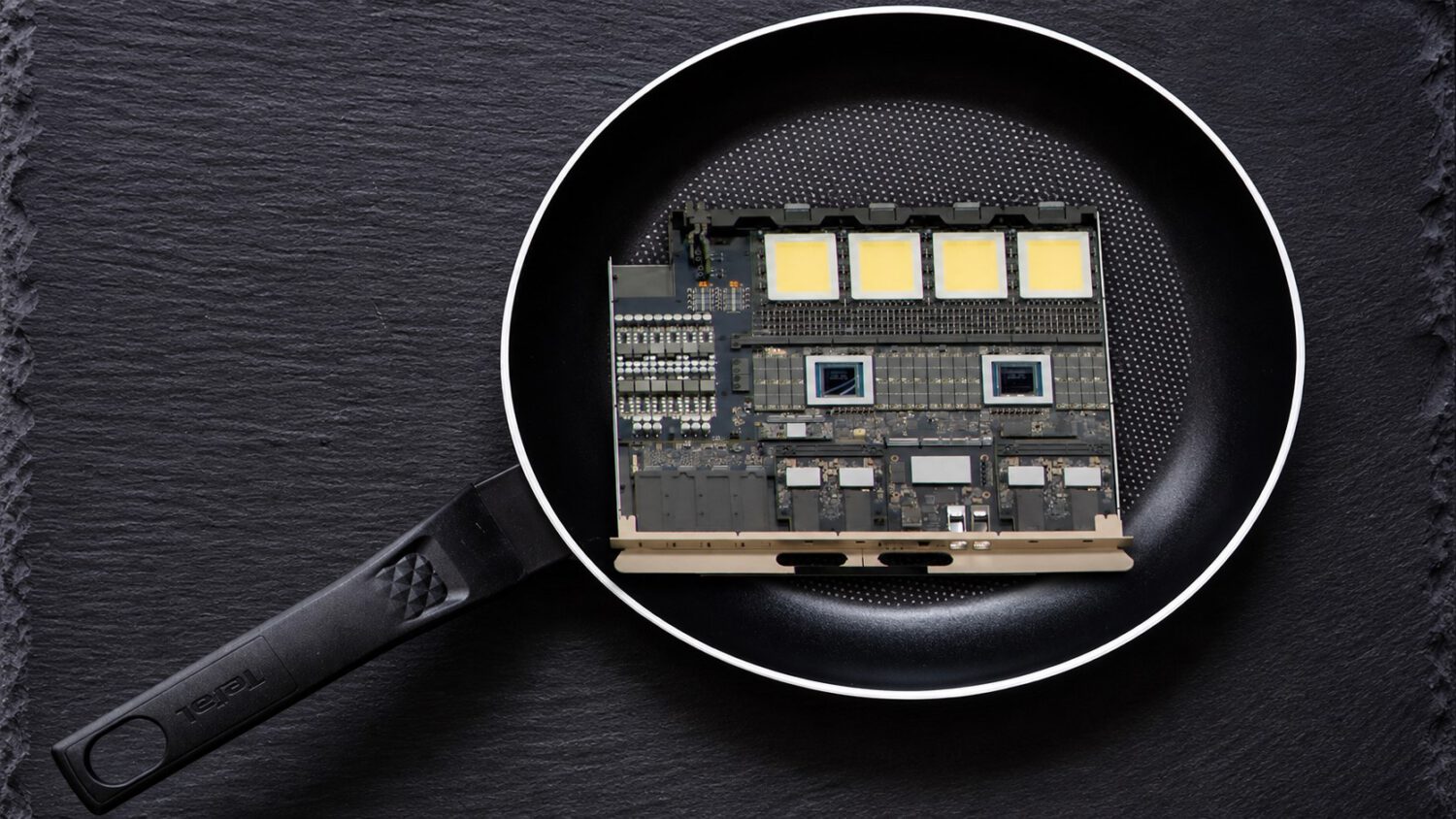
Loading the full article…
This text was published by gadgetreview.com and written by Al Landes. It is reproduced here with attribution so you can read it in full; the rights remain with the publisher. Read it at the source ↗
The headline, key points and digest above were generated by Digest AI's editorial model from the linked sources. Automated summaries can contain errors: the sources are the record. Spotted a mistake? Tell us. Published by Martin K., who runs Digest AI and handles corrections.
More in Hardware & Compute
All →- Omen AI acquires Aquatic Labs for $16M to improve data center cooling sensors · 2 src
- Ohio voters may block Amazon’s $2B data center over energy limits · 2 src
- OpenAI proposes renaming data centers to ‘AI compute campuses’ amid backlash · 2 src
- OpenAI launches Grid Protectors program for Georgia campus · 2 src
- Microsoft unveils Azure Maia 300 system for business AI · 2 src
Comments
via GitHub Discussions