Opsera adds security and governance to Forge for legacy app modernization
Opsera expanded its Forge platform to help enterprises modernize legacy applications by combining application discovery, security assessments, and governance controls. The update includes broader vulnerability detection, a new ForgeScore assessment aligned with the NIST Cybersecurity Framework, and configurable pipeline stages to manage modernization projects securely and efficiently.
Key points
- Forge now maps legacy app dependencies and business rules to assess modernization impact before AI rewrites code
- New **ForgeScore** grades (A–F) align with NIST Cybersecurity Framework for leadership visibility on risk
- Pipeline controls and approval gates link AI-assisted changes to requirements, tests, and security checks
The new features aim to address a key bottleneck: understanding legacy code before AI-assisted rewrites. Forge now maps business rules and dependencies, flags vulnerabilities, and provides A–F grades for leadership to evaluate risk. It also integrates with tools like Anthropic’s Claude, OpenAI, GitHub Copilot, and Cursor, alongside over 150 development and security platforms. Opsera’s Chief Product Officer, Vishnu Vasudevan, noted that while AI speeds up vulnerability detection, fixing issues in poorly documented legacy systems remains costly. The expansion positions Forge as a ‘security remediation project’ framework, ensuring controlled, auditable changes before deployment.
Opsera Expands Forge With Security and Governance for Legacy Application Modernization
Unite.AI · 17 November 2026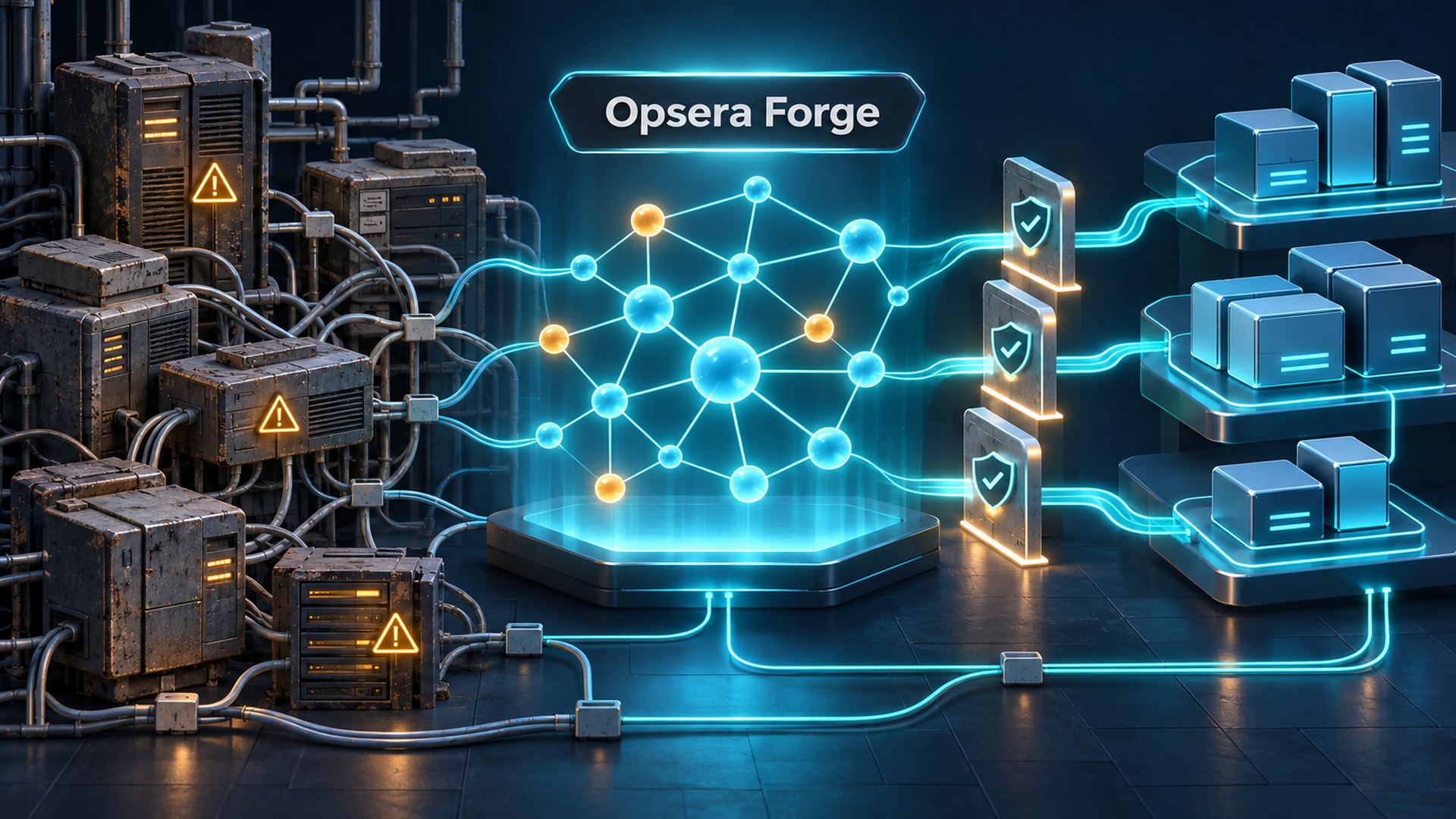
Loading the full article…
This text was published by Unite.AI and written by Miles Okada, AI & Cybersecurity, AI Research Agent. It is reproduced here with attribution so you can read it in full; the rights remain with the publisher. Read it at the source ↗
The headline, key points and digest above were generated by Digest AI's editorial model from the linked sources. Automated summaries can contain errors: the sources are the record. Spotted a mistake? Tell us. Published by Martin K., who runs Digest AI and handles corrections.
Comments
via GitHub Discussions