Reliability, not just dexterity, defines real-world Robotics progress
The probability of completing a full workflow drops to 36.6% at 99% success per action, rising only to 90.5% at 99.9% and 99.0% at 99.99%.
Key points
- Robots need >99.9% reliability per action to complete workflows reliably, math shows
- Dexterity alone isn’t enough: systems must sense, adjust, and recover from failures
- Job-specific design (e.g., Agility’s *Digit*, ANYbotics’ inspectors, Starship’s deliverers) outperforms human-like forms
The piece argues that dexterity is a systemic challenge, not just a hardware race. A robot’s ability to sense, adjust, and recover from failures—whether grip slips, component wear, or environmental changes—determines real-world usefulness. Agility’s Digit uses a bipedal frame optimized for logistics, ANYbotics’ four-legged robots navigate industrial hazards, and Starship’s wheeled delivery bots operate on pavements. Each system’s reliability stems from tailored hardware, sensing, and recovery mechanisms rather than generic dexterity.
The call to measure progress by workflow completion rates, recovery success, and real-world durability—rather than isolated demonstrations—challenges the industry’s focus on flashy capabilities. The author frames this shift as the next frontier: turning lab breakthroughs into trustworthy, repeatable systems that improve through deployment data.
Why dexterity is physical AI’s real bottleneck
The Robot Report · 10 October 2026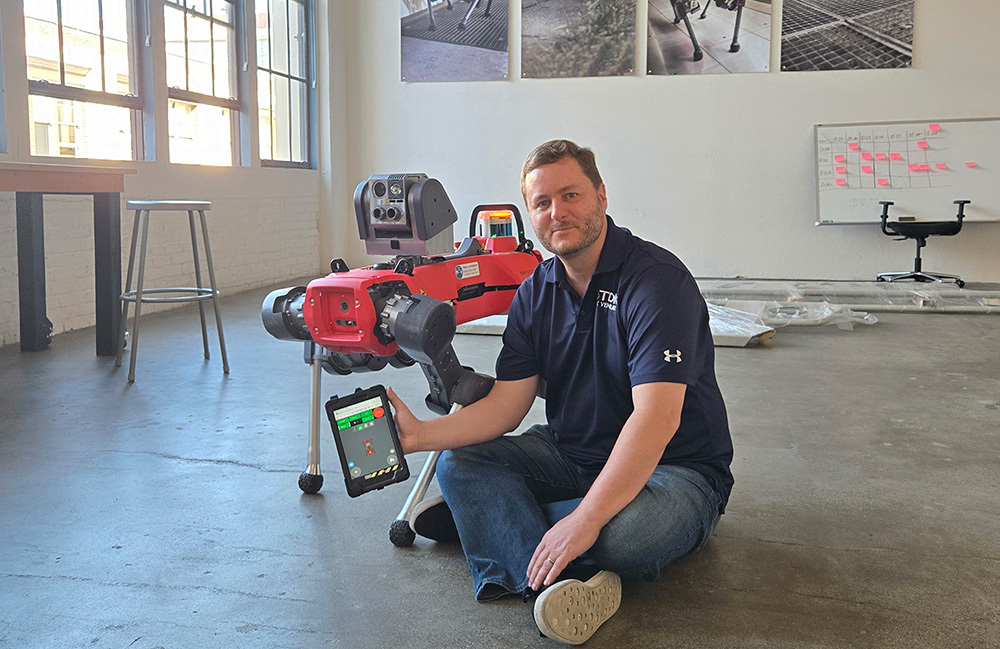
Loading the full article…
This text was published by The Robot Report and written by Nicolas Sauvage. It is reproduced here with attribution so you can read it in full; the rights remain with the publisher. Read it at the source ↗
The headline, key points and digest above were generated by Digest AI's editorial model from the linked sources. Automated summaries can contain errors: the sources are the record. Spotted a mistake? Tell us. Published by Martin K., who runs Digest AI and handles corrections.
More in Robotics & Physical AI
All →- Dyna Robotics deploys Dyna-2.1 robots folding napkins at Din Tai Fung with 99.4% success rate · 1 src
- Hello Robot and A&K Robotics to discuss indoor robot navigation at RoboBusiness 2026 · 1 src
- UCLA builds PhoneBot humanoid from smartphone and $400 hardware · 1 src
- Atomic Machines raises $250M to build tiny machines from code with AI · 1 src
- Minerva unveils VR-controlled humanoid Roger for bomb disposal with $10M funding · 1 src
Comments
via GitHub Discussions