Researchers propose TongueReenact for AI facial animation tongue synthesis
In July, a team from Australia and China introduced TongueReenact, a framework designed to address the missing tongue issue in AI facial animation. The method combines Gaussian Splatting, Neural Radiance Fields (NeRF), and diffusion-based video generation to generate realistic tongue movements in reenacted faces. The approach uses SegmentAnything for tongue segmentation and Stable Diffusion for…
Key points
- TongueReenact combines Gaussian Splatting, NeRF, and diffusion models to animate tongues in AI facial reenactment
- Uses NERSemble and VFHQ datasets (16,000+ videos) to train BiSeNet for tongue segmentation and Stable Diffusion for synthesis
- Claims **100%+ accuracy improvement** over rivals in tongue positioning and size matching, but no code or demo released yet
The researchers claim their method outperforms competitors by over 100% in tongue positioning accuracy and area similarity, with metrics like Tongue IoU at 0.3582 and Tongue Area Similarity at 0.4338. However, the project lacks released code or supplementary videos, and training required 50,000 iterations on a single NVIDIA A40 GPU with 48GB VRAM. The authors argue that tongue synthesis cannot be treated as generic inpainting, as it must align with dynamic facial geometry—an oversight in existing systems.
No Tongues! AI Researchers Address Missing Anatomy in Facial Animation
Unite.AI · 11 November 2026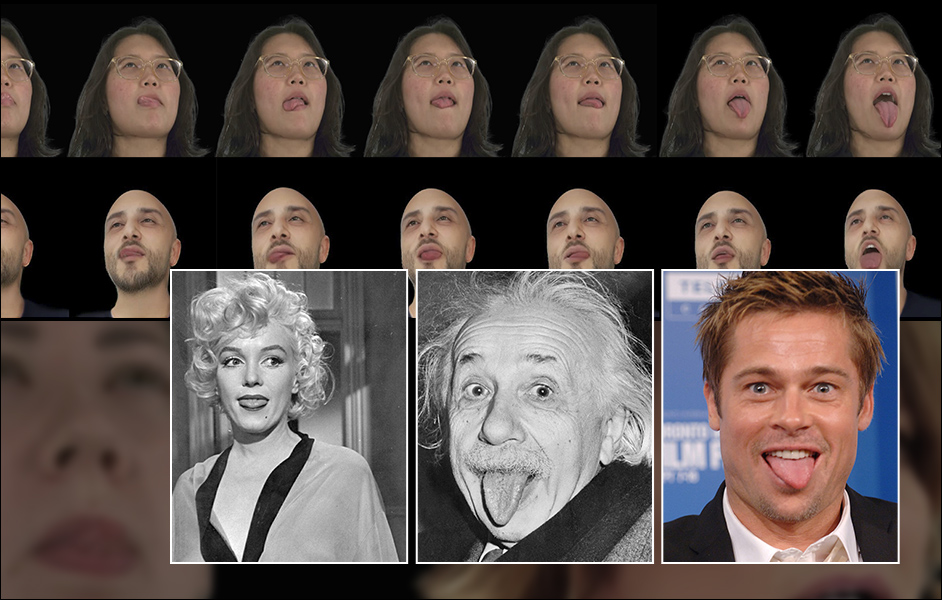
Loading the full article…
This text was published by Unite.AI and written by Martin Anderson. It is reproduced here with attribution so you can read it in full; the rights remain with the publisher. Read it at the source ↗
The headline, key points and digest above were generated by Digest AI's editorial model from the linked sources. Automated summaries can contain errors: the sources are the record. Spotted a mistake? Tell us. Published by Martin K., who runs Digest AI and handles corrections.
More in Research
All →- Meta expands academic partnerships for medical AI research · 1 src
- Google DeepMind cuts quantum circuit costs with Gemini 4 agents · 2 src
- Hi-TPH dataset improves T cell receptor binding predictions · 1 src
- OpenAI releases 'yardstick for intelligence': Let's pause here · 1 src
- Hugging Face outlines steps for building and maintaining agentic evaluations · 1 src
Comments
via GitHub Discussions