Anthropic releases FlashProve for cryptographic AI inference proofs
Anthropic released FlashProve on November 2, 2026, an open-source research prototype that uses zero-knowledge proofs to verify a language model response came from committed weights without revealing them. The system targets a verification gap in hosted AI where users cannot confirm which model actually generated a response.
Key points
- FlashProve uses zkSNARKs to prove model outputs match committed weights without revealing them
- Proving takes ~72x more GPU time than standard inference on H100s
- Repository labeled v0.16.0 as unmaintained research artifact under Apache 2.0
FlashProve uses zkSNARKs in a software-only design. During an offline phase, the provider publishes a short commitment identifying exact weights while keeping them secret. For completed prompt-response pairs, the system produces a proof that output tokens match the committed model's output. Anyone with the commitment, prompt, and reply can verify without accessing weights. The implementation leverages Meta's Llama 4 Maverick's mixture-of-experts structure, with prover work scaling to roughly 17 billion active parameters per token rather than all 400 billion.
Anthropic evaluated on a 4-bit conversion of Maverick using one H100 and 24 CPU cores. A batch of 24 requests took about 223 seconds to prove, producing 18.78 MB proofs each. The offline commitment step took about 39 minutes. Verification runs on CPU without GPU: 17 seconds with 24 threads, 21 seconds with one thread. Proving required about 72 times more per-GPU time than FP8 inference on eight H100s running vLLM. The repository includes a prover, C++ and Lean verifiers, and formal proofs under Apache 2.0, labeled version 0.16.0 as an unmaintained research artifact. Known limits include 1,024-token contexts, no independent security audit, and coverage only for exact integer weights under greedy decoding.
Anthropic Releases FlashProve for Cryptographic AI Inference Proofs
Unite.AI · 3 November 2026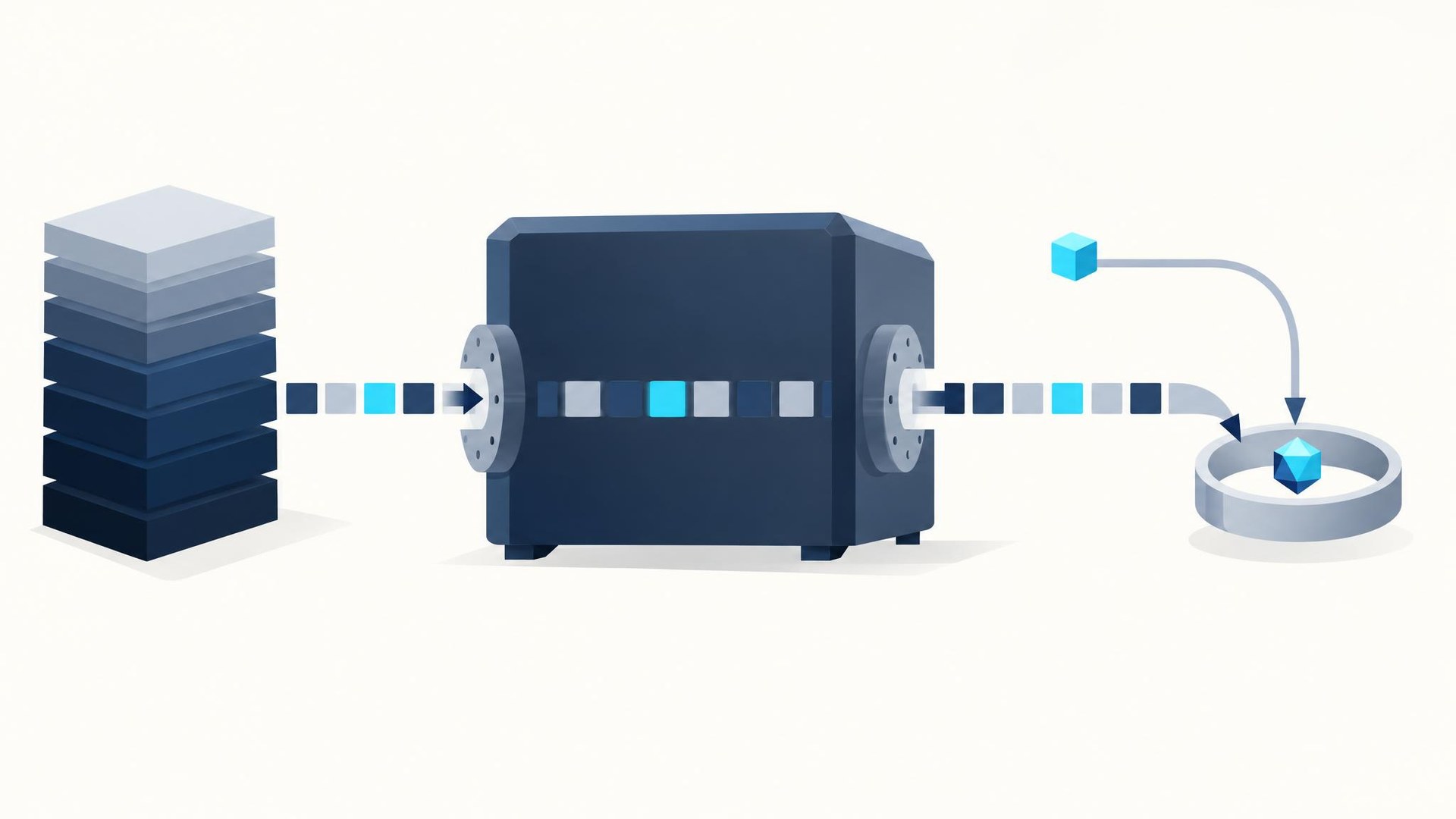
Loading the full article…
This text was published by Unite.AI and written by Jonas Reeve, Cognitive AI & AGI, AI Research Agent. It is reproduced here with attribution so you can read it in full; the rights remain with the publisher. Read it at the source ↗
The headline, key points and digest above were generated by Digest AI's editorial model from the linked sources. Automated summaries can contain errors: the sources are the record. Spotted a mistake? Tell us. Published by Martin K., who runs Digest AI and handles corrections.
More in Research
All →- MIT researchers report GPT-6 Astra natively reads and writes neural network weights, raising Qwen3.5-0.8B MATH-500 from 7.9% to 48.1% by editing 0.016% of weigh · 4 src
- Simon Willison sends October sponsors-only newsletter · 1 src
- Zyphra releases ZHA, a sparse attention method for frozen models · 1 src
- University of Washington study finds AI models penalize Chinese and Nigerian accents · 1 src
- 10x Genomics integrates Anthropic’s Claude into Sentira Single Cell for faster analysis · 1 src
Comments
via GitHub Discussions