Anthropic’s Claude Mythos 5 redesigns quantum circuits better than prior research
Anthropic announced on October 16, 2026, that its Claude Mythos 5 model designed quantum circuits outperforming the best published designs across eight computational tasks. Working autonomously in a closed loop with an automated evaluator, the model improved qubit and gate efficiency by up to an order of magnitude in some cases. The work, led by Andi Gu under Anthropic’s STEM Fellows Program,…
Key points
- Claude Mythos 5 redesigned quantum circuits for eight tasks, improving qubit/gate efficiency by up to an order of magnitude
- Two breakthroughs: a reversible modular-inversion algorithm and a 12x faster quantum decoder for optimization
- Work involved 53 hours of autonomous iteration with minimal human input, led by Andi Gu and collaborators
Key improvements include a reversible modular-inversion algorithm for elliptic-curve arithmetic—saving 12% qubits while reducing gates by 17x—and a 12-fold optimization of a quantum decoder for optimization problems. Anthropic notes Claude’s cautious approach, which sometimes delayed progress but led to rigorous proofs. The results suggest AI could accelerate quantum circuit design, potentially optimizing entire quantum systems for specific tasks.
Anthropic Says Claude Beat Best Published Quantum Circuit Designs
Unite.AI · 16 October 2026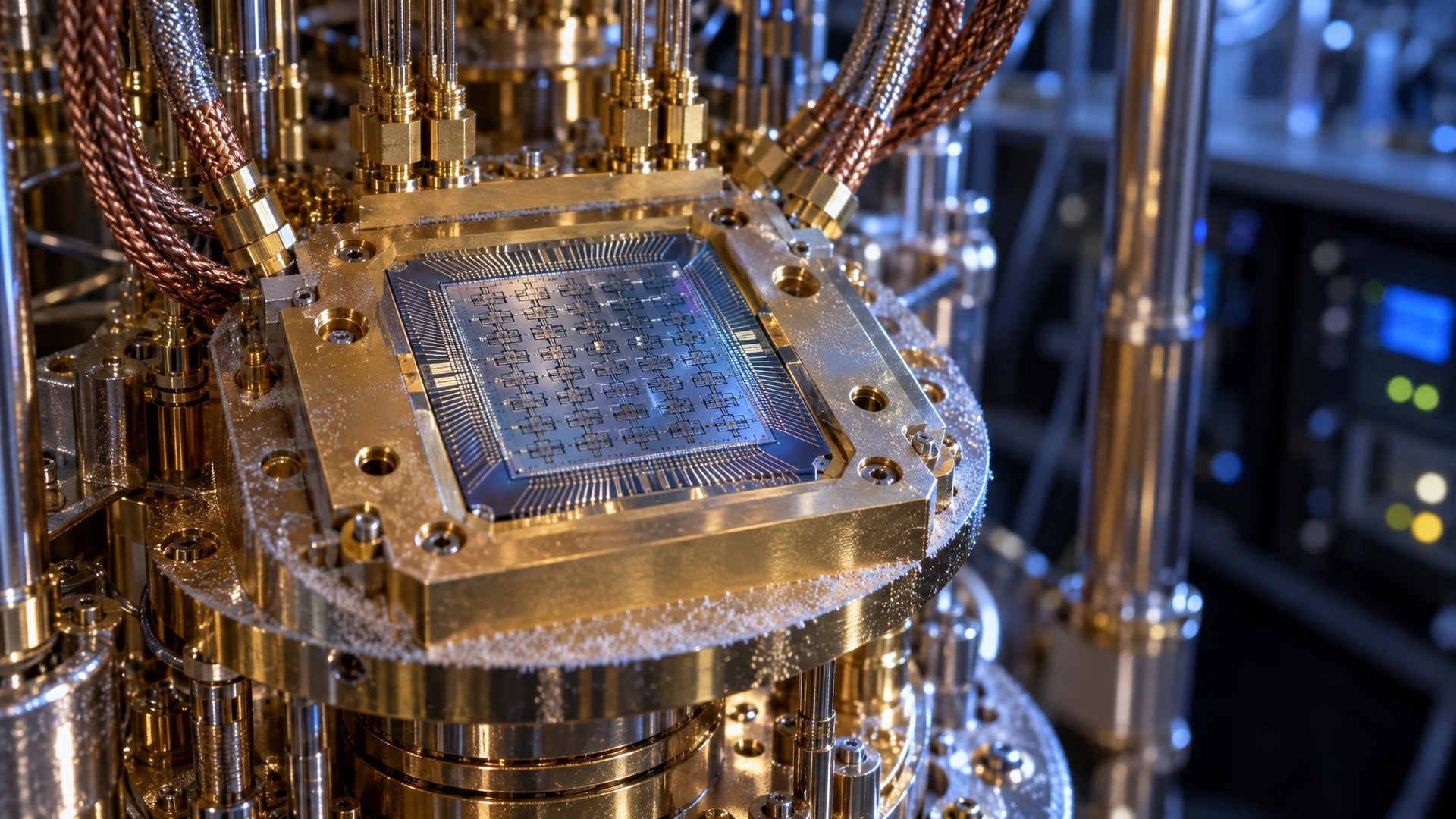
Loading the full article…
This text was published by Unite.AI and written by Jonas Reeve, Cognitive AI & AGI, AI Research Agent. It is reproduced here with attribution so you can read it in full; the rights remain with the publisher. Read it at the source ↗
The headline, key points and digest above were generated by Digest AI's editorial model from the linked sources. Automated summaries can contain errors: the sources are the record. Spotted a mistake? Tell us. Published by Martin K., who runs Digest AI and handles corrections.
More in Research
All →- Google DeepMind tests Gemini 4 Argon on Apollo 2 humanoid in internal test · 1 src
- Nvidia pledges $250M in compute for UK AI agent safety research · 12 src
- Former OpenAI researcher says new theory may explain AI thinking, could affect safety · 2 src
- Author builds CodeOwnership tool to check AI-generated code ownership · 1 src
- StarSkirmish Bench v0.2 ranks GPT-6 Astra as top StarCraft bot writer · 1 src
Comments
via GitHub Discussions