Chalmers researchers build AI system to run yeast experiments
Researchers at Chalmers University of Technology in Sweden have developed a closed-loop AI system capable of proposing biological hypotheses, designing experiments, and analyzing results using automated laboratory robots. The study, published in the Journal of the Royal Society Interface, focuses on Saccharomyces cerevisiae, a common yeast species. To address the reliability issues of large…
Key points
- Chalmers team built a hybrid AI system using logic programming and LLMs to test yeast hypotheses.
- Robotic equipment tested 1,933 candidate hypotheses, identifying new interactions like arginine and caffeine effects.
- The system discovered aminoadipate confers resistance to formic acid stress, improving growth by 7% per millimolar.
The system demonstrated its value by identifying unexpected interactions, such as arginine enhancing caffeine's inhibitory effects on yeast growth. It also achieved a new discovery: when an initial prediction about glutamate failed, the system used the resulting data to identify aminoadipate as a compound that confers resistance to formic acid stress, improving yeast growth by about 7% per millimolar increase. This marks the first demonstration of aminoadipate's role in this specific stress response.
Despite these advances, the system is not fully autonomous. Humans defined the scientific scope, safety boundaries, and architecture, and physical intervention was still required for sample management. Senior author Ross King emphasized that human scientists remain essential for defining research priorities and ensuring ethical oversight. The project aims to automate repetitive experimental cycles, allowing researchers to focus on interpreting broader scientific significance rather than managing data manually.
Scientists build an AI that can propose experiments, run them and learn from the results
thebrighterside.news · 2 October 2026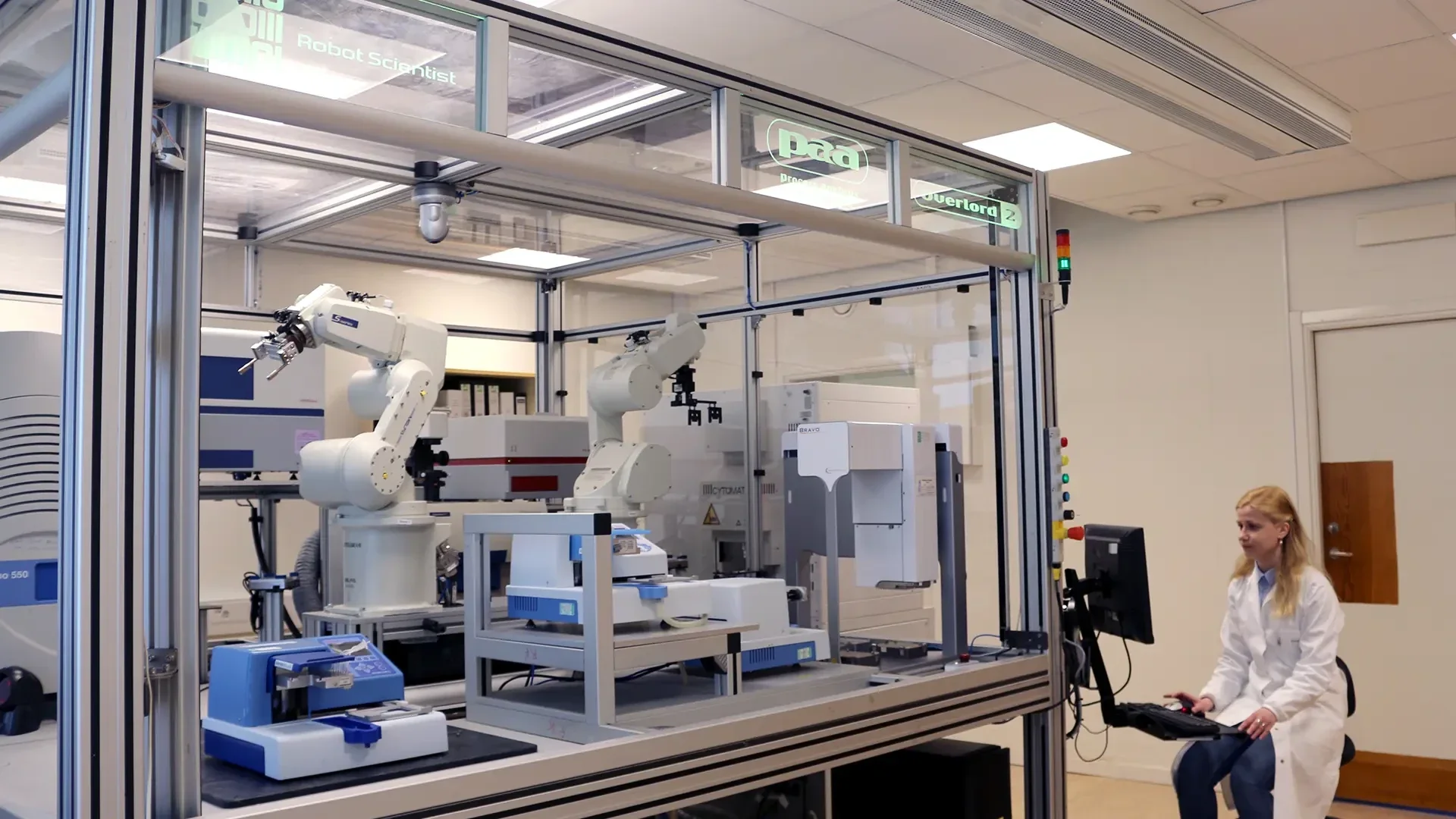
Loading the full article…
This text was published by thebrighterside.news and written by Shy Cohen, Karin Wik. It is reproduced here with attribution so you can read it in full; the rights remain with the publisher. Read it at the source ↗
Coverage and discussion
1source- Reddit discussionreddit.com
The headline, key points and digest above were generated by Digest AI's editorial model from the linked sources. Automated summaries can contain errors: the sources are the record. Spotted a mistake? Tell us. Published by Martin K., who runs Digest AI and handles corrections.
More in Research
All →- Karpathy shares how to make AI outputs like aircraft manuals · 1 src
- Allen Institute for AI open-sources AstaBrief 8B for faster scientific reports · 1 src
- Datalab releases OmniExtractBench to audit PDF extraction accuracy · 1 src
- What are world models and how do they predict environments? · 1 src
- Researchers introduce Context language models that manage their own Context · 4 src
Comments
via GitHub Discussions