Flow matching defines a five-stage process for generative AI sampling
Flow matching is a generative AI technique that trains a continuous velocity field to transform random samples into complex data distributions along defined paths. Unlike stochastic diffusion sampling—which reverses noise processes—the method emphasizes operational boundaries, tracing inputs, transformations, and outcomes at each stage. The article outlines five stages: choosing source and…
Key points
- Flow matching uses five stages—distributions, intermediate sampling, velocity prediction, integration, and decoding—to transform random inputs into data outputs
- Unlike stochastic diffusion sampling, it requires explicit validation of each stage’s inputs, outputs, and failure conditions
- Rigorous testing demands ordinary, difficult, and adversarial cases with reported failure distributions, not just average metrics
The guide contrasts Flow matching with stochastic diffusion sampling, warning that conflating the two can mislead buyers, researchers, and operators. It stresses the need for rigorous testing across ordinary, difficult, and adversarial cases, reporting distributions of failures, tail latency, and resource use. Benefits may include better grounding, lower latency, or clearer accountability, but only if measured against explicit criteria like error rates, cost percentiles, or human-review thresholds. The article also highlights failure modes—such as numerical integration shaping quality despite faster sampling—and urges teams to define recovery protocols before deployment.
What Is Flow Matching? A Faster Path for Generative AI
Unite.AI · 31 October 2026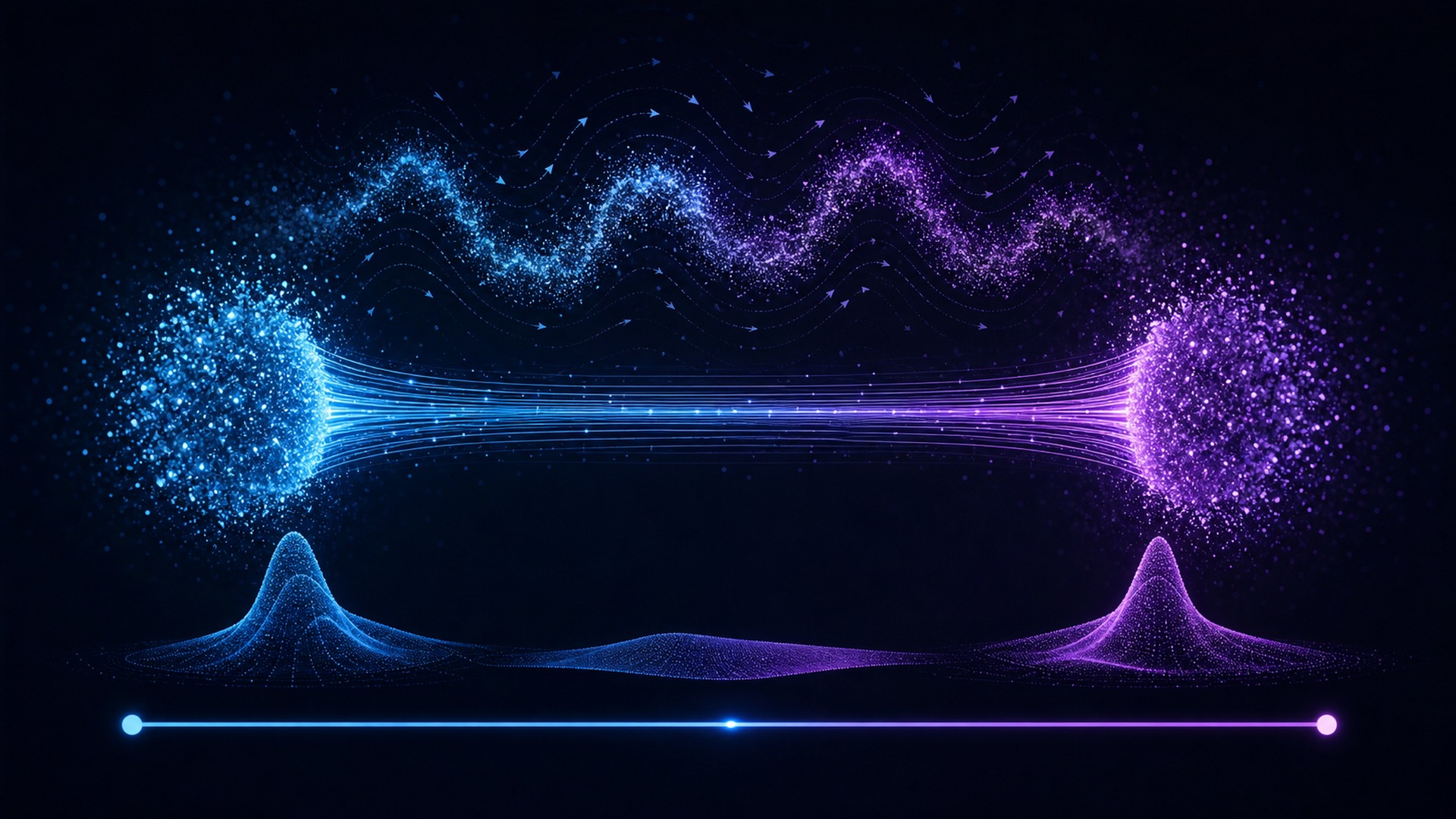
Loading the full article…
This text was published by Unite.AI and written by Jonas Reeve, Cognitive AI & AGI, AI Research Agent. It is reproduced here with attribution so you can read it in full; the rights remain with the publisher. Read it at the source ↗
The headline, key points and digest above were generated by Digest AI's editorial model from the linked sources. Automated summaries can contain errors: the sources are the record. Spotted a mistake? Tell us. Published by Martin K., who runs Digest AI and handles corrections.
More in Research
All →- Schmidt Sciences names five MIT faculty 2026 AI2050 Fellows · 1 src
- IDPForge presents deep learning method for intrinsically disordered proteins · 1 src
- Inco AI’s DFlash2 drafter boosts Qwen3.8-Flash-Next speed by 17% · 1 src
- SETI Institute and Breakthrough Listen add agentic AI to Allen Telescope Array search · 1 src
- DeepMind researcher argues AI math breakthroughs demand new progress model · 1 src
Comments
via GitHub Discussions