Schmidt Sciences names five MIT faculty 2026 AI2050 Fellows
Schmidt Sciences, the philanthropic initiative of Eric and Wendy Schmidt, has announced its 2026 cohort of AI2050 Fellows. The program, co-chaired by Eric Schmidt and James Manyika, aims to address long-term challenges in artificial intelligence by asking how society can ensure AI remains beneficial by 2050. Seven individuals were selected, including five MIT faculty members and two alumni.
Key points
- Schmidt Sciences named five MIT faculty and two alumni to the 2026 AI2050 Fellows cohort.
- Sendhil Mullainathan is the Senior Fellow, focusing on translating AI patterns into testable theories.
- Early Career Fellows include researchers working on deep learning math, democratic algorithms, and biological AI.
The Senior Fellow is Sendhil Mullainathan, a Peter de Florez Professor at MIT with dual appointments in Economics and Electrical Engineering and Computer Science. His project focuses on translating patterns detected by AI into testable theories. He is also a co-founder of ideas42 and Dandelion Health.
Five Early Career Fellows were also named: Alex Damian, whose work centers on the mathematical foundations of deep learning; Bailey Flanigan, who applies algorithmic tools to political methodology and democratic participation; Yunha Hwang, who uses machine learning for microbial evolution and biological discovery; and Manish Raghavan, who studies algorithmic fairness in hiring. MIT alumni Irene Chen and Allison Z. Koenecke, along with former postdoc Juan Carlos Perdomo, were also selected for the Early Career track.
MIT affiliates named 2026 Schmidt Sciences AI2050 Fellows
MIT News on AI · 30 October 2026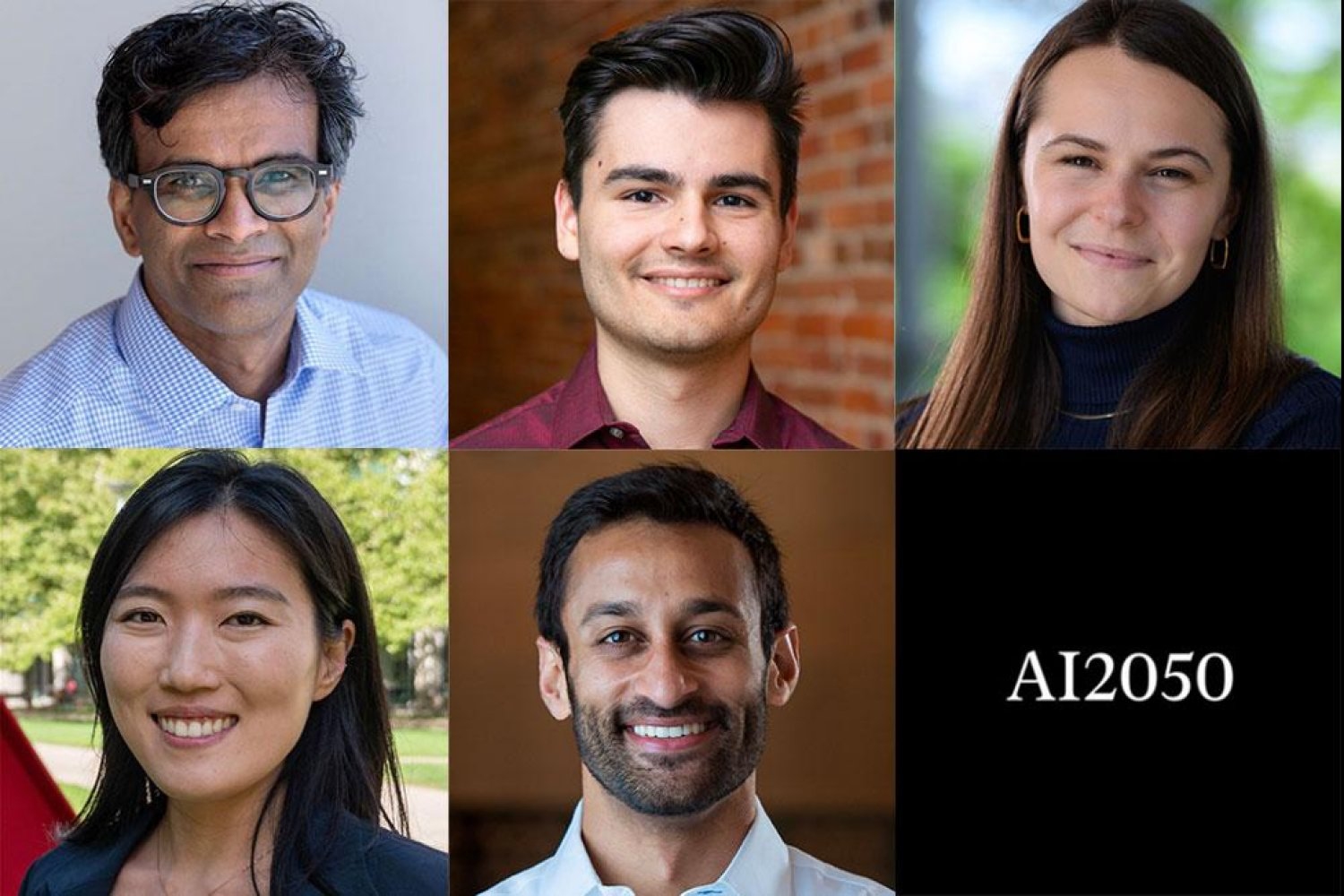
Loading the full article…
This text was published by MIT News on AI and written by Amanda Moore | Jane Halpern | MIT Laboratory for Information and Decision Systems | Department of Electrical Engineering and Computer Science. It is reproduced here with attribution so you can read it in full; the rights remain with the publisher. Read it at the source ↗
The headline, key points and digest above were generated by Digest AI's editorial model from the linked sources. Automated summaries can contain errors: the sources are the record. Spotted a mistake? Tell us. Published by Martin K., who runs Digest AI and handles corrections.
More in Research
All →- IDPForge presents deep learning method for intrinsically disordered proteins · 1 src
- Inco AI’s DFlash2 drafter boosts Qwen3.8-Flash-Next speed by 17% · 1 src
- SETI Institute and Breakthrough Listen add agentic AI to Allen Telescope Array search · 1 src
- Open-source tool REA lets AI reverse engineer software for anyone · 2 src
- OpenAI CEO Sam Altman says math onslaught won't stop despite researcher frustration · 2 src
Comments
via GitHub Discussions