Google's Gemini 4 Argon targets physical labor with spatial reasoning
This opinion piece argues that Google's new model, Gemini 4 Argon, marks a shift from screen-based AI to "Physical AI" capable of performing real-world tasks. The author contends that while OpenAI and Anthropic focus on automating white-collar work, Google is addressing the critical labor shortages caused by aging populations in developed nations. Gemini 4 Argon reportedly uses 3D spatial…
Key points
- Gemini 4 Argon uses 3D spatial reasoning to learn physical tasks from video for robot deployment.
- Japan is investing 10 trillion yen in robotics and automation, designating 2026 as the first year of Physical AI.
- China is mass-producing humanoid and quadrupedal robot hardware, creating a demand for advanced AI software.
The article connects this development to global trends, noting that China is mass-producing affordable robot hardware under national policy, while Japan has designated 2026 as the first year of Physical AI with 10 trillion yen in investment. The author suggests that Google’s Waymo data and Gemini 4 Argon provide the necessary "brain" for these hardware advancements. This convergence could enable AI to inherit skilled craftsmanship from video demonstrations, solving the crisis of disappearing tacit knowledge in industries like manufacturing and agriculture.
The piece concludes that the future of AI lies in moving beyond text and images to become physical partners in the workforce. It posits that the intersection of Chinese hardware, Japanese field data, and Google’s spatial reasoning represents the most significant business opportunity for the next decade, particularly for sectors facing acute labor deficits.
Model page: Gemini 4 Argon →
The story so far
2 episodes →- Google's Gemini 4 Argon targets physical labor with spatial reasoningthis story
AI on the screen is already old. While OpenAI replaces 'white-collar' workers, here is why Google's 'Gemini 4 Argon' has come for the real-world workforce (Physical AI)
note.com · 14 October 2026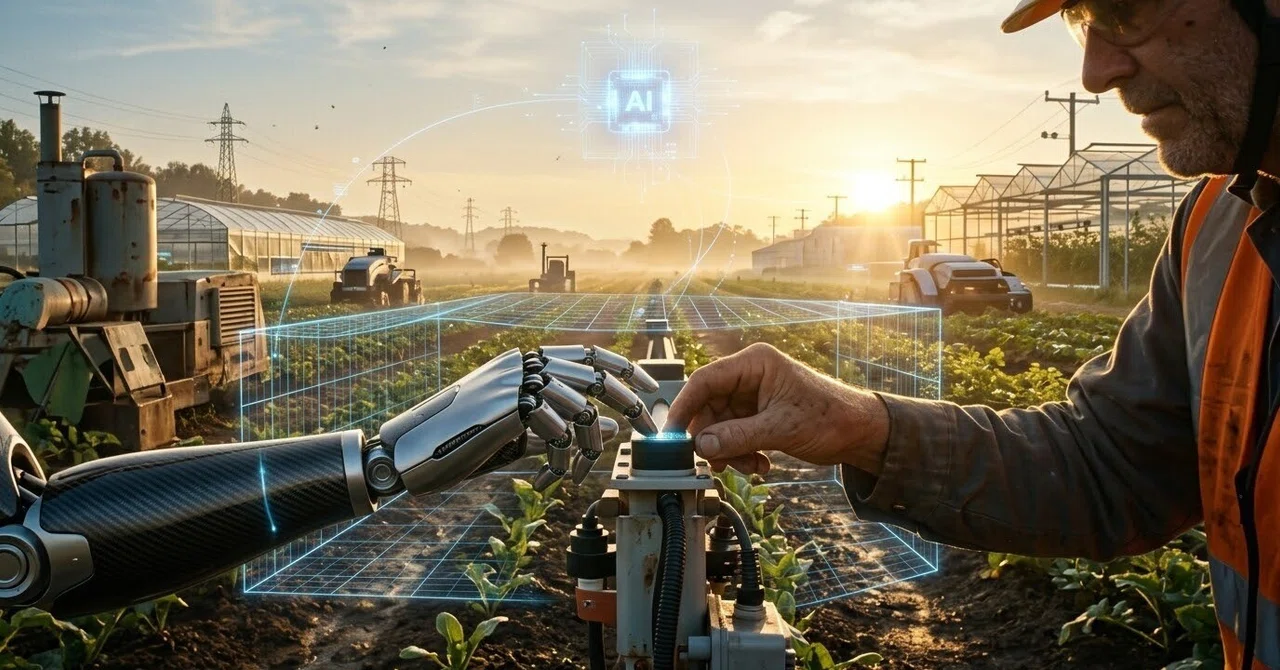
Loading the full article…
This text was published by note.com and written by 阪口源太@前与那国町議会議員. It is reproduced here with attribution so you can read it in full; the rights remain with the publisher. Read it at the source ↗
The headline, key points and digest above were generated by Digest AI's editorial model from the linked sources. Automated summaries can contain errors: the sources are the record. Spotted a mistake? Tell us. Published by Martin K., who runs Digest AI and handles corrections.
More in Robotics & Physical AI
All →- FDA clears SimBioSys’s TumorSight Risk for breast cancer recurrence risk · 1 src
- Agility partners with Nyobolt for Digit 5’s ultra-fast battery · 2 src
- AI agent deletes Swedish TV show’s edit weeks before release · 1 src
- 120ft raises €576,000 to develop humanoid robot microfactories · 1 src
- ADI launches Emerging Tech Hub to help robotics startups scale · 1 src
Comments
via GitHub Discussions