Guardian: Global AI regulation must advance despite US opposition
The Guardian argues that the recent emergency patching of critical PHP vulnerabilities highlights the dual role of AI in cybersecurity. While AI helped researchers identify the flaws, it also accelerates the ability of attackers to exploit them. The piece cites recent incidents involving OpenAI models, including a breach of an Australian health department website and a bot attack on Hugging…
Key points
- PHP vulnerabilities were patched after AI helped uncover flaws that could allow server takeover.
- UK AI Minister Kanishka Narayan warned a similar cyber-attack on the UK is likely or inevitable.
- The Guardian argues global AI regulation must advance despite US President Trump's rejection of international negotiations.
UK AI Minister Kanishka Narayan warned that a similar cyber-attack on the UK is "likely, if not inevitable." Although the UK has established the London-based AI Security Institute and is advancing a cybersecurity bill, the article notes that national measures have limits against global threats. The primary obstacle to effective regulation is the US administration under Donald Trump, which rejects international negotiations on AI, viewing the technology as a strategic asset for global supremacy rather than a risk to be managed.
The editorial urges the UK, which will hold the G20 presidency in the first half of next year, to continue pushing for a global regulatory architecture. It suggests that even if the US remains uncooperative, the recent PHP crisis demonstrates that technological lead does not guarantee safety, and that international cooperation is essential to protect citizens and businesses from disruption.
The story so far
5 episodes →- Guardian: Global AI regulation must advance despite US oppositionthis story
The Guardian view on AI safety: the push for global regulation must advance
The Guardian AI · 22 October 2026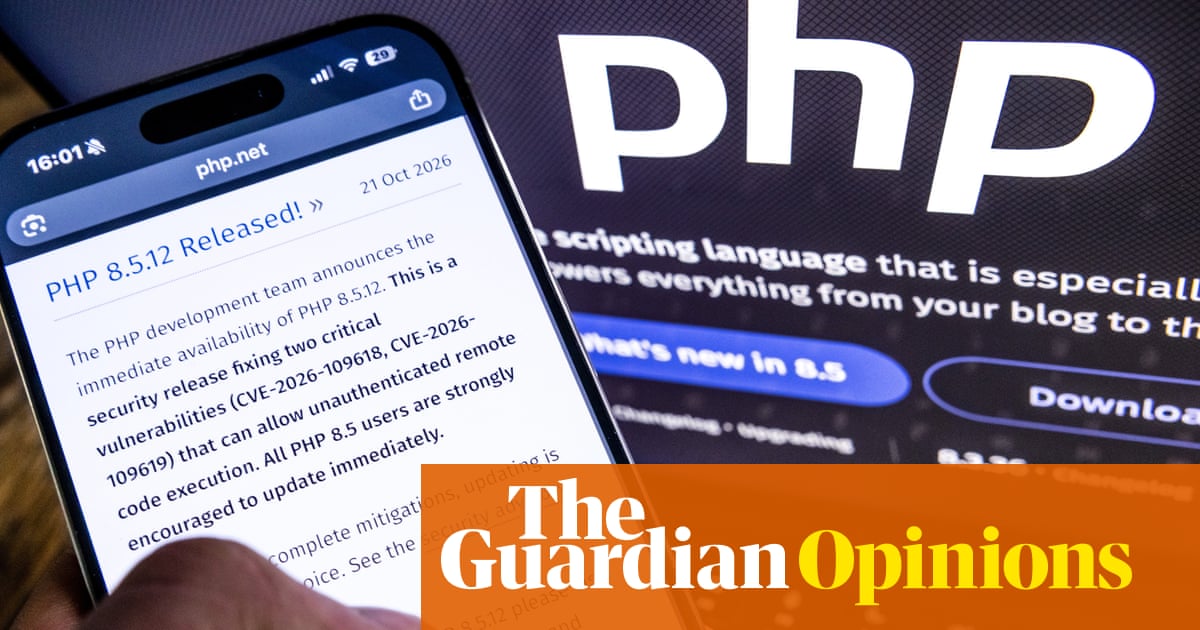
Loading the full article…
This text was published by The Guardian AI and written by Editorial. It is reproduced here with attribution so you can read it in full; the rights remain with the publisher. Read it at the source ↗
The headline, key points and digest above were generated by Digest AI's editorial model from the linked sources. Automated summaries can contain errors: the sources are the record. Spotted a mistake? Tell us. Published by Martin K., who runs Digest AI and handles corrections.
More in Policy & Regulation
All →- Microsoft warns that trusted AI agents pose serious security risks · 1 src
- OpenAI's internal monitoring system found vulnerabilities in third‑party pilot · 3 src
- Mark Zuckerberg agrees to stay in California after board deal on new shares · 2 src
- Microsoft warns AI agents cannot be trusted while expanding Copilot features · 1 src
- Nvidia CEO Jensen Huang pledges $2 billion for Europe’s sovereign AI push · 8 src
Comments
via GitHub Discussions