Lincoln laboratory publishes survey of AI accelerators
The Lincoln Laboratory Supercomputing Center (LLSC) has been running the Lincoln AI Computing Survey (LAICS) since 2018. The survey now spans six papers, covering more than 120 AI accelerators, from CPUs and GPUs to ASICs, FPGAs and data‑flow chips. The team, led by Albert Reuther, compares each device’s peak performance and peak power, drawing data from public sources.
Key points
- LAICS surveyed 57 accelerators in its first paper, 120+ in the latest.
- Survey compares peak performance and power across CPUs, GPUs, ASICs, FPGAs, data‑flow accelerators.
- Six new startups announced AI accelerators in recent months.
LAICS uses peak performance and power as its main metrics, then sorts devices by form factor—chip, card or system. The survey also explores how architectural choices, such as adding cores or parallel performance, affect performance. In the latest paper, the team noted that smaller, denser transistor designs and lower numerical precision drive performance gains. Reuther reports that each year five to ten new startups launch accelerators, and six have announced their first products in recent months.
The survey informs LLSC’s procurement decisions, helping the laboratory choose GPUs for future systems and advising government sponsors on acquisition choices. Reuther says the data help sponsors and mission programs understand the AI accelerator landscape and make better research and acquisition decisions. The full set of papers and datasets is available online.
Supercomputing researchers document evolution of AI hardware
MIT News on AI · 6 October 2026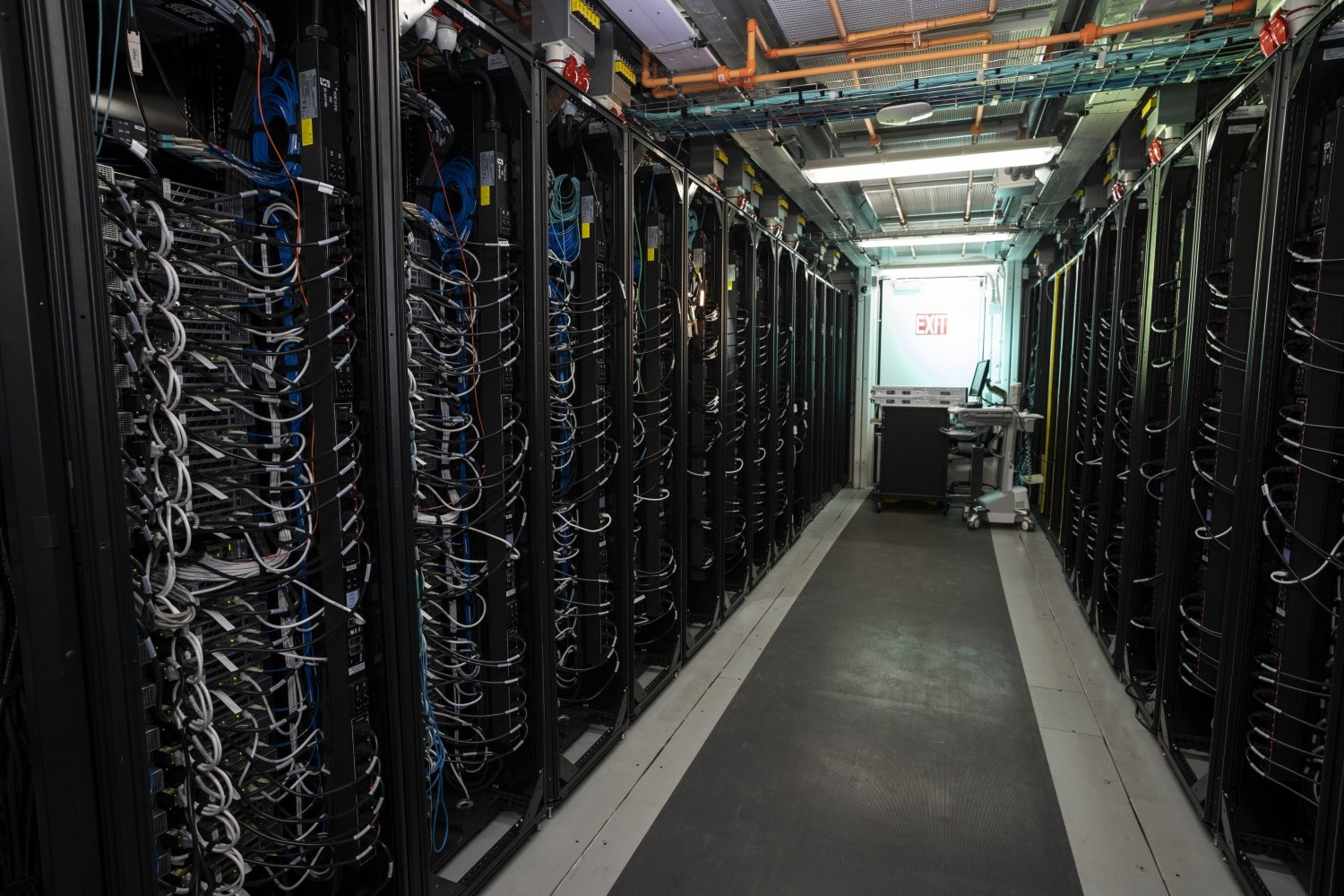
Loading the full article…
This text was published by MIT News on AI and written by Haley Wahl | MIT Lincoln Laboratory. It is reproduced here with attribution so you can read it in full; the rights remain with the publisher. Read it at the source ↗
The headline, key points and digest above were generated by Digest AI's editorial model from the linked sources. Automated summaries can contain errors: the sources are the record. Spotted a mistake? Tell us. Published by Martin K., who runs Digest AI and handles corrections.
More in Research
All →- Gen-Verse releases DiscoveryRSI-27B for scientific hypothesis generation · 1 src
- Anthropic’s Jack Clark advances AI self-improvement forecast to 2027 · 3 src
- New study finds AI struggles to correct false claims clearly across languages · 2 src
- Shanghai AI Lab’s Shusheng‑S2 aids reported proof of three‑dimensional Ghys conjecture · 1 src
- OpenAI fails to prove Navier-Stokes, mathematicians claim · 1 src
Comments
via GitHub Discussions