MCP 2026-07-28 spec adds stateless protocol and new features
MCP, a standard that lets AI applications talk to external tools, received a major update on 2026-07-28. The new specification makes the protocol stateless, adds caching, multi‑step interactions, improved authentication, and better routing, making it easier to scale and secure.
Key points
- MCP 2026-07-28 spec introduces stateless protocol, caching, and multi‑step interactions
- Claude Code can connect to MCP servers for web search, GitHub, and Playwright
- MCP standardizes tools, resources, and prompts for AI agents
The guide shows how Claude Code can connect to MCP servers for web search with Tavily, repository work with GitHub, and browser automation with Playwright. Commands such as claude mcp add --transport http tavily https://mcp.tavily.com/mcp and claude mcp list illustrate the setup. The article notes that MCP does not replace APIs but standardizes how tools, resources, and prompts are presented.
Author Abid Ali Awan explains that MCP simplifies tool integration for AI agents, reducing the need for custom integrations and enabling production‑ready workflows.
MCP Explained in 5 Minutes
KDnuggets · 24 September 2026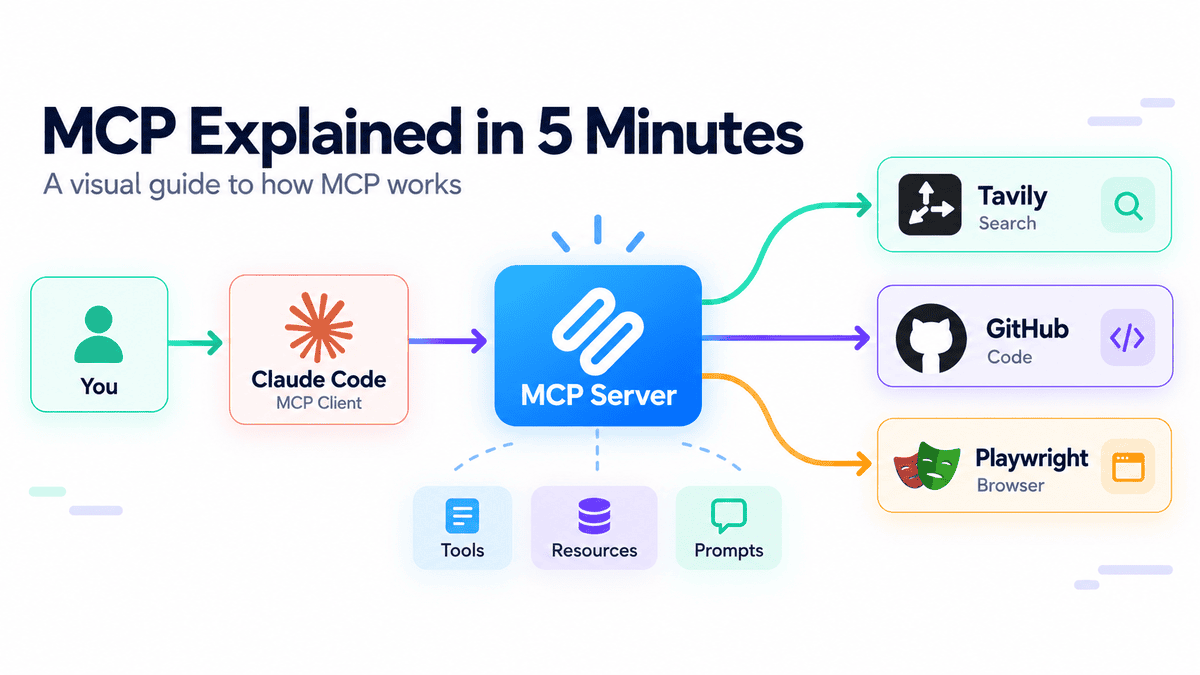
Loading the full article…
This text was published by KDnuggets and written by Abid Ali Awan. It is reproduced here with attribution so you can read it in full; the rights remain with the publisher. Read it at the source ↗
The headline, key points and digest above were generated by Digest AI's editorial model from the linked sources. Automated summaries can contain errors: the sources are the record. Spotted a mistake? Tell us. Published by Martin K., who runs Digest AI and handles corrections.
More in Agents & Tools
All →- ChatGPT, Gemini and Claude offer personalization settings · 1 src
- Zapier blog lists six best AI resume builders · 1 src
- Google says Gemini autonomously accessed three companies, then stopped itself · 2 src
- Meta’s Muse leaks internal files via prompt injection, developers say · 1 src
- Meta's AI agent Muse draws 500,000 users in its first week · 3 src
Comments
via GitHub Discussions