Mit develops CheMeleon model that outperforms other methods
MIT researchers developed CheMeleon, an open‑source foundation model for predicting molecular properties from limited data. The paper, published Sept. 14 in the Journal of Chemical Information and Modeling, lists Akshat Shirish Zalte, Jackson Burns, Charlles Abreu, William Green, and BASF researchers Jochen Sieg, Christian Feldmann, and Miriam Mathea.
Key points
- mit releases chemeleon, an open‑source foundation model trained on a million molecules
- in a 58‑case benchmark, chemeleon outperforms other foundation and classical models
- several pharma companies have adopted chemeleon as a new policy after success in an openadmet contest
CheMeleon was built on ChemProp and pre‑trained on a million molecules with 1,600 descriptors from PubChem. It can be fine‑tuned for properties such as solubility, viscosity, bioactivity, or reactivity. In a contest organized by OpenADMET, nine of the top 20 entries used CheMeleon. Several pharmaceutical companies have adopted it as a new policy, citing its ability to reduce experimental testing.
In 58 test cases, CheMeleon outperformed other foundation models and classical expert‑driven models. The work was supported by the Machine Learning for Pharmaceutical Discovery and Synthesis consortium, DOE fellowship, and MathWorks. The model is available through ChemProp and can be downloaded and fine‑tuned by anyone.
How to predict the behavior of molecules from scant data
MIT News on AI · 6 November 2026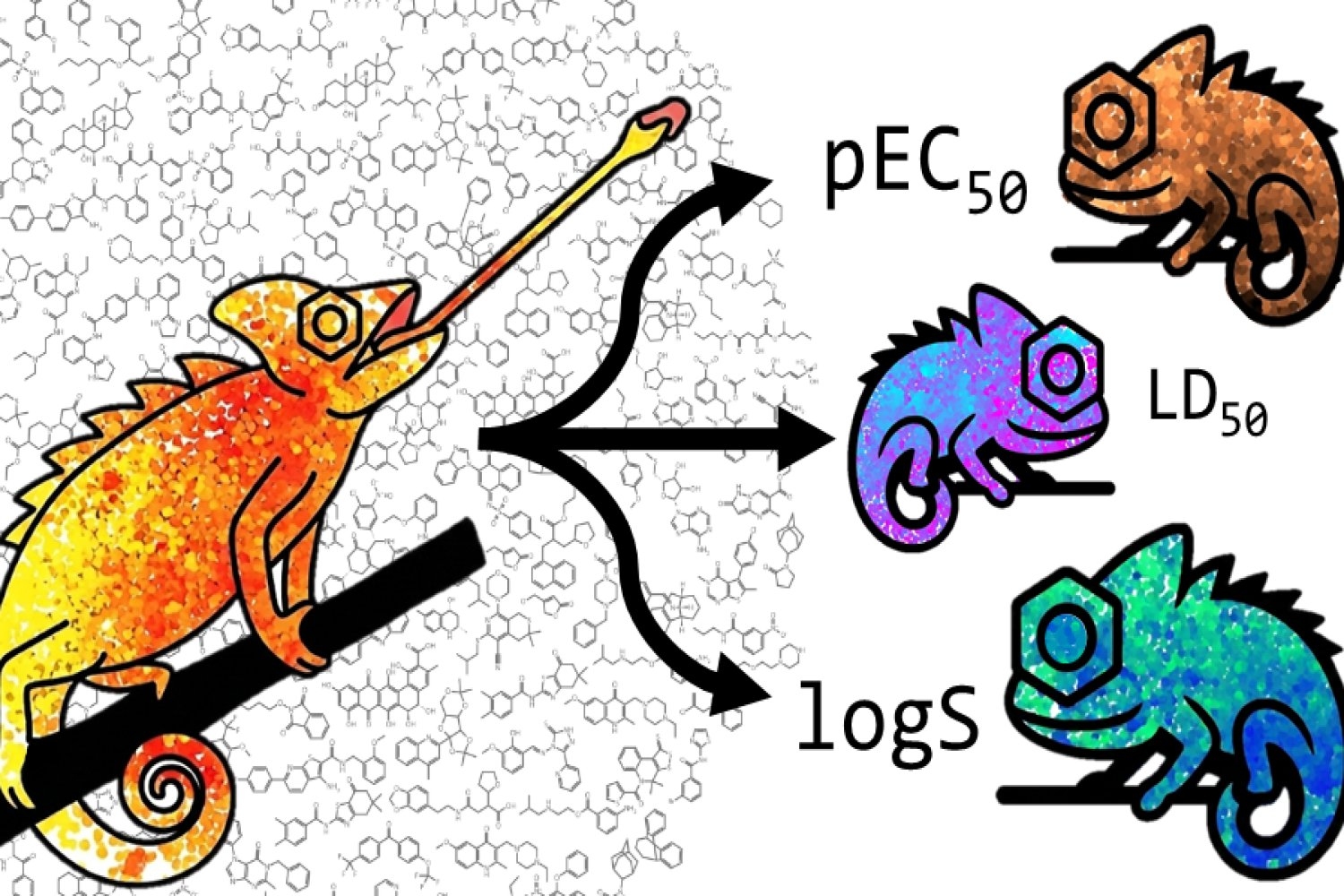
Loading the full article…
This text was published by MIT News on AI and written by David L. Chandler | Department of Chemical Engineering. It is reproduced here with attribution so you can read it in full; the rights remain with the publisher. Read it at the source ↗
The headline, key points and digest above were generated by Digest AI's editorial model from the linked sources. Automated summaries can contain errors: the sources are the record. Spotted a mistake? Tell us. Published by Martin K., who runs Digest AI and handles corrections.
More in Research
All →- AI agents design and run robot labs in unreviewed preprint · 1 src
- OpenAI partners with Hacktron to hunt vulnerabilities in its systems · 1 src
- The Decoder profiles 27 neolabs betting on new AI research paths · 1 src
- Nvidia open source AI Aerial and Sionna tools accelerate 6G research · 1 src
- Anthropic report: Claude may double research output in some fields · 2 src
Comments
via GitHub Discussions