MIT researchers introduce framework to bound chaotic AI simulations
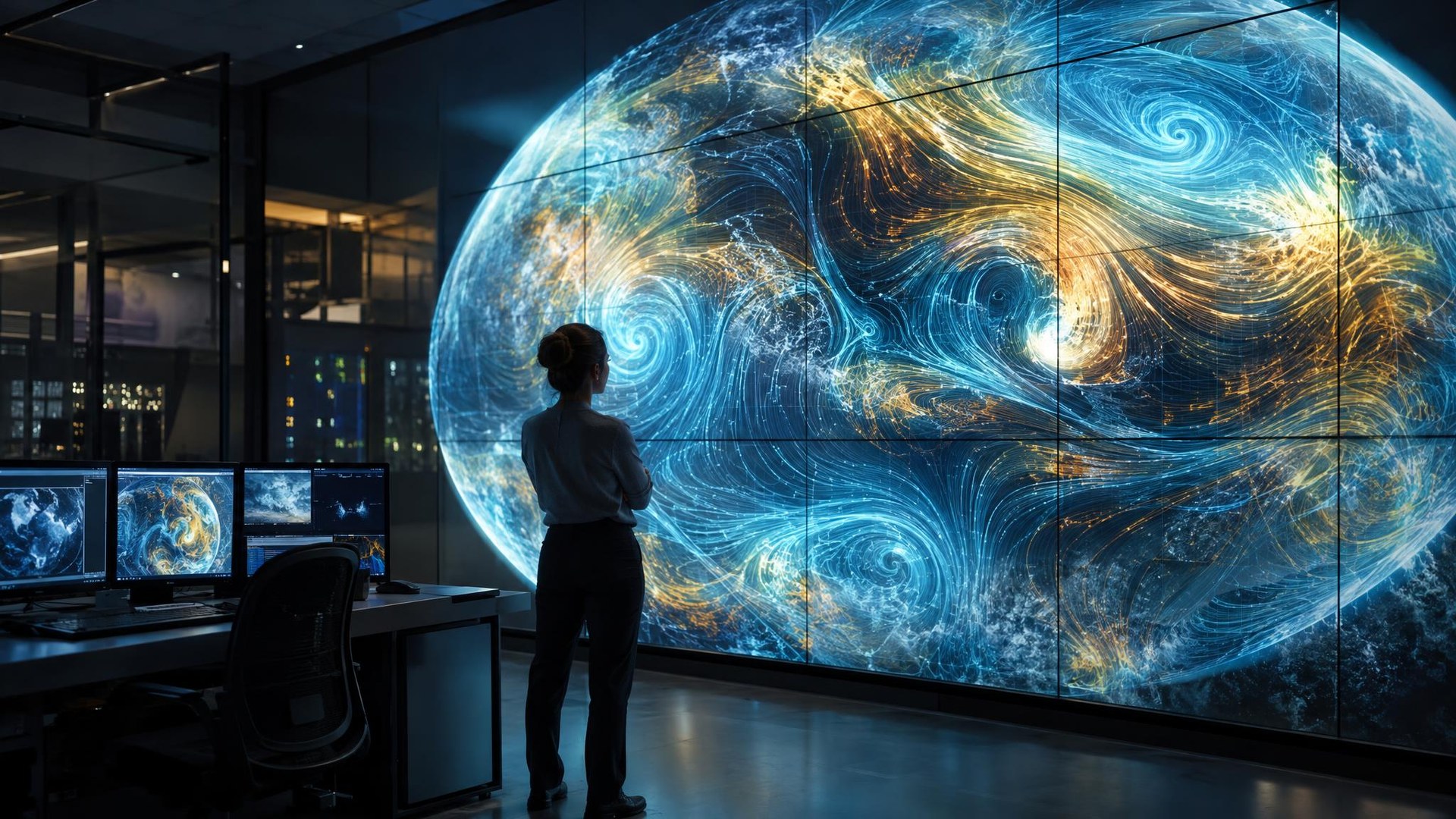
MIT researchers developed a machine-learning framework that ensures AI models of chaotic systems—like weather or turbulence—stay within physically plausible limits over long forecasts.
Key points
- MIT’s framework guarantees bounded trajectories for chaotic AI models over long forecasts by enforcing dissipation via a learned energy constraint
- Tests on Lorenz 96 and Kuramoto–Sivashinsky models show bounded predictions, but realistic weather performance is unproven
- Open-source code is available on GitHub, with plans to test larger systems and data-driven weather models next
The method, announced on November 20, 2026, combines a dynamics emulator with an energy-like constraint to enforce dissipation, preventing unbounded errors that invalidate long-term predictions. While the approach works in controlled tests (e.g., Lorenz 96 and Kuramoto–Sivashinsky models), its performance on realistic weather data remains untested, leaving open whether it preserves meaningful long-term statistics in practice.
The framework, detailed in a PNAS paper (published October 12, 2026), is modular and model-agnostic, meaning it can adapt to different neural architectures. Lead author Sunbochen Tang and professors Navid Azizan and Themistoklis Sapsis emphasize that the method does not suppress chaotic variation but instead constrains energy dissipation to keep trajectories bounded. The team has released the code on GitHub, inviting further research and testing on larger, more complex systems.
Coverage and discussion
2sources- New approach enables physically consistent AI models of chaotic systemsPrimary source · MIT News on AI ·
The headline, key points and digest above were generated by Digest AI's editorial model from the linked sources. Automated summaries can contain errors: the sources are the record. Spotted a mistake? Tell us. Published by Martin K., who runs Digest AI and handles corrections.
More in Research
All →- OpenAI publishes a preprint that claims to prove that the matrix multiplication exponent (ω) is exactly 9/4, addressing a major open problem in mathematics · 2 src
- Study of 58 Anthropic customers finds 80% of AI-built apps automate manual tasks · 2 src
- Anthropic researcher proves Riemann Hypothesis with Claude, verified by Lean community · 17 src
- Google DeepMind proves Signal encryption code with AlphaProof Code · 1 src
- OpenAI reports GPT-6 designs proteins with reasoning, lab tests show binding · 4 src
Comments
via GitHub Discussions