MIT report finds AI erodes student engagement and creative friction
MIT’s Human Insight Collaborative (MITHIC) has released findings from a recent report on artificial intelligence and education, highlighting a decline in student participation in office hours and collaborative problem-solving. The report warns that generative AI is eroding the "creative friction" essential to the MIT educational model, where students traditionally challenge one another and…
Key points
- MIT report finds students use AI less for collaboration, eroding educational 'creative friction'.
- MITHIC has funded 67 projects with $5.5 million, focusing on AI's social impact.
- Research examines if AI tools like Claude provide incomplete political information to voters.
To address these concerns, MITHIC is supporting interdisciplinary research across the Institute. One project examines how large language models, such as Anthropic’s Claude, may provide incomplete political information to voters, as seen in Alaska’s midterms. Another study by professors Eric Klopfer and Pawan Sinha investigates whether AI use offloads cognitive function or supports it during creative processes. Additionally, faculty are launching new courses and workshops to help educators manage AI’s impact on writing and critical thinking, emphasizing the need for a "humane" approach to user experience design.
MIT leadership, including President Sally Kornbluth and Provost Anantha Chandrakasan, stresses the urgency of combining technological advancement with human-centered perspectives. They argue that understanding the societal and ethical implications of AI is critical to ensuring it elevates rather than diminishes human existence. MITHIC plans to continue pairing humanists with scientists to explore how AI is changing knowledge production in fields like mathematics.
Putting a spotlight on AI, society, and humanity
MIT News on AI · 17 November 2026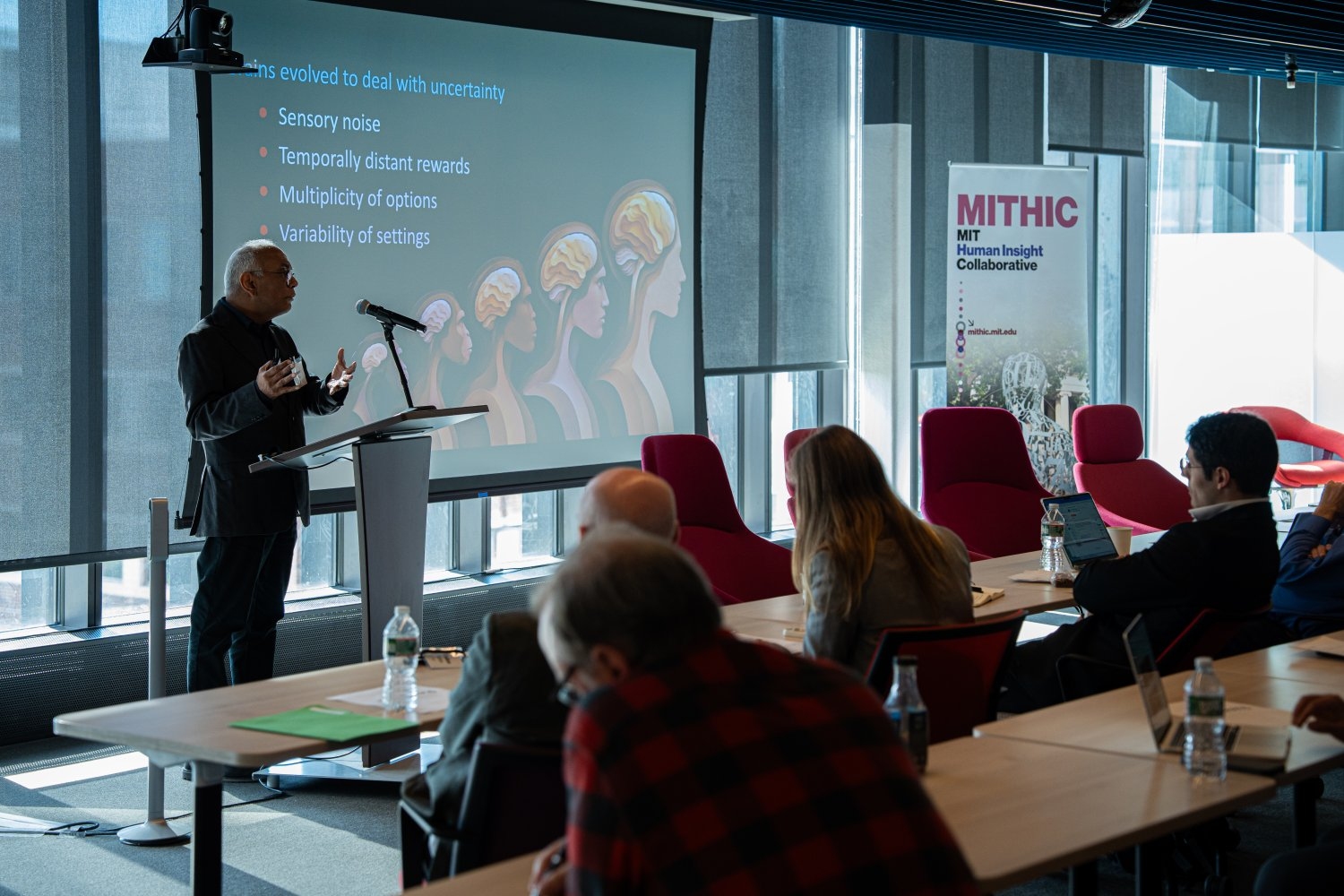
Loading the full article…
This text was published by MIT News on AI and written by Danna Lorch | School of Humanities, Arts, and Social Sciences. It is reproduced here with attribution so you can read it in full; the rights remain with the publisher. Read it at the source ↗
The headline, key points and digest above were generated by Digest AI's editorial model from the linked sources. Automated summaries can contain errors: the sources are the record. Spotted a mistake? Tell us. Published by Martin K., who runs Digest AI and handles corrections.
More in Society & Work
All →- Chess world championship offers lessons on human vs AI limits · 1 src
- Dario Amodei reportedly suggested games could pacify masses after AI job loss · 3 src
- Microsoft AI CEO says parents may rethink college savings, 15% already cut · 1 src
- Guardian writer tests AI text replies with husband · 1 src
- Former members accuse AI-focused Vermont group Maple of cult-like practices · 1 src
Comments
via GitHub Discussions