MIT researchers develop TangiMap to map AI agents to physical controls
MIT researchers have introduced TangiMap, a system that uses AI agents to reprogram physical controls for digital software.
Key points
- TangiMap uses AI agents to map digital software functions to physical controls like knobs and buttons.
- Researchers demonstrated the system with Adobe Lightroom, Blender, and Character Animator using physical mixers.
- The work was presented at the ACM Symposium on User Interface Software and Technology.
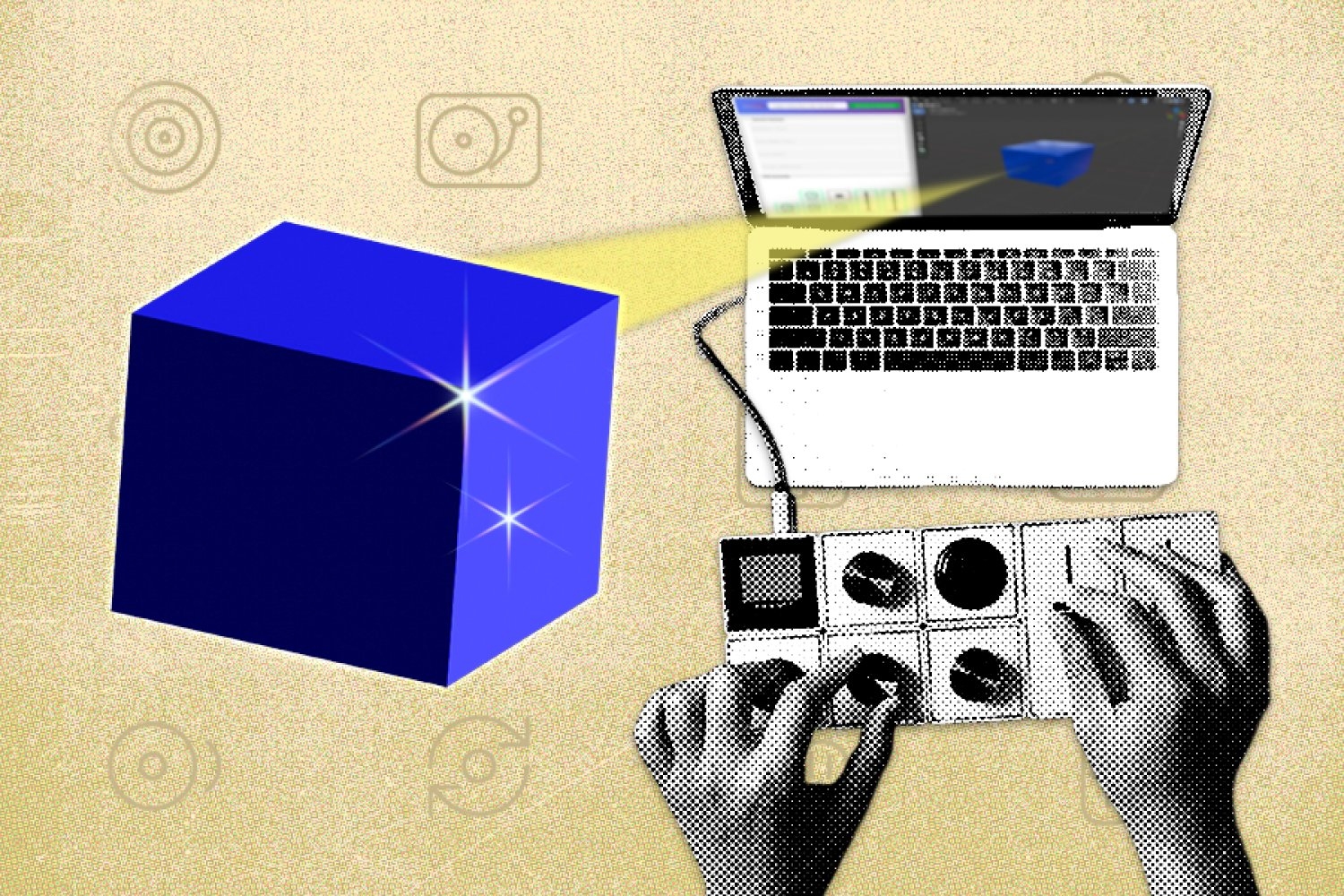
The tool maps digital widgets to tangible inputs like knobs and buttons, allowing users to interact with applications such as Adobe Lightroom, Blender, and Character Animator through physical devices like mixers and control pads. This approach aims to restore the efficiency and precision of tactile controls, which are often lost in fully digital interfaces.
The system relies on an AI agent to gather context from software APIs, MCP servers, or screenshots interpreted by vision-language models. It then uses a large language model to map specific digital functions to physical controls. For example, the team turned a standard mixer into a photo-editing controller for adjusting color in Lightroom and reprogrammed another mixer for 3D modeling in Blender. The researchers presented this work at the ACM Symposium on User Interface Software and Technology.
Yunyi Zhu, a doctoral student at MIT, and co-author Chang Xiao from Boston University developed the system. They envision a future where everyday objects use AI agents as a "brain" to dynamically reprogram themselves based on context. The research was supported in part by Google’s Gemini Academic Program Award.
The headline, key points and digest above were generated by Digest AI's editorial model from the linked sources. Automated summaries can contain errors: the sources are the record. Spotted a mistake? Tell us. Published by Martin K., who runs Digest AI and handles corrections.
More in Research
All →- Anthropic builds Siren honeypot to test AI agent sandbox escapes · 2 src
- Anthropic mathematician claims Claude proves Riemann hypothesis, independent checks confirm · 40 src
- OpenAI releases 'yardstick for intelligence': Let's pause here · 2 src
- GPT 6.2 Astra Solves Historical Mystery · 1 src
- Harvard researchers introduce EcoVAE model for global species distribution prediction · 1 src
Comments
via GitHub Discussions