NVIDIA releases CUDA-X libraries to speed up scientific AI agents
NVIDIA has expanded its CUDA-X library suite with new tools including cuPhoton, cuPotential, and cuSpa. These libraries are designed to help AI agents accelerate research in fields ranging from astrophysics to biology by processing vast datasets faster. The update aims to reduce the time required for complex simulations and data analysis, allowing scientists to work with larger datasets and…
Key points
- cuPhoton.xBeam reduces black hole data correlation time from over a month to eight minutes.
- cuPotential accelerates molecular simulations by up to 3x for drug discovery workflows.
- Open-source cuSpa provides a 900x speedup for cell polygon calculations in biology.
In astrophysics, the cuPhoton.xBeam module reduced the time to correlate Event Horizon Telescope black hole data from over a month to eight minutes. For fusion research, Pacific Fusion used the cuPhoton.xLens module to analyze plasma simulations in real time, coupled with an NVIDIA Nemotron-powered agent. In drug discovery, cuPotential accelerates molecular simulations by up to 3x, with adoption by companies like Schrödinger and Fathom Therapeutics.
The new open-source cuSpa library offers a 900x speedup for cell polygon calculations, used by Memorial Sloan Kettering Cancer Center and Therna Biosciences. Additionally, the Daviator kernel collection for the Vienna Ab initio Simulation Package delivers quantum-mechanical calculations up to 22x faster. These tools run on distributed multi-GPU systems or compact NVIDIA DGX Spark systems, integrating GPU acceleration into standard scientific workflows.
The story so far
2 episodes →- NVIDIA releases CUDA-X libraries to speed up scientific AI agentsthis story
NVIDIA CUDA-X Libraries Give Agents the Tools to Accelerate Scientific Discovery
NVIDIA Blog · 16 November 2026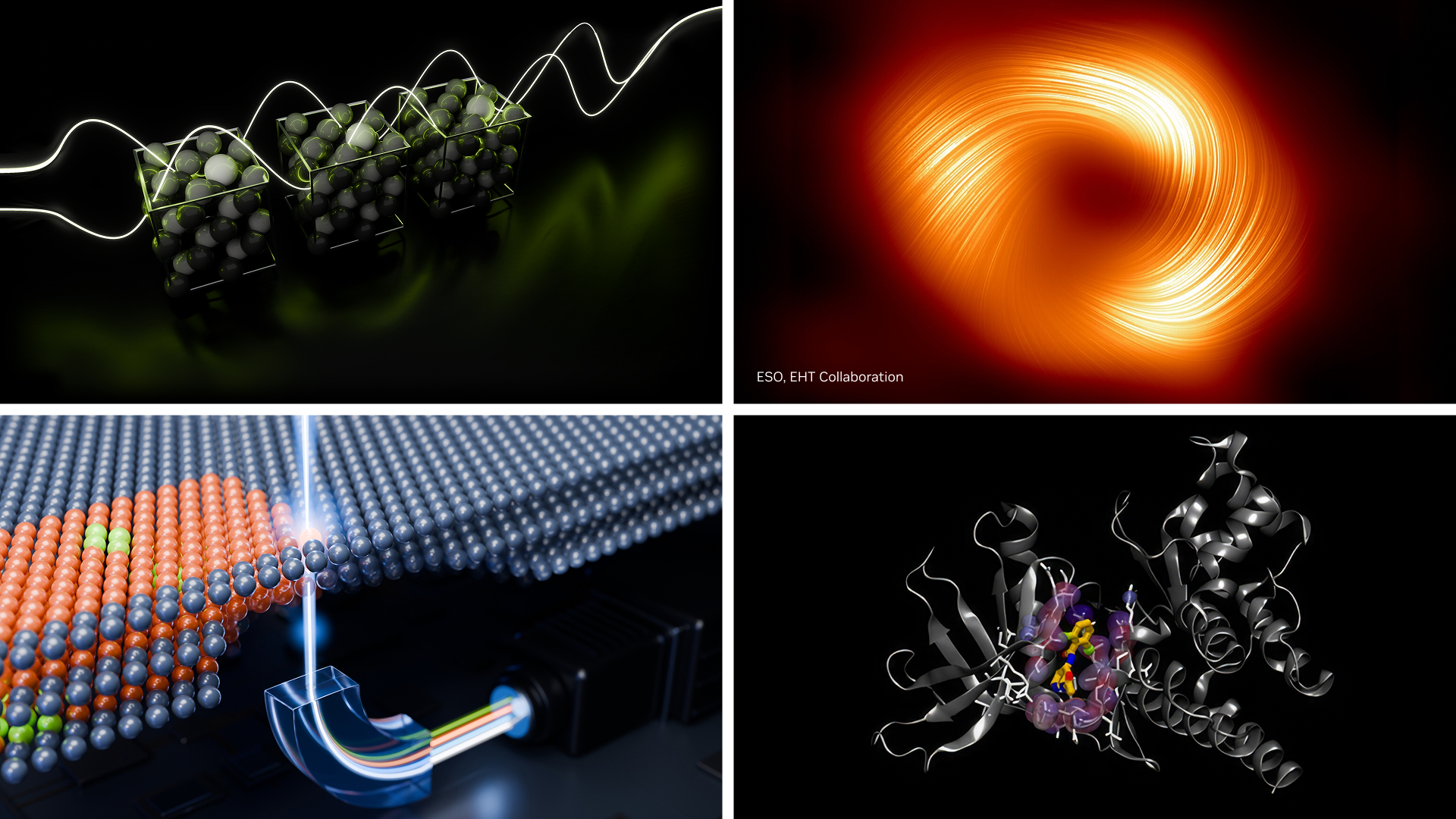
Loading the full article…
This text was published by NVIDIA Blog and written by Kibibi Moseley. It is reproduced here with attribution so you can read it in full; the rights remain with the publisher. Read it at the source ↗
The headline, key points and digest above were generated by Digest AI's editorial model from the linked sources. Automated summaries can contain errors: the sources are the record. Spotted a mistake? Tell us. Published by Martin K., who runs Digest AI and handles corrections.
More in Research
All →- Google DeepMind cuts quantum circuit costs with Gemini 4 agents · 1 src
- Hi-TPH dataset improves T cell receptor binding predictions · 1 src
- OpenAI releases 'yardstick for intelligence': Let's pause here · 1 src
- Hugging Face outlines steps for building and maintaining agentic evaluations · 1 src
- Apple launches 200,000-person study on health AI trust with OpenEvidence · 1 src
Comments
via GitHub Discussions