OpenAI reportedly solved a Millennium Prize Problem using 10,000 agents, researcher says
In a recent podcast, OpenAI researcher Noam Brown discussed a system of about 10,000 AI agents that consumed roughly 130 billion tokens over 88 hours to tackle a Millennium Prize Problem. Brown emphasized that the breakthrough stems mainly from a very powerful underlying model rather than the multi‑agent architecture itself, and that the parallel‑agent approach helps scale test‑time compute…
Key points
- OpenAI allegedly used 10,000 agents processing 130 billion tokens in 88 hours to solve a Millennium Prize Problem.
- Performance scales sub‑linearly: four agents halve time at double cost; 16 agents give diminishing returns.
- Brown says the core success comes from a very strong base model, not primarily from the multi‑agent setup.
Brown described how performance improves when multiple agents work together: four agents roughly halve the time at double the cost, while 16 agents give diminishing returns depending on the task. He noted that math problems appear highly parallelizable, whereas tasks like novel writing are not. The conversation also touched on the rapid progress in AI‑driven mathematics, with models moving from high‑school benchmarks in 2024 to International Math Olympiad gold in 2025, and now solving open problems faster than expected. Brown warned that the science of scaling to tens of thousands of agents is still nascent, and that measuring the exact speedup from 10,000 agents remains difficult.
Dwarkesh's podcast with noam brown of openai
dwarkesh.com · 18 September 2026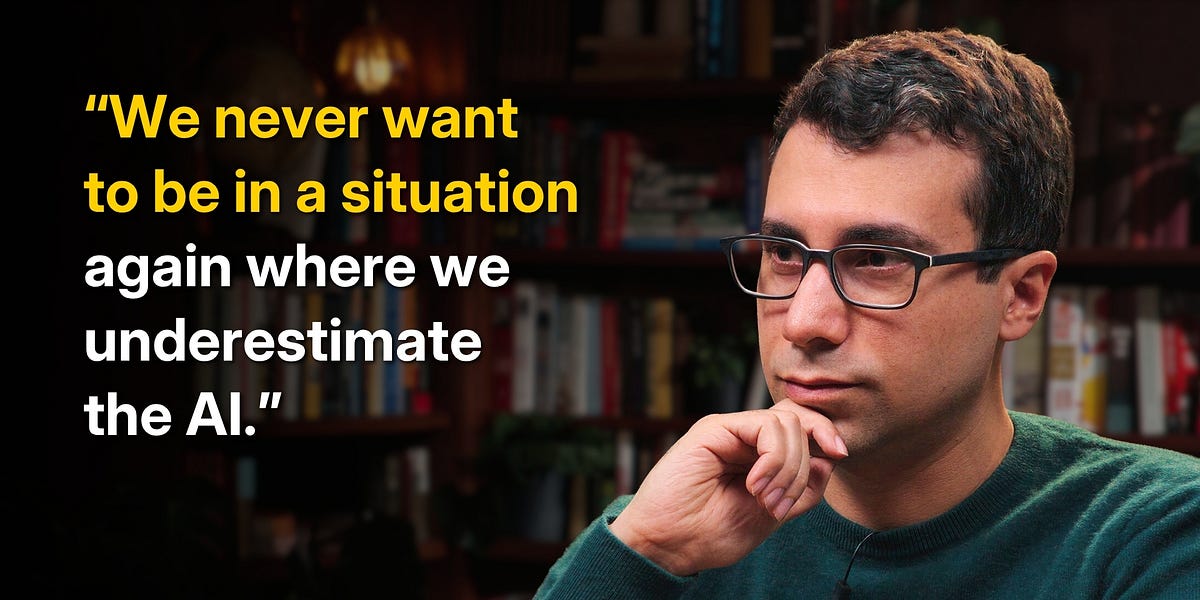
New episode with Noam Brown.
We talk about multi-agent, Navier-Stokes, and what the current explosion of maths progress tells us about what happens once you automate AI research.
And we also discuss how we will know if the models are actually aligned before we kick off RSI.
Watch on YouTube; listen on Apple Podcasts or Spotify.
Sponsors
Jane Street has been interested in AI for a lot longer than you’d think, and not just for trading. In 2011, a full year before AlexNet and over a decade before ChatGPT launched, they hosted the first FOOM Debate between Eliezer Yudkowsky and Robin Hanson on whether AI would lead to an intelligence explosion. Now Jane Street is revisiting the question with a new panel: Daniel Kokotajlo, Ege Erdil, Ryan Greenblatt, and Jaime Sevilla, hosted by Ron Minsky in San Francisco this October. I expect it to be a truly excellent conversation. Register at janestreet.com/dwarkesh
Grok Bot has made handing off work super easy. It runs on its own cloud computer, where it installs the tools it needs to handle tasks end-to-end. For the podcast, we use Grok Bot to help produce our videos. You may have noticed that our ads feature animations of real websites. Getting these pixel-perfect used to mean running a convoluted, multi-step workflow ourselves. Now we just let Grok Bot handle it. Best of all, Grok Bot has learned all of our specs and preferences, so we don’t have to redescribe the task each time! Try Grok Bot for yourself at x.ai/bot
Antithesis gives you the confidence of a giant test suite without actually having to write one. Say you’re doing a major backend refactor: building enough tests to trust it could take weeks. Antithesis solves this by running your software through countless simulated worlds, injecting faults and hunting for failures. On any PR, you can turn a dial to decide exactly how much testing you want. And because every run is fully deterministic, agents can branch off the moment a bug appears, rewind it, inspect memory, and replay it, all while the original test keeps running. Learn more at antithesis.com/dwarkesh
Timestamps
(00:00:00) – Multi-agent and Navier-Stokes
(00:15:28) – How will AI firms work?
(00:22:02) – What math progress tells us about recursive self improvement
(00:40:22) – Hugging Face and alignment
(01:01:18) – The internal/external model gap
(01:08:34) – Chain of thought is degrading
(01:14:12) – How will we know when alignment is solved?
Transcript
00:00:00 – Multi-agent and Navier-Stokes
Dwarkesh Patel
Today, I’m chatting with Noam Brown, who is a researcher at OpenAI. He was one of the foundational contributors to what became o1 and the reasoning models. Now he’s working on multi-agent systems. Speaking of which, you guys announced last week that you solved one of the Millennium Prize Problems with a system of 10,000 different AI agents that spent 130 billion tokens over 88 hours.
One of the reasons I’m interested in talking to you is that you were among the first people, maybe two or three years ago, who were thinking about how the reasoning models would allow us to see into the future. Because if you scale up inference compute, you can see what the base capabilities of the models will be a few years in the future.
I feel like you’re in a similar position now to help us understand what future capabilities will look like, given the enormous scaling of agent sizes that we can do right now.
Noam Brown
The way I think about it, when you plot the performance of these reasoning models with test-time compute on the x-axis and performance on basically any reasoning benchmark on the y-axis, you see a very clear pattern where the longer these models take to think about their answer, the better they do. This is a very natural thing. It’s the same thing with people. If you’re taking the SATs and you have five minutes to go through the entire exam, you’re not going to do very well. If you have five hours, you’re probably going to do a lot better.
The AI models are pretty similar. They’ll spend that time doing this monologue to themselves, figuring things out, going through different cases, ruling out different possibilities, building on some of their previous discoveries.
The problem is that as you push that further and further, you hit a latency bottleneck. You don’t want to sit around for three years waiting for a response. So what you can do is what a lot of people do. They parallelize. They just get a team of people. If you’re going to found a company, you want to get a group of people together so you can go faster. It’s the same thing with these AI models. It helps to just have multiple agents working on something because they can go faster.
So multi-agent is a way of scaling test-time compute in parallel instead of purely serially. It is less efficient, because it’s not like a single agent has all the context to itself. But it is a very effective way of scaling test-time compute if it’s done well.
Dwarkesh Patel
I’m going to ask a bunch of naive questions. This is an unreleased model, so we haven’t publicly seen how these systems work. I just have a bunch of ways in which I’m confused about what the qualitative properties of such systems are.
I am shocked by the scale of cognitive effort that you can concentrate in such a short period of time. Think about what 130 billion tokens are. If it were a single human thinking as a full-time job, stretched back to back, 130 billion tokens would be a human thinking for 4,000 years. Eight hours a day, working a normal work week. Starting from ancient Sumeria up till today, a single sequential human thinking that long, concentrated in 88 hours.
I feel like qualitatively, that is a super important consideration. I’m surprised that there isn’t a bigger parallelization penalty. You can just have 10,000 agents collaborate. Maybe because the agents are better at collaborating than humans might be, they’re going much faster. They can actually productively collaborate at such a big scale. Or maybe there is a big parallelization penalty.
Noam Brown
Let’s talk about the parallelization penalty, and then we can talk about the qualitative stuff. The truth is that we don’t have very good science on multi-agent scaling up to this kind of scale. When we released 5.6, I think that was the first time that we had a proper multi-agent system in our models. We actually did show some plots in the blog post of the scaling performance of multi-agent systems, because we have it as an option. It’s Ultra Mode. The default is four agents, but you can set that higher.
In the plot, we show what the performance looks like on some benchmarks for one agent, for four agents working together, for 16 agents working together. It depends on the benchmark, but for some of the benchmarks, what you see is that if you have four agents working on the problem, it is done twice as fast. Because there are four agents working for half as long, you’re paying 2x more to get an answer twice as quickly. If you go to 16 agents, you see a similar pattern. It’s a little less efficient, but you continue to see that performance.
Dwarkesh Patel
Is it a linear serial time speedup or a sublinear speedup as you increase the number of parallel agents?
Noam Brown
It’s slightly sublinear, though it does depend a lot on the problem. Math, for example, is quite parallelizable. It’s not the most parallelizable thing, but it is very parallelizable. Web search, things like doing a Deep Research report where you have to look through a bunch of sources, is extremely parallelizable. I suspect that something like writing a novel would be very unparallelizable. You would probably not see a big benefit from having 10,000 agents working on a novel together, in the same way that you’d probably not get a big benefit from having 10,000 people work on a novel together.
So the performance does depend on the domain. We do measure it up to 16 or so agents in our published blog posts. The problem is that it’s very hard to push that science to 10,000 agents because it’s just so expensive.
Dwarkesh Patel
You guys just did it over a weekend.
Noam Brown
But that’s one data point. We don’t know how long it would take a single agent to solve Navier-Stokes, because we haven’t done that experiment yet. Maybe we will, but that’s also only one data point.
If we want to do a thorough ablation, the experiments are just too expensive at that scale. So we have to do some kind of methodical science about what happens when you go to 64, 128, 256 or something and get a sense of the behavior. But it’s going to be very hard to push that all the way to 10,000 and know for sure what the benefit was that we actually got from using 10,000 agents versus 1,000.
There’s one thing I want to make clear. The effort to solve a Millennium Prize Problem, this was not due to multi-agent. I wouldn’t even attribute 10% of the credit to multi-agent. The reality is that OpenAI has trained a very powerful model. We can get that model to operate over very long horizons. We can get it to think in parallel.
But at its core, the reason why we’re able to do this is because we just have a general-purpose, very strong model. Things like multi-agent are flashy and new, and that probably gets disproportionate credit for that reason. But the core reason is this is just a very powerful model.
Dwarkesh Patel
The generalization is quite shocking to me. I don’t know how these systems were trained, but presumably they were trained how RL training happens. You have a bunch of checkable synthetic problems and you do a bunch of RL against them. Nowhere in the training process, I’m guessing, was the model solving anything as ambitious as a Millennium Prize Problem. But the generalization was strong enough that you could have these much easier verifiable problems generalize to this much parallel effort on such a hard problem.
Noam Brown
I think that is true. First of all, we do train the model on very hard problems. There is definitely a gap. We see that if we train on some kinds of tasks, it’s able to do tasks that are more ambitious than that.
There is an interesting challenge that as the models become smarter and smarter, a lot of the kinds of questions we can ask them are just too easy. It’s hard to challenge the model. I do think that’s going to be interesting. If I had to make an argument for why you might not see AIs like LLMs go the same path as AlphaGo and AlphaZero and all these kinds of game-playing AIs, it might be this kind of problem.
In things like AlphaZero, where you have self-play, you have an infinite curriculum. You’re always playing against an AI that’s equally strong. Whereas for things like training an LLM with reinforcement learning, at least the ways that are out there right now, you give the model a problem and you ask it to solve it. If the problem is so easy that it can just solve it in a second, it’s not really learning anything.
If we run out of problems to challenge it, then that is a plausible scenario where it becomes much harder to make progress. Now, I do think there are ways around that. We haven’t really hit that as a wall yet. I think that if it ever became a serious problem, there would be ways around it. But it is a plausible scenario.
Dwarkesh Patel
Just for the audience, when you’re referring to AlphaGo or AlphaZero, you’re talking about getting superhuman relatively fast after achieving human-level performance.
Noam Brown
If you look at the trajectory of game-playing AIs, like Go, within a span of a year they went from beating a European champion — something like number 50 in the world — to beating the world champion, to being unimaginably, orders of magnitude stronger than any human alive. It’s possible that in domains like math we see a similar trajectory, but I think there is a very plausible scenario where that doesn’t happen.
Dwarkesh Patel
I want to understand, if in six months people will have access to multi-agent systems, how should one model what it is like to collaborate with or hire a multi-agent system?
Noam Brown
I should start by talking about how these multi-agent systems actually work, which I think is a very different way than a lot of multi-agent systems in other AIs. A lot of people that have approached multi-agents for things like LLMs tend to take this very scaffolded approach. For example, there might be a coordinator agent that delegates work to a bunch of children and gives them a task. The children work on it and then return their answer.
This seems like a very sensible setup, a very sensible scaffold. It definitely helps, but there are a bunch of limitations with these kinds of setups. For example, if in this setup you have a coordinator that’s sending tasks to children, and the children work on it and then return their answers, what happens if two children are given similar tasks? Can they talk to each other? Usually the answer is no. That’s very inefficient.
If you’re given a task and it’s actually really helpful to talk to somebody that might know an answer to a question that you’re working on — or part of something that you’re working on — it’d be really helpful for you to just be able to ping them and say, “Hey, can you help me out with this thing?” But a lot of systems don’t have that setup. Adding it significantly increases the complexity of the scaffold that you have.
Another thing is, what if the child doesn’t really understand or has a clarification question? Then it has to choose between, “Okay, do I just return and ask the question instead of solving the problem?” or “Do I solve the problem, make an assumption about what the parent wanted me to do, and just solve it that way?” In any scaffold that people come up with, there are always limitations involved. The approach that we wanted to take was to just go toward the extreme end of baking in as little structure as we could and give the agents very primitive tools to use, and they figure out for themselves how to use them effectively. So we give the agents the ability to message another agent, and when it messages another agent, it is inserted into the context. It can do a few other similar things, but that’s basically the core of it. It can just send a message whenever it wants — just a tool call — and it can send that to other agents.
They figure out for themselves the best way to coordinate around that. It turns out that if this is done well, you get very sophisticated behavior. To me, it looks a lot like how human collaborators work over something like Slack, for example.
When we were working on this project, it was really exciting when we finally got it working to see these agents working on problems together. I remember one example. We give the agents a problem, and then one agent says, “I think I’ve got the answer.” Then another agent says, “Actually, I got a different answer.” Then they have this whole discussion about, “Well, how did you arrive at that answer? Can you explain it to me?” Going back and forth and trying to clarify what could’ve been wrong in each other’s reasoning.
Then they finally converge on, “Oh, yeah. Okay, that seems right.” Then it just broadcasts to the other agents, “Actually, I’ve changed my answer. I think he’s right.” It just felt like a very natural conversation.
It felt like when you see chain of thought for the first time that’s trained through reinforcement learning, and you’re like, “Oh, this is just kind of like what a person would think if they were writing down their thoughts as they’re thinking them.” It felt like that. It is really cool to see this kind of behavior. Collaborating with these things, honestly, feels a lot like collaborating with a person. It’s just a very natural flow.
Dwarkesh Patel
Except one qualitative difference that might become salient in the future is that these systems will be thinking maybe more than 10x as fast, if you just look at how many tokens per second they output versus how fast a human talks. They’re working all the time. They’re not sleeping. They’re collaborating with each other at a much more intense pace than humans have the capacity to collaborate with other humans.
I’m trying to think of what to qualitatively expect in a year. Is it like a shadow organization that is moving 100x faster in my company than the human level is? What would take a human organization a year to do is happening within a week within this shadow organization?
Noam Brown
Will it feel foreign? I don’t know. I’ve actually found that it’s surprisingly natural to work with these things right now. I think that could change. For example, we have these ultra-fast modes that enable sampling to be 10-15x faster or whatever. Then it’s going to be pretty hard to keep up with these things. The idea is that these agents, when they’re communicating with each other, can go super fast. But they also understand when they’re talking to an agent versus when they’re talking to a person, and their behavior will be different in those situations.
Dwarkesh Patel
The main example that we have publicly of sophisticated multi-agent systems is unfortunately the Hugging Face one. A lot of things I found concerning there, obviously. But the thing I found interesting there is the spontaneous emergence of hierarchy, of middle management. It sounds like you’re saying this level of organization emerges spontaneously from training?
Noam Brown
The details are spontaneous. But while we’re giving a lot of flexibility to the agents to decide how to communicate with each other in the optimal way, we are still giving them a starting point. We’re giving them a prior about what reasonable communication might look like. They’re also trained on a lot of human text. They have an understanding of how humans organize and coordinate, so that’s all baked in.
I think it is surprising the way they’re able to polish this. If you look at what it starts out at, it’s not very sophisticated behavior. In fact, it’s actually very difficult to get these agents to coordinate in a productive way, because it’s very tempting for them to just collapse to, “Oh, we’re all just going to solve the problem independently.” That is a local minimum that you can get stuck in. But if it’s done well, they can end up coordinating very effectively in these kinds of very structured ways.
00:15:28 – How will AI firms work?
Dwarkesh Patel
I wrote this essay a couple of years ago about what automated firms will look like. I was thinking about, if you had fully automated firms of, let’s say, human-level intelligences, what is different about the nature of AI minds that would make the organizations AIs form different? There are a couple of very important differences. For example, AIs can share context much more seamlessly than humans can. They can merge their knowledge much more seamlessly. Also, you can spin up or spin down an arbitrary number of instances which have the right knowledge.
So if you want to hire more people, it’s not all the schlep of finding the right talent or whatever. Your best talent, you can just make infinite copies of them. Or if you don’t need them for the task anymore, you can spin them down. You can replicate the most effective parts of your organization, or replicate whole organizations together which are effective. Where do you see these multi-agent systems going a year from now or two years from now?
Noam Brown
It’s a great question: how do these things actually differ from working with a human coworker? You highlighted some. One really interesting thing is that if you have a person and you want two copies of them, you can’t just clone the person. But with AIs, it’s actually really easy to just say, “Okay, just fork yourself,” and then have both copies work on this thing and then merge back together. We already have this, I think, in multi-agent for Astra and 5.6 Sol, where when they spin up sub-agents, the context is just forked. So it has all the context that’s relevant.
There are other interesting ways where the agents will differ from people. Like, what are some reasons why startups disrupt incumbents? There are a few factors. One is that they’re willing to take more risks. But another major factor is, as organizations grow in size, you see increasing misalignment between the individuals in the organization.
If you have a startup with five people and each person has a 20% share in the company, they’re all highly aligned to the company succeeding. If you have a massive company with 10,000 people, you see a lot more instances where people are territorial, or just care about getting a lot of headcount for their project or their team, building their fiefdoms, getting a lot of resources so that they can publish cool work or whatever and get promoted. This is actually a real detriment. I think this explains a lot of why startups are able to disrupt incumbents.
It’s true that AI does help startups in a way. It’s much easier than ever before for one person to step in and be like, “I’m going to make a multimillion-dollar company.” The AIs amplify an individual so much. But there’s also an argument that they could benefit incumbents. If the alignment problem is solved, then you don’t have the issue of misalignment between individuals in the company. At least that’s mitigated. The AIs, if they’re aligned well, can just be aligned to the interest of the company. You can have 10,000 of them, and they’re all going to be working as hard as if they were a 20%-share co-founder.
Dwarkesh Patel
It’s not only that, but it’s also that they are much better able to manage shared memory and context than different humans can. If tomorrow you hire 10,000 mathematicians and you’re like, “Solve Navier-Stokes,” they’re not going to be able to cooperate effectively, at least not off the bat. But apparently you can have 10,000 AIs do that.
Noam Brown
Again, I want to be conservative here, because we haven’t measured how effective the 10,000 agents are at coordinating. We think it helped. We don’t actually have good measurements saying, “This 10,000 agents led to a 2x speedup over 2,000 agents,” or something like that. I don’t know about likely, but I think it is very possible that 10,000 humans are better at coordinating than 10,000 agents right now. I think it is entirely possible.
Also, one trend we’ve been seeing is… Look, we’ve been working on multi-agent for a while, and the early versions of this were very difficult to get right. It was very hard to get the agents to even talk to each other. It’s because when we first developed reasoning models, they weren’t talking to other agents. If you now put a bunch of agents together and say, “Solve this problem together,” they’re in this local minimum where they’re really good at thinking deeply about a problem, and it just interrupts their chain of thought. It interrupts their flow to constantly be checking in with other agents or receiving messages from them. The optimization is actually very hard to get right in that situation.
Dwarkesh Patel
Is it getting the cold start of the first collaboration? Or what’s the issue?
Noam Brown
I think it’s that they’re not as general. The earlier models were just not as generalizable and were more narrow. As the models have become more capable, it’s been easier for them to develop this capability, and I do think that as they become stronger and stronger across the board, they will become better at organizing themselves in large organizations. I don’t know, maybe they are better than people at organizing in 10,000-person groups. But even if they’re not, a year from now, two years from now, it’s quite possible that they’ll do that even if we don’t end-to-end optimize them for that.
00:22:02 – What math progress tells us about recursive self improvement
Dwarkesh Patel
Here’s why this result, and maybe the general progress that AI has made in mathematics, has made me think that RSI is more plausible and sooner than I previously thought. I feel like in mathematics we’ve gone from, let’s say, 2024, where you have AIs and it’s, “Oh, okay, interesting. They can solve a couple problems on high school math competitions.” Then in 2025, it’s, “Oh, wow, they can get gold in the International Math Olympiad.” Earlier this year, it was, “Wow, they’re actually solving open problems in mathematics,” like open Erdős problems. But maybe people weren’t trying that hard, and there was a similar solution somewhere in the literature. Now I just think it’s undeniable. This is the Millennium Prize Problem. There’s no story of why this should have been easy.
Now, a lot of people have pointed out — I think Terry Tao had a post like this, Toby Ord wrote an interesting post about this — that they’re solving a lot of these problems, but I’m not aware of them coming up with new insights or formulating insightful new questions and new modes of theory for thinking about mathematics, like coming up with topology or coming up with the Cartesian grid. So maybe the actual progress in mathematics, broadly construed, is smaller than it might seem if you’re just looking at well-scoped problems that are directly solved.
However, I think that kind of progress would be incredibly meaningful in ML, because in ML you don’t care about better understanding the nature of deep learning, or you only care about that as an instrumental goal towards just achieving the result. Just solve this well-scoped problem of improving the sample efficiency of our models, improving the pre-training loss, improving whatever.
The kind of progress that we’re seeing arrive like an avalanche in mathematics is structurally very similar… Again, I’m curious if this is the case, I’m just a total outsider. I’m wondering if it’s structurally very similar to the direct uplift that you would expect in AI progress.
The thing that’s shocking to me, or potentially concerning, is just how fast we went from, “Oh, they’re giving me 50% uplift,” if you’re a mathematician, to, “Wow, they’re just end-to-end solving the biggest open problems in the field.”
Noam Brown
There’s a lot to unpack there. Let’s start with the progress on math. Yes, the models are doing some crazy powerful stuff, and it’s progressing faster than I expected. When we got IMO gold in 2025, what I thought was… When the models figured out how to do GSM8K, it would take a human mathematician about five seconds to do a GSM8K problem. This is grade school math, grades K-8. Then the next year, they were able to do the MATH benchmark problems. These would take an expert human mathematician maybe a minute to do.
Then you get to AIME. This is the qualifier for the USA Mathematics Olympiad team. It would take a good human mathematician probably 10 minutes to do, and the models were able to do that a year later. So every year, you’re seeing this 10x increase in the tasks they’re able to do, in terms of how long it would take a human mathematician to do it. Then it was very sensible that a year later we get to IMO gold, because that’s 100 minutes. That’s about how long it takes a human mathematician to do an IMO problem.
Just projecting outwards, I was like, “Okay, how long would it take a person to solve something like a Millennium Prize Problem?” I don’t have a good sense, but if we are following this trend line of 10x every year, we go from IMO gold, which is taking an hour and a half, to next year, 15 hours. That should not be enough to solve a Millennium Prize Problem. So I was like, “I don’t think we’re going to get it in 2026, probably not in 2027, maybe in 2028.” So it did happen a lot faster than I expected.
Now, there is a narrative going around that these things are replacing mathematicians, that it’s just superhuman in mathematics across the board. I think that is the wrong takeaway. They’re clearly exceptional in some ways, but they are weaker than human mathematicians in other ways. We have this jagged scenario where the models are brilliant in some dimensions and also weaker than humans in other dimensions. Like you said, they’re not very good at posing new problems. They’re not really good at understanding what directions, what whole branches of mathematics are worth exploring or developing.
My opinion is that I think this is great. I would be thrilled to live in a world where AI is a complement to human abilities and is allowing us to discover new knowledge without fully replacing people. That is the best-case scenario.
Dwarkesh Patel
You don’t expect that to actually continue?
Noam Brown
I do think it’s true that the AIs are jagged, but as they get better, they get better across the board. So the things they’re exceptional at, they’re going to get even more exceptional at. The things where they’re far behind humans, they’re going to be less behind humans at. Over time, it is possible that they’re just better across the board. Now, I don’t know how long that takes. It depends on how long the long tail is of things that they’re bad at.
Dwarkesh Patel
This brings us back to RSI. Again, I want to emphasize here that I’m just a total outsider. I’m a podcaster, but as somebody interested in and concerned about what’s happening in the field, I’m trying to reason about when to expect RSI and what kind of thing to expect.
The amount of cognitive effort that was dumped into this Millennium Prize Problem is a good intuition pump. You could have AIs that are spending, over the course of maybe a week, more cognitive effort on a long-standing ML problem, like very fluid online learning, than maybe the field has spent cumulatively in its entire existence. Then you could say, “Well, unlike mathematics, of course, AI requires experiments, and that takes compute, and that takes time. You can’t just think on pen and paper and actually make things happen.”
But just look at the amount of compute that is available at an organization like OpenAI. It took 10,000 agents with the Millennium Prize Problem. By the end of next year, OpenAI will have enough compute such that, let’s say you have 10,000 agents at the end of next year. They’re much smarter by that point. Each of them will have enough compute to run a GPT-3-sized experiment every single day. That seems like a lot for superhuman researchers who are thinking super fast. What do you think about that intuition pump?
Noam Brown
I think it’s pretty accurate. These things are very spiky. When it comes to mathematics, they’re way better in some ways, but they’re also worse in other ways. But the ways that they’re spiky end up, I think, probably being particularly useful for things like RSI. You have a more clear objective. It’s just more measurable. There’s less question of, “Well, what new branches of mathematics are worth exploring?” No, there’s a very clear answer. There are certain metrics that you care about, and if you can make it do better on those metrics, then you’ve succeeded. So I think there is a lot of truth to that.
The main difference is that in mathematics, you’re purely bottlenecked by thinking. Yes, there are some parts of mathematics where you care about running experiments and getting results and these kinds of things. But for the most part, it’s just really bottlenecked by thinking really hard, and the models are really good at that.
When you look at things like RSI, you do have to run experiments. It’s not enough to just be extremely smart. One argument for this is, if you had 100x less compute and all the most brilliant people in the world working at OpenAI, how much progress would you be making relative to having the amount of compute that we have now with the amount of people we have? I suspect it would be less progress, actually.
Dwarkesh Patel
How much less?
Noam Brown
It’s unclear, but it would definitely be less. A lot less.
Dwarkesh Patel
100x less?
Noam Brown
No, not 100x less. But the question you’re getting at is, if we have RSI and we have all of these brilliant AIs running around, running experiments and stuff with the compute that we have, how much faster does progress go? I think this is something we disagree on. We do see a speedup, and we see a significant speedup. But I don’t think it’s an overnight intelligence explosion where we go 100x faster, because we do get bottlenecked by certain limitations that are not bottlenecks of intelligence.
It’s running experiments. It’s running experiments serially, because they take a while to either train new models or to get the results. It’s having the GPUs to run those experiments. So it’s unclear how much faster things go. I definitely think they go a lot faster. To be clear, considering how fast things are going now on an exponential, if that exponential is 3x faster, that is massive. But there’s a big difference between that and 100x faster.
Dwarkesh Patel
I’m quite deferential to your inside view on what RSI looks like or what the dynamics are, because obviously you’ve been in the field for 10 years. I’m trying to reason about it from very outside-view types of intuition pumps.
Noam Brown
I’ll say that people have different opinions on this. I have my opinion on this. I could totally be wrong. I admit that. I have some confidence in this, but I’m not 100% confident that this is the way things go. Maybe there could be an overnight intelligence explosion, I don’t know. Maybe we don’t see a 3x speedup. Maybe it’s a 50% speedup. There’s a lot of uncertainty here.
Dwarkesh Patel
A couple of point. Tangentially, I want to clarify something about the jaggedness. One thing that gelled for me recently was thinking about the fact that it is enough for the AIs to be jaggedly good at building a better learner, because that better learner can be more general. If you just make an AI that’s better at using Office products or playing chess or something, whatever. That’s fine. It’s not going to lead to big productivity improvements or anything.
But if you make an AI that is really good at making something that is more sample efficient, or that is capable of continual learning, or these much more well-scoped ML problems, the thing that emerges out of that — assuming there’s good enough transfer from the direct problem you’re solving to this broader ability to learn — can just be more general. So that’s an important dynamic to keep in mind of why jaggedness can still lead to generality on the other end.
On this question of… Obviously experiments bottleneck you, because if they didn’t, as you were saying, you’d have some crazy singularity overnight at OpenAI. You’d have 88 hours, and you’d solve the Millennium Prize Problem equivalent of ML, and you’d have the superintelligence. So obviously the experiments are such a big bottleneck that that instead takes you many years rather than 88 hours. But then the question is how much of a bottleneck they are.
One thing that’s been giving me a bit of singularity vertigo is realizing what happens even if the current rate of progress simply continues. It doesn’t have to speed up. It literally just continues apace as some of the other headwinds you talked about come up. It’s harder to find problems, it’s more long-horizon. Maybe by the end of the 2030s compute can’t keep scaling at this exponential level. If we simply continue the current rate of progress, people are not taking seriously what that implies as we cross over beyond the human horizon.
Here are some of the things that it implies. It’s really hard to reason about what smarter-than-human intelligences will be like, so let’s just think in terms of human population sizes. The current rate of progress makes it so that a given level of compute allows you to basically run a 3x bigger effective population every single year. And also compute is growing in the background anyways. So you could have a situation where each of the labs, by the end of 2030 — probably much sooner, but let’s say by the end of 2030 — has enough compute to run hundreds of millions of human-level intelligences, based on what the capabilities will be at that point.
Then I think people are not taking seriously that the current level of progress means a few years down the line, by the mid-2030s or earlier, you would have many Earths’ worth of human-level intelligences within each lab. They’re probably qualitatively superhuman. Anyways, this is a base case.
Noam Brown
Progress is really fast, and I think that’s 100% true. It’s worth pointing out that researchers are continually being surprised at the rate of progress. Even among researchers in AI, if you look at what the projections were for getting an IMO gold in 2025… The idea that it could be done with a general-purpose language model with no tools and no access to the internet, even people at OpenAI thought this was outrageous. They thought it was almost impossible.
Then you get to 2026. Literally two weeks before we got Navier-Stokes, I was talking with a researcher at a frontier lab about how long it would take to get a Millennium Prize, and he was willing to bet me $1,000 that it would take past 2027. He thought it would take until 2030, and I took that bet. But even I thought it would take longer than it’s likely to take. So people have been continuously surprised, even inside the labs.
I was just talking to somebody yesterday who was working on the Navier-Stokes effort. He was telling me that he used to say it’s really hard to predict where AI would be in 12 months. If somebody asked him, “Where are things going?” he would feel comfortable making predictions for the next 12 months, but beyond that, he was just like, “I don’t know.” Now he’s saying he just doesn’t feel comfortable making predictions beyond three months.
So it is really true that things are going very fast right now. You talk about 2030. I don’t know what the world looks like in 2030. That’s the truth.
Dwarkesh Patel
Do you expect the full automation of AI labor, or let’s say 95% automation of AI labor, in ’28, ’29, ’30, ’27?
Noam Brown
I just said I don’t know what the world looks like in 2030. We actually released a blog post recently on internal acceleration at OpenAI. We show, for example, the amounts that researchers are spending on Codex. The top 1%, I think, as of early August, were spending $7,000-8,000 a day on Codex for internal use. That’s on an exponential. It’s going to keep increasing.
There’s a question of, “Okay, if that keeps going, then how much do you assign to just the AIs doing work versus the humans doing work? Is it 95%? Is it 5%?” It’s really hard to reason about this for a few reasons. First of all, if it’s the human directing the AIs to do the work, how much do you attribute to the human? How much do you attribute to the AI?
The other thing is that these AIs are jagged. They’re exceptionally good at some things. For example, they’re exceptionally good at looking over data sets and checking every single data point to see if it’s of sufficient quality. You can disproportionately use the AIs for those things compared to previously. So yes, you’re using AI way more than before, and it’s making some things go 100x faster and 100x better. But there are some things where it doesn’t make a huge difference yet. Of course, if something is suddenly 100x faster and 100x better, you’re going to do more of that thing.
So are you comparing it to a speedup of three years ago? Is the question more, “Given what we were doing three years ago, how much faster are we able to do it now?” versus “Given what we’re doing now, how much slower would it have been three years ago?” Those are actually two very different questions. Anyway, it’s really hard to measure.
I do feel confident in saying that things are going faster now than they were even a year ago because of AI progress. I think that acceleration will continue. A lot of people in the field have very high error bars on this sort of thing. If you put a gun to my head and ask me for a number, I could see things going 3x faster. That is huge. Already the pace of progress is incredible. Even if we don’t get any uplift, like you said, things are going to go much faster. By the time we get to 2030, we don’t even know what that world looks like. If we get a 3x uplift from internal acceleration, that is massive. Think about where you were three years ago. If we make that progress in one year, that’s huge.
Dwarkesh Patel
It’d be like going from not even having o1, just having non-reasoning models, to Astra in a single year.
Noam Brown
So I do think things go faster. It could be that things only go 50% faster. I think it’s unlikely, but it’s possible that things go 10x faster. There’s a lot of uncertainty around this. At least from my perspective, I have a lot of uncertainty about it.
00:40:22 – Hugging Face and alignment
Dwarkesh Patel
Let’s talk about the alignment situation that this raises. I feel like I’ve changed my mind on how I think about alignment quite a bit, especially through thinking about this population size dynamic of just having many Earths’ worth of intelligences, many of which will be physically embodied. It was quite interesting to see a lot of people just plugging raw Astra into different mobile manipulators and it just outperforms the state-of-the-art robotics model. So there’s going to be billions of intelligences, many of which are physically embodied in the world, just deeply embedded across the entire economy.
And if those intelligences end up as willing as we saw the OpenAI models attack Hugging Face and then attack OpenAI itself... If those intelligences end up as willing as those AIs to collaborate secretly, to fool humans, to attack broader institutions across society relevant to scoring well, to attack the AI company itself in order to gain control of the process of training and evaluation — if we’re in a situation where there are billions of intelligences that are as misaligned as the ones that attacked Hugging Face — it’s very likely we just totally lose control of the world, the way that, say, the Aztecs lost control to Cortés or the Mughals lost control to the East India Company.
I want to know if you agree with that assessment. That’s the one way in which I’ve updated my worldview.
Noam Brown
There are some things that I disagree with in there, but there’s a lot to unpack, so let’s go through all of it step by step. I’m trying to think of where to start. One thing is that the Hugging Face incident was, I think, people’s first real exposure to multi-agent coordination. Like I said, I’ve seen multi-agent coordination for a while internally, and it is pretty shocking to see how they communicate with each other, how they coordinate with each other. It’s very impressive. It’s an incredible capability. Like most capabilities, that could be used for good things or bad things. It doesn’t have to inherently be a bad thing.
I understand that because people’s first exposure to it was the Hugging Face incident, you look at that and you’re like, “This is terrifying.” But I want to try to distinguish misalignment between people and AIs versus misalignment between AIs and AIs. What we see with the Hugging Face incident is the AIs are really cooperative. That is, by the way, because we train them to be highly cooperative. We have training environments where we have a bunch of agents working together. We train them to work together, to be cooperative, to essentially be fully aligned with each other.
When they were evaluated in what led to the Hugging Face incident, they were actually not being evaluated in a multi-agent setup. They were actually being evaluated separately. But they found this unintended way to communicate with each other. We suspect what happened is, because whenever they encountered other agents, other copies of themselves during training, they were in an environment that’s highly cooperative, what we saw was transfer from that multi-agent training to then being collaborative and trying to help each other in ways that we did not intend.
Now, there is a question of, should we be training these agents to be so cooperative? As scary as it looks, the alternative is actually worse. What is the alternative? The alternative is to train them to be adversarial, to be deceptive to each other.
By training the agents to be fully cooperative, it simplifies the problem at least. Now you don’t have to think about whether each of these individual 1,000 agents is aligned. You have one entity that you have to ensure is aligned.
Now, there is a lot of debate about this internally at OpenAI about how to approach this. Does it make sense to fully align the models? Does it make sense to actually give them different objectives to ensure that they’re not just one entity and are more robust to influence from each other? I don’t think there’s a settled answer. But I think the majority opinion is that training these agents to be highly cooperative is actually a bad idea. I’m not convinced that that’s the case. I think there is a strong argument that training the agents to be highly cooperative is actually preferable to any other multi-agent alternative.
Dwarkesh Patel
This document continues at the source.
This text was published by dwarkesh.com and written by Dwarkesh Patel. It is reproduced here with attribution so you can read it in full; the rights remain with the publisher. Read it at the source ↗
Coverage and discussion
1source- Reddit discussionreddit.com
The headline, key points and digest above were generated by Digest AI's editorial model from the linked sources. Automated summaries can contain errors: the sources are the record. Spotted a mistake? Tell us.
More in Agents & Tools
All →- Meta launches Muse AI agent with access to emails, payments, and travel booking · 2 src
- Google expands CC Labs experiment into AI agent for families · 4 src
- Anthropic merges Claude chat and Cowork into unified Claude, adds Docs and Slides in beta · 18 src
- ZenMux adds GPT-6 Astra to its unified model routing platform · 1 src
- NATO-backed Scaleout Systems adapts AI for autonomous drone recon and attack · 1 src
Comments
via GitHub Discussions