Opinion: AI can generate plausible but inaccurate personal narratives
The author recounts using Claude to draft an article about personal experiences and noticing that the model inserted sentences they never actually said, such as claiming three days of inactivity after upgrading to Claude Pro. The resulting text sounded natural but contained fabricated details and a narrative tone that did not match the author's voice. After consulting ChatGPT (referred to as…
Key points
- Claude added sentences the author never said, creating a plausible but inaccurate narrative.
- A new workflow—facts first, then Claude asks questions—removed major fabrications in a test draft.
- Minor wording and nuance differences remained, and the author cannot yet confirm the method’s effectiveness.
I realized this after having Claude write about my experiences. AI creates a 'me' that sounds plausible
note.com · 22 September 2026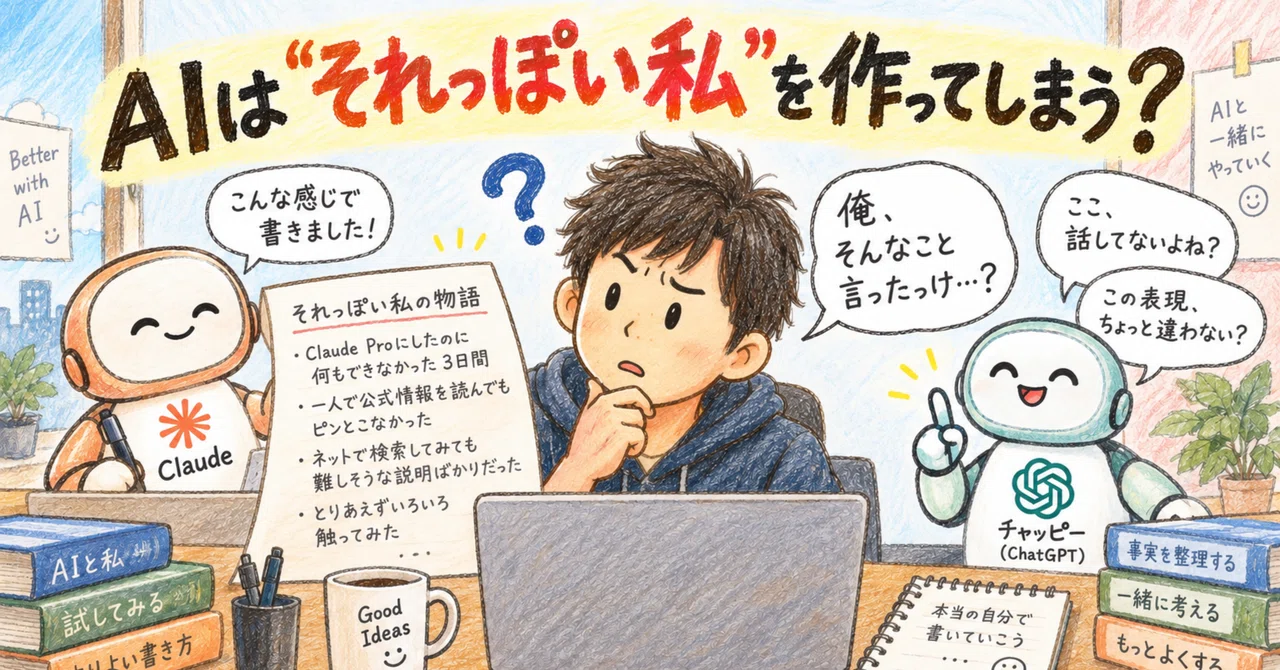
Loading the full article…
This text was published by note.com and written by みずみずしい@AI時代を生き抜く. It is reproduced here with attribution so you can read it in full; the rights remain with the publisher. Read it at the source ↗
The headline, key points and digest above were generated by Digest AI's editorial model from the linked sources. Automated summaries can contain errors: the sources are the record. Spotted a mistake? Tell us. Published by Martin K., who runs Digest AI and handles corrections.
More in Agents & Tools
All →- Meta's Muse AI agent tops US App Store, outpaces ChatGPT downloads; zero-day flaw reported · 21 src
- Amazon blocks Meta's Muse AI agent from shopping on its platform · 20 src
- OpenAI adds GPT-Live voice to ChatGPT app for hands‑free task delegation · 1 src
- OpenAI launches Agents API public beta for long-running cloud agents · 4 src
- Advancing Private AI Compute with secure, server-side memory · 2 src
Comments
via GitHub Discussions