Opinion: AI firms fund extravagant immersive events as party culture revives
AI‑backed companies are channeling large portions of their budgets into elaborate, often sober, corporate gatherings that prioritize human interaction over traditional perks. Event planner Nikita Khandheria of Eria notes that roughly 80% of her AI clients’ spending goes to the experience itself, with average event costs around $350,000 and some multiday retreats reaching $7 million. Shift + Alt…
Key points
- AI firms allocate about 80% of event budgets to experiences, averaging $350,000 per event and up to $7 million for retreats.
- Shift + Alt Events says 90% of its business now comes from AI clients, whose spend on creative décor has surged.
- Recent AI financing—SpaceX’s $1.25 trillion xAI acquisition and OpenAI’s $122 billion raise—has helped revive San Francisco’s convention economy.
The surge in spending coincides with massive AI financing, including SpaceX’s $1.25 trillion acquisition of xAI and OpenAI’s $122 billion raise, which analysts say is reviving San Francisco’s convention economy. Hotel bookings tied to Moscone Center events have risen 64% since 2024, according to Anna Marie Presutti of the San Francisco Travel Association. Organizers argue that these events help AI firms humanize their brand, build trust, and retain talent in a competitive market.
“I have a really, really strong legal team.” Inside the AI party boom.
sfstandard.com · 20 September 2026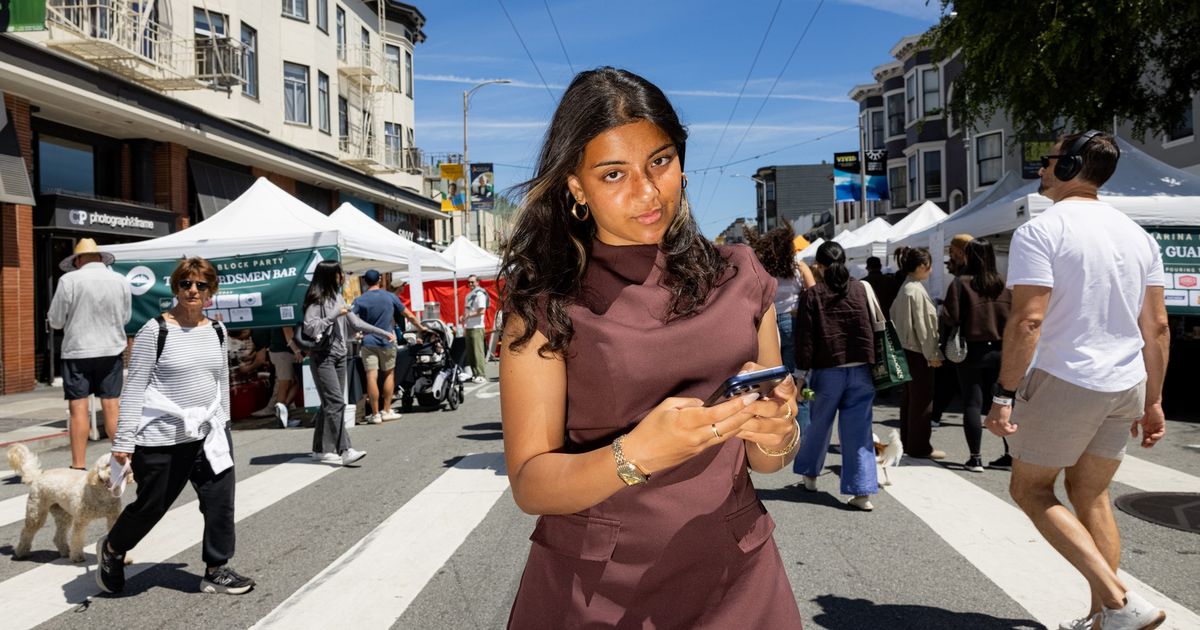
In July, eight AI executives learned how to breathe fire at a 4,000-square-foot event venue in the Marina District. Nikita Khandheria, the 24-year-old founder of Eria , a luxury event planning company, watched as the performer she’d flown in from Europe coached the group through taking a mouthful of fuel and expelling it into an open flame.
Khandheria had tried the activity a couple years earlier and said that the experience, “hurts a little bit.” The group got so carried away that the ceiling had to be repainted. “I have a really, really strong legal team,” she said. “[That’s] mandatory for the kinds of weird things that we like to do.” AI money is reviving San Francisco’s corporate party scene, but instead of the excess and light debauchery of the 2010s, companies are paying for events with elaborate activities and themes. The industry is moving away from caviar and champagne flights — partly because this crowd leans zero-proof — into events engineered to create real human interactions. Think Burning Man-style weekend retreats, bars stocked with Lego bricks, and dinners staged to mimic science fiction stories.
The Bay Area tech industry has always spent lavishly on parties. In 2019, Facebook transformed Pier 80 into a “Game of Thrones” castle and village for a two-day shindig. For Salesforce’s 2000 launch, Marc Benioff famously paid $600,000 to have the B-52’s perform. That same year, Jason Calacanis splashed out $125,000 for a 3,000-person party at Chelsea Piers with ice sculptures, Molly Ringwald, and a $12,000 caviar budget — roughly $24,000 after inflation today. “I haven’t heard the word ‘caviar’ in so long. Like, nobody cares,” said Khandheria. Roughly 80% of her AI clients’ budget goes toward the experience, she said, the rest on food and drink. The money powering the AI companies, and their party budgets, is breathtaking. In February, SpaceX acquired xAI in a $1.25 trillion deal, and in March, OpenAI raised $122 billion.
SoMa-based Anthropic is expected to go public this year with a $2 trillion valuation.
‘You have no idea how popular a Lego bar is.’ A deeper shift, said event planner Vivienne Errington-Barnes, is that “the Bay Area is becoming less transactional.” She sees events as less about selling a product and more about selling yourself. In her view, “knowing who somebody is, is becoming more important. … Do I trust that this person wouldn’t do something unethical?” What better place to get to know someone than an avant garde dinner theater? Last year, Errington-Barnes converted a Bay Area warehouse into the set of Isaac Asimov’s “The Last Question,” a story of humanity’s attempt to reverse entropy, for an AI company dinner. Thirty guests sat on a platform that rotated clockwise to reveal various sets, while actors performed around them and flew over them in harnesses. “The room changed like a clock between the scenes,” she said. “Every time the clock shifted, you could get up and explore the immersive thing, and then sit back down for your course.” Errington-Barnes is CEO of Shift + Alt Events, a luxury event planning company known for running luxury retreats and staging birthday kidnappings. Its Bay Area event volume has grown significantly over the last year, with more parties and activities every night. Corporate events make up 90% of its business, a shift she credits to her AI clients, who average $350,000 per event, with some paying up to $7 million for multiday retreats.
“What’s got more spending is the creative budget. … There is much more emphasis on decoration,” said Errington-Barnes. “Every single call [we] have is [about doing] something that people have not experienced before.” Recent gatherings include a robot cellist performing atop Salesforce Tower and an immersive listening room at an AI summit. “It’s all the rage at the moment,” she said of the listening parties. “It’s a focused experience, the idea is that you’re dropped into this different state [of being].” The more AI automates human interactions, from emails and brainstorm sessions to therapy and customer service, the more valuable a tangible, face-to-face encounter becomes. “There has been this insane level of desire for human connection,” she said.
Sheila Dizon-Burns, founder and CEO of Event Solutions , has also noted a push for human connection. Half of her corporate clients are in AI, and they typically try to “downplay how futuristic they are,” she said. They opt for outdoor venues that help “connect their employees together to be less artificial.” She recently produced a weekend getaway for 450 staffers of a major AI company. It was a Burning Man-inspired campout, with employees sleeping in fancy tepees and dining on “elevated catering” like artisanal hot dogs. “It was also very dusty,” she added.
‘AI companies don’t want a hotel ballroom.’ Her younger AI clients tend to eschew traditional plans like a cocktail hour or celebrity speaker, Dizon-Burns said. Instead, they want programming where people can “get to know each other.” Popular activities include customizing hats, design-a-scent stations, build-a-bouquet bars, and candle making; a recent hit was a “make your own trail mix” station. Lego bars, where employees compete to re-create their company logo, are another standout for the AI crowd. “You have no idea how popular a Lego bar is,” she said. “It’s kind of the weirdest thing, but they love it. The engineers love to build stuff.” They do most of this sober. “The AI companies do not drink as much,” she said. They’re more likely to request a cannabis bar, which she has provided for private events. Many also forgo traditional holiday parties for summer picnics and quarterly get-togethers, she added. Older tech brands, like Oracle and Genentech, still have holiday parties. “Alcohol is really starting to phase out,” agreed Natasha Miller, CEO of Entire Productions .
Many of Miller’s AI clients hope the events encourage employees to stick around and not quit or go to a competitor. “They want those employees to go, ‘I am not moving. I love this company. I’m staying put.’” To that end, they’re investing in expensive swag, like Vuori jackets and Moleskine journals. And they’re booking team-bonding activities, pairing them with nonalcoholic adaptogenic “elixir” drinks derived from herbs and fungi.
“One main differentiator is that AI companies don’t want a hotel ballroom,” said Miller. Around half of Miller’s clients are AI companies, and her business has grown 400% over the past year. The recreational spending is spilling into AI workers’ private social spheres. Last year, Deena Malaeb, 31, hired Khandheria to plan her husband’s 30th birthday, shortly after he sold his AI agent startup to Salesforce. She wanted something splashy. They got an ice luge and a hookah bar. “The best thing about working with her is she never says no,” Malaeb said of Khandheria.
Khandheria entered the events business 18 months ago, after pivoting from running the Eria restaurant in Sausalito . Her biggest event so far had a $2.2 million budget, and her client list includes OpenAI, Anthropic , and Meta, with one AI startup on a high-six-figure contract for regular events. AI events make up 30% of her overall revenue, and she has three locations.
Her first event was a 50-person dinner for Anthropic execs in April 2022, where she created a digital trivia game. Dario Amodei was in attendance. Since then, she’s organized a “Thriller” flash mob at an Anthropic employee’s birthday dinner, an e-foiling party — where guests rode electric surfboards fitted with hydrofoil wings — for 20 AI employees (“I don’t think they understood how much they would fall”), and a drone-show programming workshop for the Young Presidents Organization, a community of chief executives, at a private Napa winery. For Serval, an AI employee-management startup valued at $1 billion, Khandheria hired Russell Davis, the celebrity mixologist from “Bar Rescue” and Netflix’s “Drink Masters,” to lead a cocktail-making class for 60 staffers. They drank 163 purple mocktails and 68 mimosas. “They weren’t big drinkers,” she said.
Khandheria rehired Russell for another client, Patentext, an AI patent startup; employees competed to make cocktails using ingredients like charcoal and dry ice. The winning team used the company software to patent their recipe. Next on her docket: installing an indoor skydiving machine, like iFly, for a tech exec’s vow renewal. ”It basically latches onto your ceiling, and it latches onto the ground,” she said. “The mic is the hardest part, because in zero gravity, it’s just not working.” These activity-filled events sound ridiculous but undeniably fun, and fun, after all, is the point. The excess comes at a time when San Francisco is grappling with soaring AI-related rent increases and layoffs.
The industry’s event spending is helping to revive San Francisco’s convention economy, said Anna Marie Presutti, CEO of the San Francisco Travel Association. Hotel bookings tied to Moscone Center events have risen 64% since 2024, she said. “San Francisco has become the epicenter of AI, and the world is showing up to be part of it.” The companies are happy to put a human face to technology that’s become increasingly unsettling.
“The vibe of the events is less technical. It’s more, how do we get people to meet and build relationships together?” said Errington-Barnes. The events are also a way for AI companies and employees to “dispel this fear around them, by showing them [as] real people in person.”
This text was published by sfstandard.com and written by https://sfstandard.com/author/zara-stone/. It is reproduced here with attribution so you can read it in full; the rights remain with the publisher. Read it at the source ↗
Coverage and discussion
1source- Reddit discussionreddit.com
The headline, key points and digest above were generated by Digest AI's editorial model from the linked sources. Automated summaries can contain errors: the sources are the record. Spotted a mistake? Tell us.
More in Society & Work
All →- Opinion: ex-Anthropic researcher says AI could pose over 10% existential risk · 2 src
- Opinion: AI writing imposes a uniform corporate tone on internet content · 1 src
- ChatGPT allegedly sent email to FBI using a linked Gmail account · 1 src
- Opinion: avoid these common mistakes when using AI · 1 src
- Opinion: stock compensation keeps big‑tech staff despite layoffs and AI boom · 1 src
Comments
via GitHub Discussions