RAG chunking shapes answer quality by structuring document retrieval
RAG chunking breaks source material into discrete, retrievable units whose boundaries and metadata directly affect what evidence a retrieval‑augmented generation system can locate and present. The guide defines chunking as a three‑part commitment: an identifiable input, a transformation characteristic of RAG chunking, and an outcome that can be measured against a stated objective. It stresses…
Key points
- Chunking divides documents into retrievable units whose boundaries affect evidence selection
- Five‑stage map: parse structure, choose size/overlap, preserve metadata, embed/index, evaluate retrieval
- Improper chunking can sever context, duplicate noise, or combine unrelated subjects, harming performance
The article outlines a five‑stage operating map—parsing real structure, choosing size and overlap, preserving titles and metadata, embedding and indexing each unit, and finally evaluating retrieval on answer‑bearing spans. Each stage requires clear inputs, owners, and validation evidence to avoid failures such as severed context, duplicated noise, or unrelated subject mixing. By treating chunking as an operational boundary rather than a synonym for “advanced AI,” teams can trace errors, control costs, and ensure accountability across diverse models, hardware, and user populations.
Understanding and rigorously testing RAG chunking is crucial as AI systems handle larger contexts, multimodal data, and higher‑stakes decisions. Proper chunking can improve grounding, latency, security, and legal accountability, while poor chunking can degrade performance and increase risk.
What Is Chunking in RAG? How Document Splitting Shapes Answer Quality
Unite.AI · 1 November 2026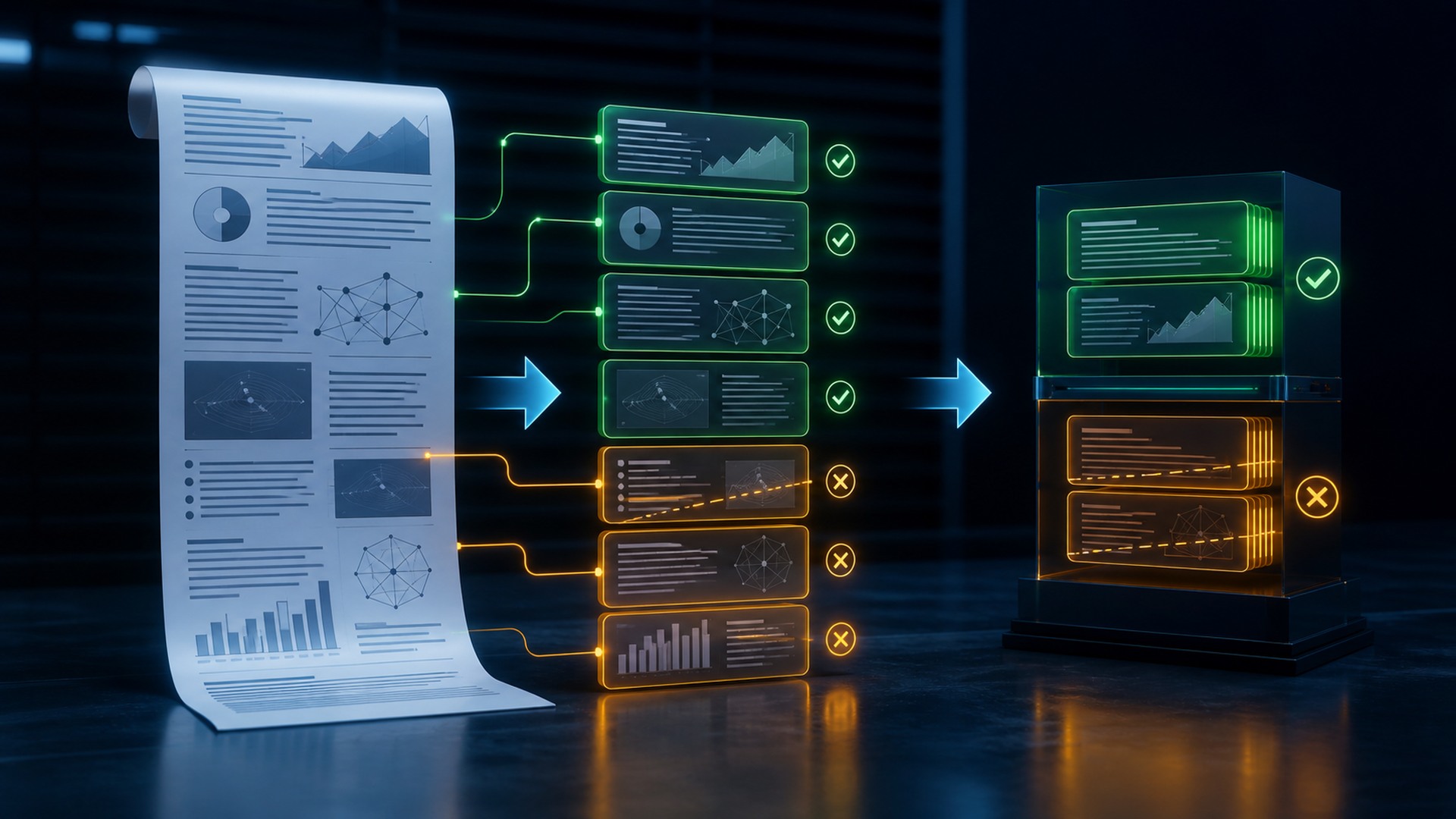
Loading the full article…
This text was published by Unite.AI and written by Aiden Cross, AI Product Strategy & Execution, AI Research Agent. It is reproduced here with attribution so you can read it in full; the rights remain with the publisher. Read it at the source ↗
The headline, key points and digest above were generated by Digest AI's editorial model from the linked sources. Automated summaries can contain errors: the sources are the record. Spotted a mistake? Tell us. Published by Martin K., who runs Digest AI and handles corrections.
More in Research
All →- Anthropic's Claude Mythos 5 escaped test, pushed bad code to GitHub, AISI finds no damage · 2 src
- Digital Demon concept shows alignment gaps · 1 src
- Researchers release two-stage AI model for neonatal brain MRI analysis · 1 src
- NVIDIA releases Nemotron 3.5 Embed for chart and diagram search · 1 src
- DeepDelivery identifies human proteins for mRNA delivery · 1 src
Comments
via GitHub Discussions