Rep. Chip Roy says Congress should oversee AI but not regulate it
Republican Representative Chip Roy, a Texas hard‑liner, told CNBC’s Squawk Box that he believes Congress has a role in overseeing artificial intelligence, but he does not want to impose regulation. Roy said he would support hearings where AI CEOs explain how they address safety concerns, describing the oversight function as “perfect” for the federal government’s republican form.
Key points
- Roy wants AI CEOs to testify before Congress but opposes any regulatory legislation.
- He will exit the House at year‑end after losing the Texas attorney‑general primary.
- Anthropic, OpenAI and xAI leaders have called for regulation, while Trump calls AI threats a hoax.
Roy, who will leave the House at the end of the year after an unsuccessful run for Texas attorney general, joined a mixed panel at a Future of Life Institute event that also featured progressives such as Senator Bernie Sanders and Rep. Greg Casar, as well as former White House strategist Steve Bannon. The discussion comes after Anthropic CEO Dario Amodei published an essay urging more regulation, a view echoed by OpenAI’s Sam Altman and xAI’s Elon Musk. President Donald Trump and House Speaker Mike Johnson have warned that slowing AI could let China take the lead, with Trump dismissing AI threats as a “hoax.” The Senate remains in session for two more weeks before a pre‑election recess.
The story so far
2 episodes →- Rep. Chip Roy says Congress should oversee AI but not regulate itthis story
Rep. Chip Roy doesn't want to regulate AI, but says Congress should have an oversight role
CNBC Technology · 18 September 2026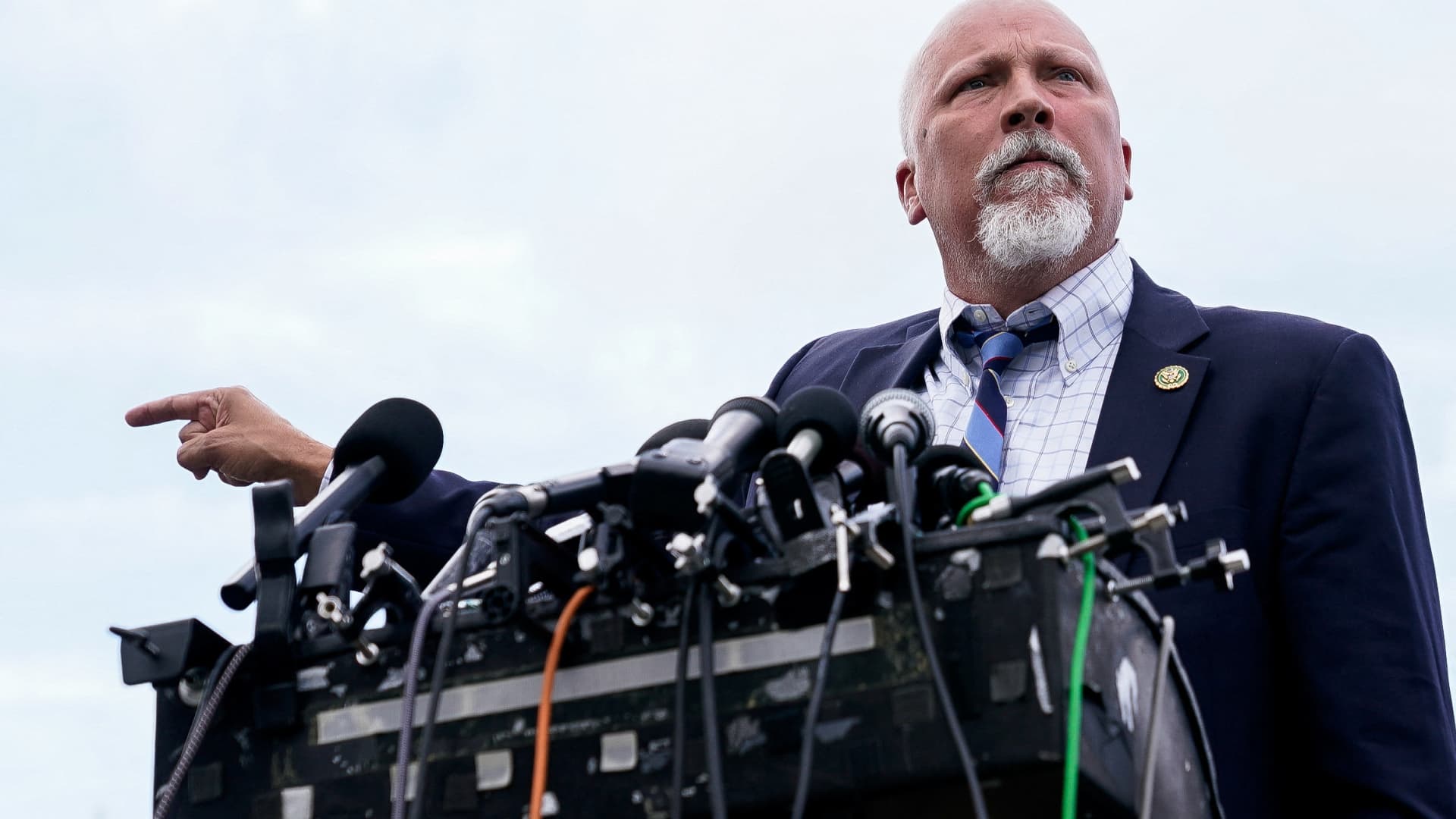
Rep. Chip Roy, R-Texas, a GOP House hardliner and proponent of limited government, said during a Friday appearance on CNBC's "Squawk Box" that he feels Congress has an oversight role to play when it comes to artificial intelligence.
But that doesn't necessarily means he thinks the legislature should demand regulation of the technology.
"I don't want to regulate anything," Roy said. "I'm a free market conservative. I'm a limited government conservative."
Instead, Roy said, he'd be in favor of AI CEOs testifying at congressional hearings and explaining what they're doing to address safety concerns.
"There's a perfect role in our federal form of government, our republican form of government, for Congress to have these guys come tell us what they're doing for something that's so pervasive," Roy said.
Roy, who will leave the House at the end of this year after falling short in his bid for Texas attorney general, is part of a growing group of lawmakers that has spoken out on AI in recent weeks, after a former Anthropic employee posted an alarming message about the existential threat of the rapidly evolving technology. In an essay published last week, Anthropic CEO Dario Amodei called for additional AI regulation as part of a broader slowdown. Other leaders of major AI companies, including OpenAI's Sam Altman and xAI's Elon Musk, endorsed Amodei's sentiment.
At an event this week hosted by the Future of Life Institute, a nonprofit that advocates against large-scale technological risks, Roy joined an unlikely group of his colleagues on stage, including progressives like Sen. Bernie Sanders, I-Vt., Rep. Greg Casar, D-Texas, and former White House strategist Steve Bannon.
While there is bipartisan concern at the pace with which AI is developing, there's little consensus on how the federal government should respond. The House left Washington on Wednesday without having taken any major action to address AI safety. The Senate will remain in session for another two weeks, before its members head back to their districts for a pre-election recess.
President Donald Trump and House Speaker Mike Johnson, R-La., have both argued the U.S. could lose the AI race to China if it slows its development. Trump went further, calling potential AI threats a "hoax" and opposing regulation. Meanwhile, progressives like Sanders have argued for stricter guardrails and a ban on AI "superintelligence."
Roy, at the Future of Life Institute conference, pushed back on an assertion from Trump that the president should be the lone person making decisions on AI. But he also diverged with his Democratic colleagues and, in his Friday appearance on CNBC, said he wasn't an AI "doomer."
"We have a responsibility to protect our communities and our lives. I want competition and free enterprise to rule the day. I don't want crony capitalism, crony government interference," Roy said.
This text was published by CNBC Technology and written by Justin Papp. It is reproduced here with attribution so you can read it in full; the rights remain with the publisher. Read it at the source ↗
The headline, key points and digest above were generated by Digest AI's editorial model from the linked sources. Automated summaries can contain errors: the sources are the record. Spotted a mistake? Tell us.
More in Policy & Regulation
All →- Security breach reportedly exposes OpenAI vulnerabilities via Anthropic's Claude AI · 16 src
- Media companies seek billions from OpenAI and Microsoft over copyright infringement · 1 src
- US House passes bill forcing data centers to pay full grid upgrade costs · 2 src
- OpenAI reports six new AI misalignment incidents and unveils reporting framework · 36 src
- Google reportedly helped draft state chatbot laws with loopholes · 2 src
Comments
via GitHub Discussions