Researchers release squint framework to help AI read hidden text in images
A new paper from researchers in China introduces SQUINT, a training framework that helps vision-language models detect and transcribe hidden text embedded in images. The method uses knowledge distillation: a teacher model receives both the original image and a downscaled version with the correct transcription, while a student model sees only the original. By comparing predictions token by token,…
Key points
- SQUINT uses knowledge distillation with downscaled images to teach VLMs to read hidden text
- Base Qwen3.5-9B improved from 26.50 to 88.61 on SquintBench after training
- Two datasets released: SquintBench (1,076 real images) and SquintCtrl (synthetic)
The researchers built two datasets. SquintBench contains 1,076 real-world images from a production content-moderation pipeline, with human-annotated transcriptions. SquintCtrl uses synthetic images generated with QR Code Monster v2 on Stable Diffusion 1.5, divided into four subsets for detection, character identification, strength variation, and full transcription. Training used 5,905 prompts across hidden-text, OCR, and visual-question-answering samples.
On SquintBench, the base Qwen3.5-9B model scored 26.50; after SQUINT training it reached 88.61, outperforming supervised fine-tuning and other baselines while preserving general vision-language performance. On external benchmarks, AdvOCR rose from 3.7 to 66.7 and HC-Bench from 1.8 to 44.6. Larger models including Qwen3-VL-235B-Thinking (24.44) and GPT-6 Astra (8.33) also scored poorly on the original task. Code has been released.
Model page: GPT-6 Astra →
Teaching AI to Read the Hidden Text That Humans Can See
Unite.AI · 10 November 2026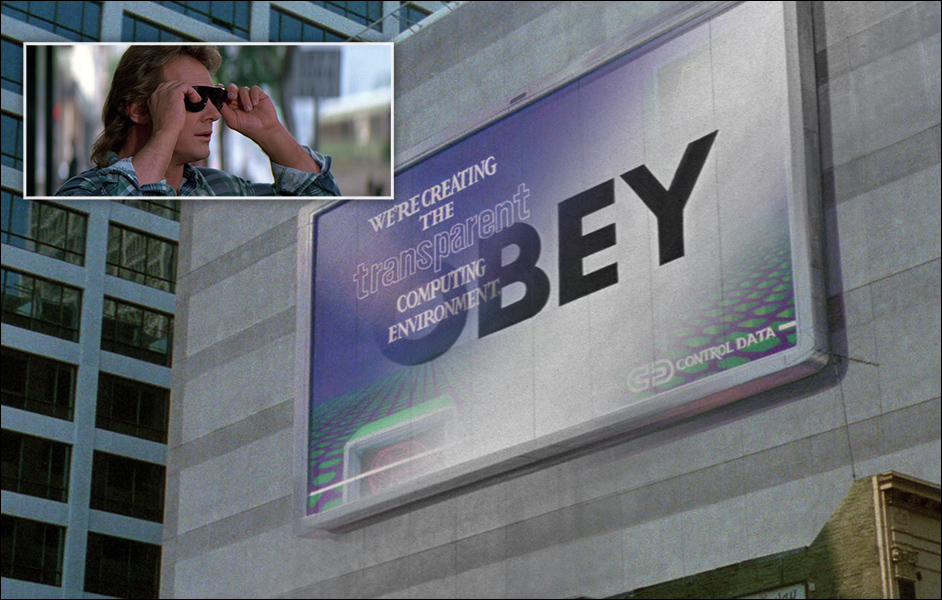
Loading the full article…
This text was published by Unite.AI and written by Martin Anderson. It is reproduced here with attribution so you can read it in full; the rights remain with the publisher. Read it at the source ↗
The headline, key points and digest above were generated by Digest AI's editorial model from the linked sources. Automated summaries can contain errors: the sources are the record. Spotted a mistake? Tell us. Published by Martin K., who runs Digest AI and handles corrections.
More in Research
All →- Google DeepMind cuts quantum circuit costs with Gemini 4 agents · 1 src
- Hi-TPH dataset improves T cell receptor binding predictions · 1 src
- OpenAI releases 'yardstick for intelligence': Let's pause here · 1 src
- Hugging Face outlines steps for building and maintaining agentic evaluations · 1 src
- Apple launches 200,000-person study on health AI trust with OpenEvidence · 1 src
Comments
via GitHub Discussions