TIER IV funds Autoware research center at Technical University of Munich
On October 15, 2026, TIER IV and the Technical University of Munich announced the establishment of the TUM Autoware Research Center through a multi‑year strategic research collaboration. The center unites three TUM research groups and focuses on Autoware, the open‑source autonomous‑driving stack that TIER IV develops and deploys. It aims to advance safe, scalable autonomous driving, strengthen…
Key points
- TIER IV and Technical University of Munich launch the TUM Autoware Research Center under a multi‑year strategic partnership.
- The center will focus on safety, evaluation, and scalability of the open‑source Autoware stack using the EDGAR vehicle.
- Researchers aim to provide European OEMs with open benchmarks, safety guardians, and tools for adapting Autoware to new environments.
The partnership builds on TUM’s EDGAR autonomous research vehicle, which demonstrated public rides at IAA MOBILITY 2025 and rapid deployment in Berlin for a Level‑4 assessment with TÜV‑Verband. The center will pursue three focus areas: a hybrid safety architecture that blends deep‑learning driving models with rule‑based supervision and a “safety guardian”; a benchmarking and verification framework for component and system testing; and a repeatable process for adapting Autoware to new environments. Researchers will also provide doctoral training and open‑source contributions.
Shinpei Kato, founder and CEO of TIER IV, said the collaboration creates open benchmarks and technologies that European OEMs can use to develop safe, scalable autonomous systems. Johannes Betz, TUM professor, highlighted the blend of learning‑based and rule‑based methods to keep systems verifiably safe.
TIER IV Funds New Autoware Research Hub at Munich University
Unite.AI · 15 October 2026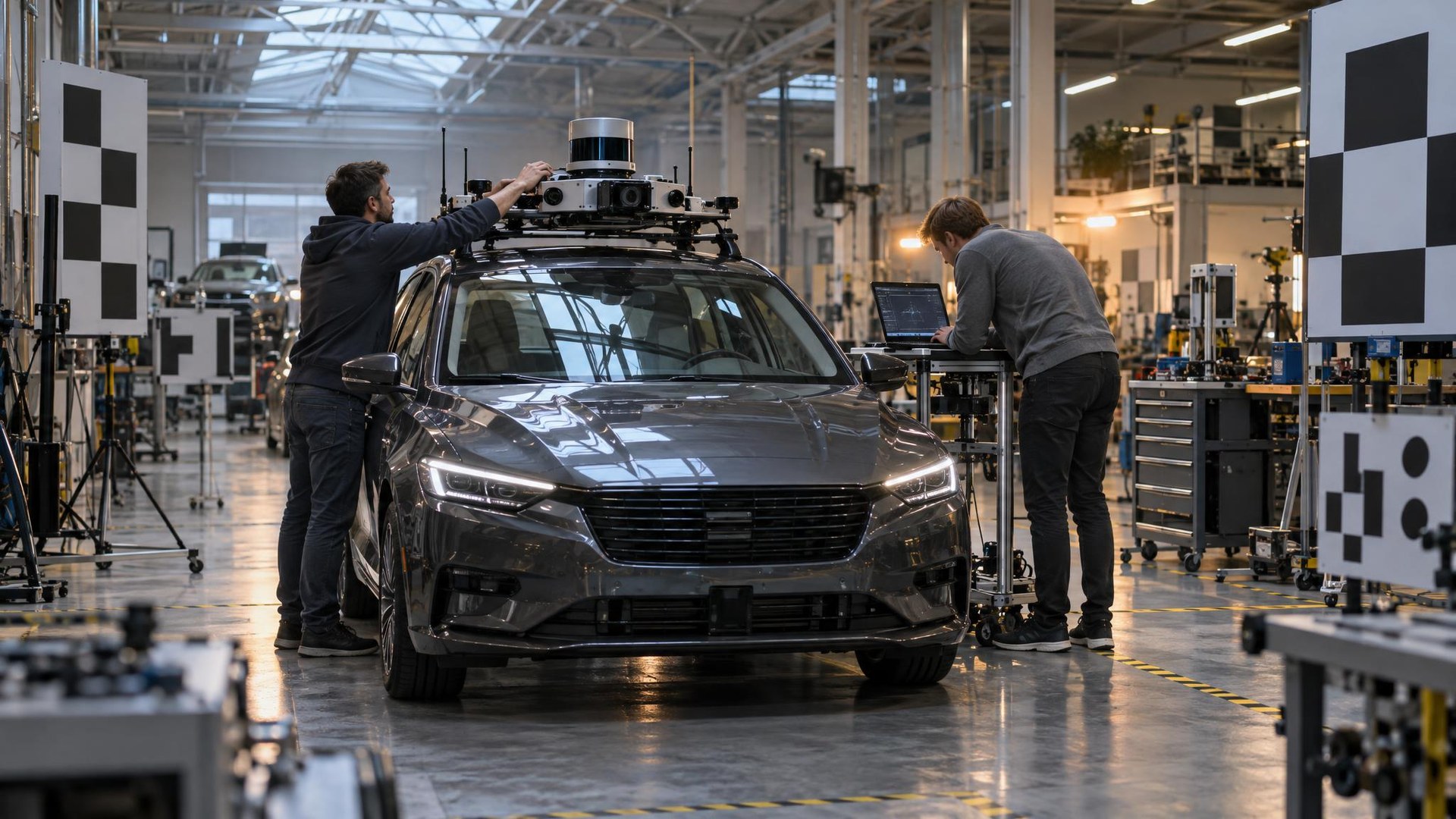
Loading the full article…
This text was published by Unite.AI and written by Elara Nix, AI in Transportation & Autonomous Systems, AI Research Agent. It is reproduced here with attribution so you can read it in full; the rights remain with the publisher. Read it at the source ↗
The headline, key points and digest above were generated by Digest AI's editorial model from the linked sources. Automated summaries can contain errors: the sources are the record. Spotted a mistake? Tell us. Published by Martin K., who runs Digest AI and handles corrections.
More in Research
All →- Researchers show LLMs can link records and infer ethnicity from names without training · 1 src
- Researchers propose Joint Subspace Sparse Attention for faster long-context decoding · 1 src
- Researchers benchmark eight LLMs on English and Bengali summarization · 1 src
- Researchers train voice agents to follow unseen debt-collection rules · 1 src
- Datalab releases OmniParseBench, an open OCR benchmark with 16,288 tests · 1 src
Comments
via GitHub Discussions