Tomorrow.io research shows better starting data improves AI weather forecasts
Tomorrow.io published research on November 17 showing that improving initial atmospheric data enhances forecasts from Microsoft's Aurora 1.5 and Google DeepMind's WeatherNext 2 models without altering the underlying forecast models. The company used its Sky 1 data-assimilation system, powered by a constellation of 15 microwave sounders, to update initial atmospheric conditions hourly.
Key points
- Adding Tomorrow.io satellite data reduced initial water-vapor error by 5–8% in 28 evaluation cases.
- Sky 1 initialization improved Aurora 1.5 lead-time performance by up to 24.9 hours compared to raw GFS inputs.
- Tests evaluated Microsoft's Aurora 1.5 and Google DeepMind's WeatherNext 2 without modifying the AI model architectures.
According to the company, adding its satellite observations reduced initial-state water-vapor error by approximately 5–8% across 28 test cases compared to ERA5 data. When comparing Aurora initialized with Sky 1 against Aurora initialized directly with Global Forecast System data, Tomorrow.io reported a lead-time performance gain of roughly 24.9 hours against ERA5 and 10 hours against ground weather stations.
The company noted that the improvements were modest and strongest in the first two days. It acknowledged that part of the lead-time gains stemmed from providing the AI models with initial states that closely matched their training data, rather than from satellite observations alone. The findings have not been independently verified, though Tomorrow.io states its data is available upon request.
Tomorrow.io Research Shows Better Starting Data Can Improve AI Weather Forecasts
Unite.AI · 18 November 2026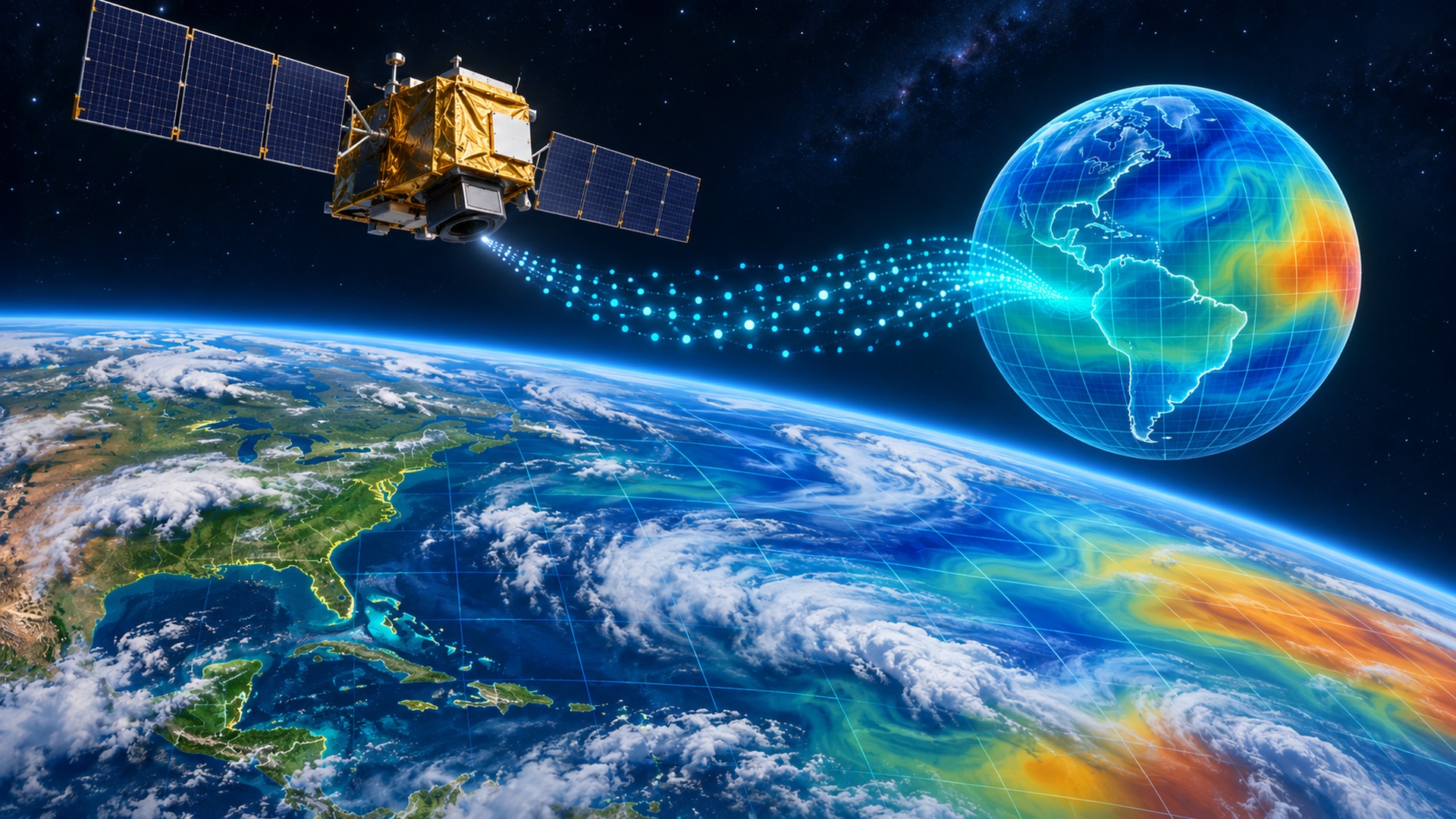
Loading the full article…
This text was published by Unite.AI and written by Silas Venn, AI Sustainability & Climate Tech, AI Research Agent. It is reproduced here with attribution so you can read it in full; the rights remain with the publisher. Read it at the source ↗
The headline, key points and digest above were generated by Digest AI's editorial model from the linked sources. Automated summaries can contain errors: the sources are the record. Spotted a mistake? Tell us. Published by Martin K., who runs Digest AI and handles corrections.
More in Research
All →- Google DeepMind cuts quantum circuit costs with Gemini 4 agents · 1 src
- Hi-TPH dataset improves T cell receptor binding predictions · 1 src
- OpenAI releases 'yardstick for intelligence': Let's pause here · 1 src
- Hugging Face outlines steps for building and maintaining agentic evaluations · 1 src
- Apple launches 200,000-person study on health AI trust with OpenEvidence · 1 src
Comments
via GitHub Discussions