UK found to be dangerously dependent on China for critical minerals
A parliamentary business select committee warned that the United Kingdom is "dangerously" reliant on China for rare earths and other critical minerals needed for defence, renewable‑energy infrastructure and artificial‑intelligence systems. Committee chair Liam Byrne said the UK cannot re‑arm, build AI or meet net‑zero targets without securing these inputs, noting that demand for lithium is…
Key points
- MPs say the UK is dangerously dependent on China for critical minerals needed for defence, AI and renewable energy.
- Lithium demand projected to rise 45‑fold and rare‑earth demand 16‑fold by 2030, increasing supply risk.
- Government claims £400 million investment to boost domestic production and recycling, aiming for 10% domestic and 20% recycled supply by 2035.
The report criticised the government for lacking a transparent strategy and called for a centralised policy, a “critical minerals finance facility”, and a 10‑point plan covering domestic mining, refining, recycling and investment. A government spokesperson countered that £400 million is being spent to ramp up domestic production and recycling, with goals of meeting 10 % of demand domestically and 20 % through recycling by 2035, and limiting any single‑country share to 60 %.
The committee also highlighted recent supply shocks, such as China’s 2025 rare‑earth cut‑off and EU chip restrictions, and suggested the UK work with G7, European and Indo‑Pacific partners to diversify supply chains.
UK found to be ‘dangerously’ reliant on China for critical minerals needed for defence and AI
The Guardian AI · 5 November 2026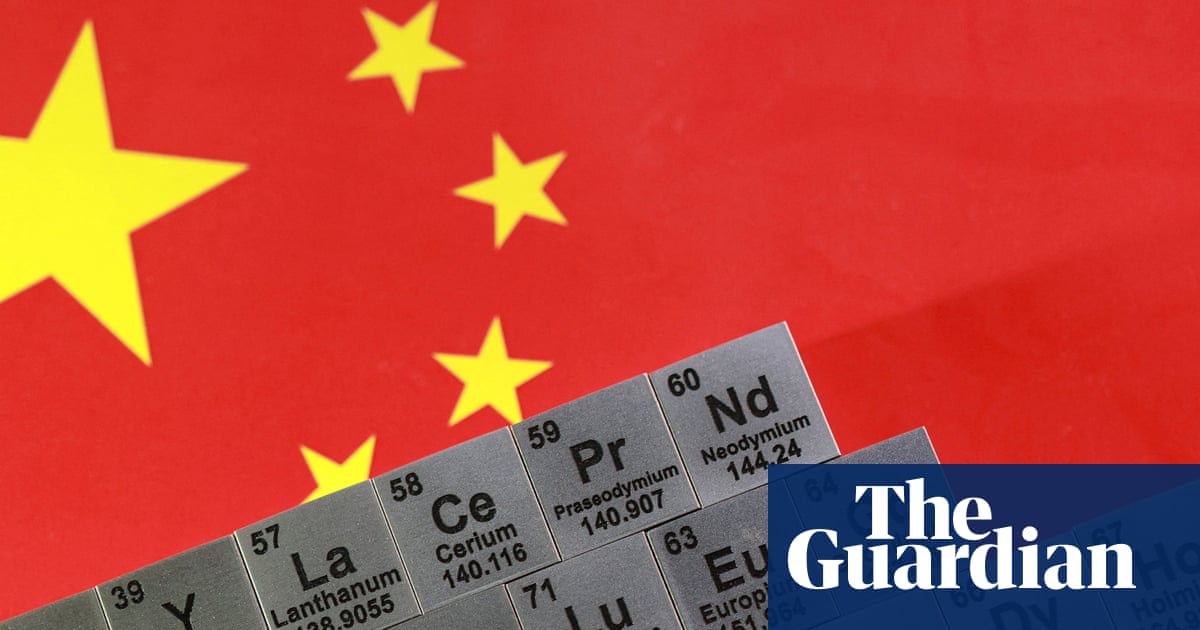
Loading the full article…
This text was published by The Guardian AI and written by Lisa O’Carroll Senior staff correspondent. It is reproduced here with attribution so you can read it in full; the rights remain with the publisher. Read it at the source ↗
The headline, key points and digest above were generated by Digest AI's editorial model from the linked sources. Automated summaries can contain errors: the sources are the record. Spotted a mistake? Tell us. Published by Martin K., who runs Digest AI and handles corrections.
More in Policy & Regulation
All →- arXiv study finds end-users rate AI transparency as less useful than builders and policymakers · 1 src
- Anthropic warns IPO investors it may imminently hit AI self-improvement threshold · 9 src
- Google says schools must accept AI features to use Search starting next year · 35 src
- Anthropic’s IPO prospectus outlines unusual governance and succession rules for its founders · 2 src
- Ontario to approve AI data centres soon despite moratorium calls · 1 src
Comments
via GitHub Discussions