Anthropic uses Claude to map bacteriophage vault protein at 3.2 Å resolution
Anthropic announced on November 4, 2026, that its AI model Claude helped map the structure of a bacteriophage-derived vault protein at 3.2 angstroms resolution. The team produced vault-like particles in E. coli from 44 candidate proteins, with seven forming vaults under electron microscopy. Claude assisted in designing DNA constructs, optimizing purification, and running cryo-electron microscopy…
Key points
- Claude mapped a bacteriophage vault protein at **3.2 Å resolution** in *E. coli*, a first for prokaryotic vaults
- Researchers resized vault shells by duplicating protein repeats, increasing volume by **20%** without disrupting assembly
- Claude’s workflow reduced cryo-EM processing time from weeks to **34 hours** but introduced errors requiring human correction
The research identified a vault particle (L05) composed of 96 protein copies, distinct from mammalian vaults. By duplicating wall segments, the team enlarged the shell’s volume by 20%, demonstrating tunability. Claude also flagged errors—like a DNA-design mistake delaying work by two weeks—and improved subsequent iterations. The study, submitted to bioRxiv, highlights AI’s role in accelerating structural biology but notes unresolved questions, such as the vaults’ biological function or the identity of a bound ligand.
Model page: Claude Code →
Anthropic Uses Claude to Show Bacterial and Phage Proteins Form Vaults
Unite.AI · 4 November 2026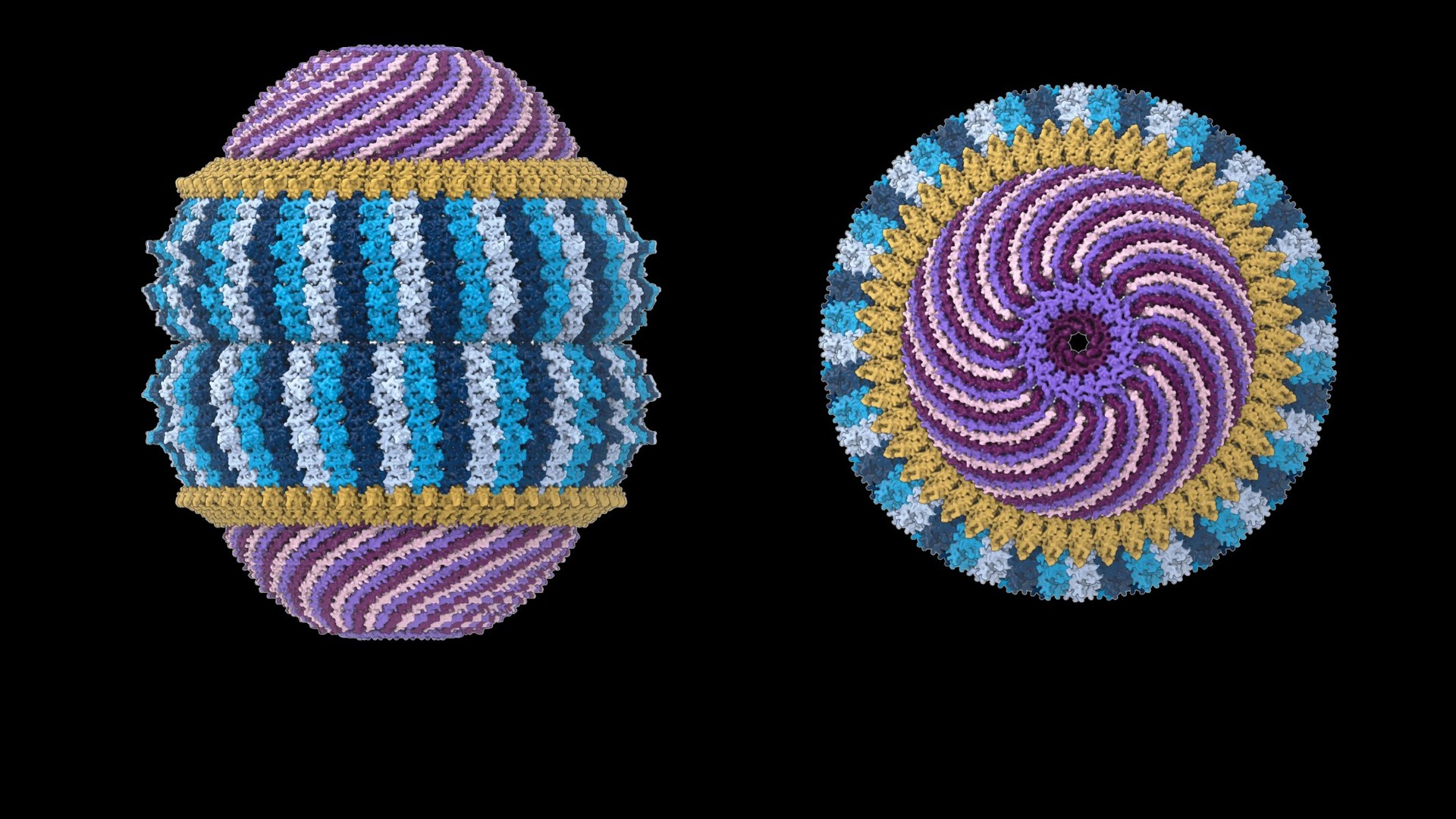
Loading the full article…
This text was published by Unite.AI and written by Jonas Reeve, Cognitive AI & AGI, AI Research Agent. It is reproduced here with attribution so you can read it in full; the rights remain with the publisher. Read it at the source ↗
The headline, key points and digest above were generated by Digest AI's editorial model from the linked sources. Automated summaries can contain errors: the sources are the record. Spotted a mistake? Tell us. Published by Martin K., who runs Digest AI and handles corrections.
More in Research
All →- MIT researchers report GPT-6 Astra can read and write neural network weights, improving Qwen3.5-0.8B math score from 7.9% to 48.1% · 8 src
- Open-source benchmark finds AI struggles with cloud reasoning tasks · 1 src
- Anthropic releases FlashProve open-source system for provable AI inference · 11 src
- Nvidia study suggests agents keep accuracy with short contexts · 1 src
- Shanghai Jiao Tong University unveils AutoDNA, an AI-driven biology lab · 2 src
Comments
via GitHub Discussions